
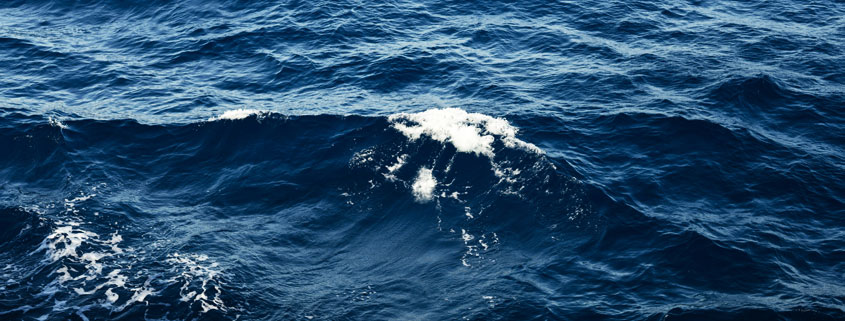
More than half of the planet lies beyond the reach of sunlight, yet it shapes climate, biology, and geological time with quiet authority. The deep ocean is not empty space between continents. It is an active, structured, and largely uncharted environment that operates according to rules still being uncovered. What humanity knows about distant planets now rivals what it understands about its own abyssal depths, and that imbalance continues to shape how discovery unfolds in the modern age.
Why the Deep Ocean Remained Unknown for So Long
The difficulty of reaching extreme depths delayed systematic exploration for centuries. Pressure increases rapidly, light disappears within minutes of descent, and communication becomes fragile. Early exploration tools were built for surface conditions, not for environments that crush steel and distort electronics. Unlike mountains or deserts, the deep ocean offers no stable vantage point. Every descent requires a complete technological system that must function autonomously. This dependency slowed progress and concentrated exploration in brief, expensive missions rather than sustained observation. As a result, large portions of the seafloor remain mapped only in outline, with details inferred rather than observed.
Mapping a Landscape Without Landmarks
The ocean floor contains mountain ranges longer than the Andes, valleys deeper than the Grand Canyon, and plate boundaries where continents are actively reshaped. Yet these structures lack the visual cues that guide terrestrial exploration. Sonar, seismic imaging, and gravimetric data replace direct sight, creating representations that must be interpreted rather than seen. Each improvement in resolution reveals complexity rather than clarity. What once appeared flat resolves into ridges, vents, and fracture zones. Mapping the deep ocean becomes less about filling blanks and more about revising assumptions. Discovery here often means realizing that prior models were incomplete or misleading.
Life Without Sunlight
Perhaps the most profound discoveries in deep ocean research concern biology. Entire ecosystems thrive in total darkness, drawing energy not from photosynthesis but from chemical reactions. Hydrothermal vents support dense communities that rely on chemosynthesis, overturning the long held belief that sunlight is the foundation of all complex life. These organisms are not marginal survivors. They are highly adapted, diverse, and stable over geological time. Their existence has reshaped understanding of where life can emerge, both on Earth and elsewhere. The deep ocean becomes not an exception but a proof of concept for alternative biological pathways.
Time Scales That Defy Human Intuition
Processes in the deep ocean operate on time scales that challenge everyday perception. Sediment accumulates millimeter by millimeter over millennia. Ocean currents circulate heat and carbon over centuries. Geological features evolve through sudden events separated by long periods of apparent stillness. Studying these systems requires patience and indirect measurement. Instruments must remain in place for years, sometimes decades, to capture meaningful patterns. Discovery in this context is cumulative rather than dramatic, built from long data sequences rather than singular moments.
Technology as an Extension of Perception
Modern exploration depends on remotely operated vehicles, autonomous underwater systems, and sensor networks that function without direct human control. These machines do not simply gather data. They extend perception into environments humans cannot inhabit. Each generation of tools changes what questions can be asked. High definition cameras reveal behaviors previously unknown. Advanced sampling techniques uncover genetic diversity invisible to morphology alone. Discovery becomes iterative, shaped by the capabilities of instruments as much as by human curiosity.
The Deep Ocean and the Global System
What happens in the abyss does not remain isolated. Deep ocean circulation regulates climate by storing and transporting heat. The seafloor plays a critical role in the carbon cycle through sedimentation and mineral formation. Disruptions at depth can propagate upward, influencing surface ecosystems and weather patterns. Understanding these connections reframes discovery as necessity rather than curiosity. Knowledge of the deep ocean informs climate models, resource management, and long term environmental stability. Ignorance carries consequences that extend far beyond the ocean itself.
Resources, Ethics, and the Next Phase of Exploration
As technology improves, interest in deep sea resources grows. Minerals, rare metals, and biological compounds attract commercial attention. This shift introduces ethical and regulatory challenges. The deep ocean is not owned by any nation, yet its exploitation affects all. Discovery now intersects with governance. Scientific exploration must coexist with economic pressure, requiring frameworks that balance knowledge acquisition with preservation. Decisions made in the coming decades will determine whether the deep ocean becomes another depleted frontier or a protected domain of shared understanding.
A Different Model of Discovery
The deep ocean resists the narrative of rapid conquest. Progress is slow, data driven, and often humbling. Each answered question reveals layers of complexity beneath it. This environment rewards rigor over speed and revision over certainty. In an era accustomed to instant results, the abyss offers a different lesson. Some truths emerge only through sustained attention and respect for systems that operate beyond human scale. Discovery here is not about mastery. It is about alignment with processes older, larger, and more intricate than any single observer. The deep ocean remains largely unknown not because it is empty, but because it is vast, dynamic, and unwilling to simplify itself for convenience. What lies beneath the surface continues to shape the planet, regardless of whether it is fully understood. The work of discovery is not to exhaust this mystery, but to engage with it responsibly, one measured descent at a time.

