
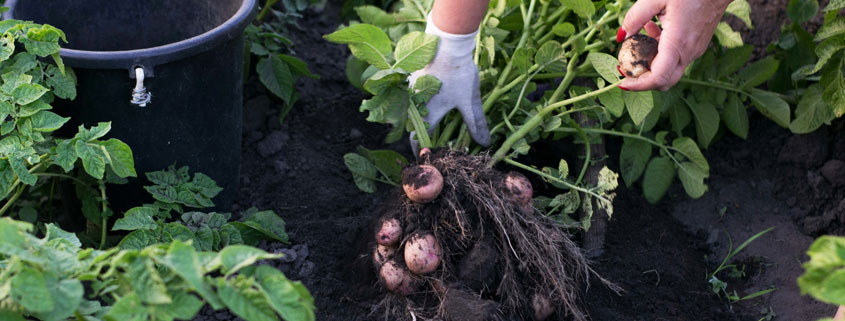
Most gardens fail long before the first plant struggles. They fail beneath the surface, where soil is treated as dirt rather than as a living system. Leaves yellow, growth stalls, pests arrive, and the gardener responds with products, tools, and interventions. Yet the problem was never the plant. The problem was the foundation. A garden is not built from flowers, vegetables, or shrubs. It is built from soil biology, structure, and balance, whether the gardener acknowledges it or not.
Soil as a Living System, Not a Medium
Healthy soil is not inert. It breathes, feeds, protects, and regulates. Billions of organisms occupy a single handful, forming a complex web of bacteria, fungi, protozoa, nematodes, arthropods, and roots. These organisms exchange nutrients, communicate chemically, and build the physical structure that allows water and air to move properly. When soil is compacted, sterilized, or stripped of organic matter, this network collapses. Plants may still grow for a time, fueled by residual nutrients or fertilizers, but they become dependent and fragile. In contrast, living soil creates resilient plants that regulate their own growth, resist disease, and adapt to stress.
Structure Determines Everything Above Ground
Soil structure refers to how particles aggregate and how pores form between them. This structure determines drainage, oxygen availability, root expansion, and microbial activity. Sandy soil drains quickly but struggles to hold nutrients. Clay retains water but can suffocate roots when compacted. Loam represents balance, but balance must be maintained, not assumed. Organic matter is the primary architect of structure. Decaying plant material binds particles into aggregates that resist erosion and compaction. Fungal networks weave through soil, stabilizing it while extending the reach of plant roots. Without these processes, even fertile soil becomes dysfunctional.
Roots Are Not Passive
Roots are active participants in the soil ecosystem. They release sugars, acids, and signaling compounds that attract specific microbes. In exchange, microbes convert minerals into plant accessible forms. This relationship is not optional. It is how plants evolved to survive in nutrient limited environments. When gardeners rely heavily on soluble fertilizers, this relationship weakens. Plants reduce their investment in microbial partnerships because nutrients arrive without effort. Over time, soil life declines, and plants lose resilience. The garden becomes increasingly dependent on external inputs.
Water Is a Test of Soil Health
Water behavior reveals soil condition immediately. In healthy soil, rain infiltrates smoothly, distributing moisture evenly while excess drains without pooling. In damaged soil, water either runs off the surface or stagnates around roots. Mulch plays a critical role here. Organic mulch protects soil from temperature extremes, reduces evaporation, and feeds microbes as it decomposes. Bare soil is an unnatural state. In nature, soil is always covered, either by plants or by organic debris.
The Myth of Clean Gardening
Many gardening practices prioritize visual neatness over ecological function. Leaves are removed, stems are cut to the ground, and beds are cleared to bare soil. While orderly, this approach disrupts nutrient cycles, eliminates habitat, and exposes soil to erosion. Decaying plant matter is not waste. It is a resource. It returns carbon to the soil, moderates moisture, and supports overwintering insects that contribute to pollination and pest control. A garden that tolerates some disorder often outperforms one that appears meticulously controlled.
Nutrients Move Through Biology, Not Labels
Nitrogen, phosphorus, potassium, and trace minerals are not absorbed simply because they are present. They must be in the correct form, at the correct time, and within reach of roots. Microbial activity governs this availability. Compost does not feed plants directly. It feeds soil organisms, which in turn feed plants. This distinction matters. A gardener focused on soil biology applies fewer amendments, observes more closely, and intervenes less frequently. The system becomes self regulating.
Pests as Indicators, Not Enemies
Insect outbreaks are often symptoms, not causes. Weak plants emit signals that attract herbivores. Healthy plants resist or tolerate feeding with minimal damage. Chemical controls may eliminate pests temporarily but often worsen underlying imbalances. Diverse gardens support predators, parasites, and competitors that keep populations in check. Monocultures invite specialization and explosion. Diversity at every level, plant species, root depth, bloom timing, and structure, creates stability.
Seasonal Thinking Changes Everything
Gardens operate on cycles, not schedules. Soil builds slowly. Microbial communities respond to temperature, moisture, and plant activity. A gardener who works with these rhythms reduces effort and increases success. Autumn is not an ending. It is a period of soil investment. Leaves, cover crops, and reduced disturbance prepare the garden for spring. Winter is not inactivity. Beneath the surface, life continues, reorganizing and storing energy.
The Role of Restraint
One of the most difficult skills in gardening is restraint. Overwatering, overfeeding, and overcorrecting disrupt systems that were stabilizing on their own. Observation is more valuable than action. A thriving garden often looks unremarkable in its early stages. Soil improves before growth accelerates. Roots develop before foliage expands. Trusting this process requires patience and a willingness to abandon quick fixes.
Gardening as Relationship, Not Control
At its core, gardening is not about dominance over nature. It is about relationship. The gardener sets conditions, and life responds. When conditions align with biological reality, the response is abundance. When they conflict, effort increases and results diminish. Understanding soil changes the entire practice. The garden stops being a collection of plants and becomes a functioning system. Success is no longer measured by perfection but by resilience, consistency, and depth. The most productive gardens are not the most managed. They are the most understood.

