
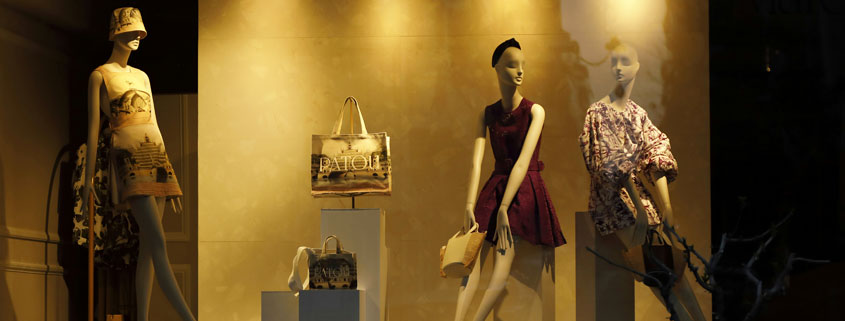
Clothing used to announce where someone came from, what they did, and how they wished to be seen. Today it often announces something else entirely, that the wearer understands the code of the moment. Fashion has shifted from a language of identity to a language of visibility, and the consequences of that shift are reshaping everything from design to desire.
The change did not happen because designers lost imagination. It happened because fashion entered an environment where attention is the most valuable currency. In that environment, garments are no longer judged primarily by how they move with a body or age over time, but by how they register in an image, how quickly they communicate relevance, and how efficiently they circulate. Fashion has become less about wearing and more about appearing.
This transformation has altered the logic of the industry at every level.
For most of its history, fashion unfolded through seasons that allowed ideas to develop gradually. Trends emerged, matured, and eventually faded as people adapted them to their own lives. That rhythm created space for interpretation. A silhouette might start on a runway, but it became meaningful only after it was worn, altered, repeated, and absorbed into everyday life.
That absorption phase has largely collapsed. Digital platforms compress the lifecycle of a trend into weeks or even days. What matters now is not whether a garment integrates into real wardrobes, but whether it performs instantly within a visual feed. The garment is evaluated before it is lived in.
As a result, fashion has grown louder and thinner at the same time.
When Clothing Becomes Content
The most profound shift in fashion is not aesthetic, but functional. Clothing increasingly exists to be photographed. This does not mean people no longer care about comfort or quality, but those concerns are often secondary to how an outfit reads on screen. Texture, construction, and longevity struggle to compete with color contrast, novelty, and recognizability at a glance.
Design responds accordingly. Pieces are exaggerated, simplified, or engineered for immediate impact. Subtlety becomes risky. Details meant to be discovered through touch or movement lose value when the primary interaction is visual and fleeting.
This does not make fashion superficial by default, but it does reward surfaces over depth. The industry learns quickly which elements stop scrolling and which are ignored. Over time, collections begin to resemble each other, not because designers copy consciously, but because they respond to the same attention metrics.
Fashion becomes optimized for the feed rather than the body.
The Illusion of Personal Style in an Algorithmic Loop
Personal style is often celebrated as an expression of individuality, yet the conditions under which style now forms are highly standardized. Algorithms surface similar references to millions of users. Influencers translate runway ideas into digestible formulas. Retailers replicate those formulas at speed. Consumers encounter the same silhouettes repeatedly and mistake familiarity for preference.
Choice still exists, but it is curated invisibly. What feels like self expression often operates within narrow boundaries set by exposure. This does not negate authenticity, but it complicates it. Wearing something because it feels right can coexist with wearing it because it feels current, even when those motivations are indistinguishable.
The language of fashion adapts. Terms like timeless and elevated circulate widely, often detached from material reality. Style becomes aspirational branding rather than an evolving relationship with clothing.
Fast Fashion and the Acceleration of Forgetting
No discussion of modern fashion can avoid fast fashion, not because it dominates creativity, but because it dominates speed. Fast fashion does not simply copy trends. It trains consumers to expect constant novelty at minimal cost, which in turn trains them to discard quickly.
The environmental and ethical consequences are well documented, but there is also a cultural cost that receives less attention. When clothing is designed to be temporary, attachment weakens. Repair loses relevance. Familiarity with a garment’s quirks, how it softens, stretches, or adapts to the body, disappears.
Fashion becomes disposable not only materially, but emotionally. People stop forming relationships with what they wear. Clothing becomes interchangeable, which makes style flatter even as wardrobes grow larger.
This is not a failure of taste. It is a predictable response to an ecosystem built on acceleration.
Luxury, Scarcity, and the Performance of Value
Luxury fashion occupies a paradoxical position. On one hand, it promises craftsmanship, heritage, and restraint. On the other, it participates fully in the same attention economy, staging viral moments, collaborating aggressively, and releasing products designed to signal status instantly.
Logos return not because subtlety failed, but because recognizability sells. Scarcity is engineered through drops and waitlists rather than genuine limitation. Value becomes performative, validated through visibility rather than longevity.
At its best, luxury still offers a counterpoint to disposability. At its worst, it mimics fast fashion’s logic with higher prices and better storytelling. The distinction between the two blurs when both prioritize circulation over endurance.
The Body as an Afterthought
One of the quieter consequences of attention driven fashion is the marginalization of the body itself. Garments are often conceived abstractly, photographed on idealized forms, and consumed digitally before most people ever encounter them physically. Fit becomes a secondary problem solved through sizing charts rather than tailoring.
This creates friction when clothing meets real bodies, which are varied, dynamic, and resistant to standardization. The frustration many feel when shopping is not simply about body image. It is about the mismatch between clothes designed for images and bodies that move, sit, sweat, and age.
When fashion forgets the body, it forgets one of its original purposes.
A Countercurrent of Slowness and Care
Against this backdrop, a quieter fashion culture persists. It does not dominate feeds or trend cycles, but it endures. Designers focus on materials that age well. Wearers build wardrobes slowly, often secondhand or custom. Repair, alteration, and reuse regain dignity.
This approach treats clothing as a companion rather than a signal. A jacket becomes meaningful because of where it has been worn, not how many likes it earned. Style emerges through repetition, not constant replacement.
This countercurrent is not nostalgic. It is pragmatic. As costs rise and environmental limits tighten, fashion that demands endless novelty becomes increasingly untenable. The future may belong less to spectacle and more to systems that support longevity.
Fashion as a Site of Cultural Anxiety
Fashion has always reflected societal tension, but today it absorbs a particularly dense mix of pressures. Identity debates, climate concern, economic precarity, and digital saturation all converge in what people wear. Clothing becomes a way to negotiate visibility, belonging, and control in uncertain conditions.
This explains why fashion can feel simultaneously trivial and overwhelming. A single outfit can carry expectations about ethics, politics, taste, and self awareness. The burden placed on dress grows heavier as the world becomes more complex.
Some respond by disengaging, others by leaning in harder. Both reactions make sense. Fashion remains one of the most immediate ways people interact with culture.
What Fashion Still Can Be
Despite its distortions, fashion has not lost its potential. It remains a powerful medium for storytelling, craft, and human connection. When freed from the demand to perform constantly, clothing can once again become a site of experimentation that values process as much as outcome.
The most interesting fashion work today often happens outside the spotlight, in ateliers, local workshops, and personal wardrobes shaped over time. It asks different questions. How does this feel after a year. How does it adapt. What does it allow the wearer to forget about themselves.
Fashion does not need to abandon visibility to regain meaning. It needs to rebalance it. Attention can amplify ideas, but it cannot replace substance. When clothing is allowed to exist beyond the image, to crease, fade, and gather history, it recovers something essential.
Fashion has not failed because people care too much about it. It struggles because it is asked to do too many things at once. To sell, to signal, to entertain, to reassure, to trend, to disappear. The most radical act in fashion today may simply be to let a garment live long enough to become ordinary, and in that ordinariness, to matter again.

