
Fashion once told people who to become. It offered silhouettes of the future, ideals of elegance, rebellion, success, or refinement that invited imitation. To dress well meant to align oneself with a projected identity, often defined by designers, magazines, and cultural centers far removed from everyday life. Today, that aspirational engine is losing its authority. Clothing still circulates endlessly, but its role has shifted. What people increasingly seek from what they wear is not transformation into someone else, but support for who they already are. Fashion is moving away from aspiration and toward function, not in the utilitarian sense of uniforms or workwear alone, but as personal infrastructure that must perform across psychological, social, and practical dimensions of daily life.
This shift does not announce itself through dramatic trend reversals. It appears quietly, through the disappearance of clear seasonal dictates, through the flattening of hierarchies between formal and casual, through the growing irrelevance of the question “Is this in style.” What replaces it is a different question entirely, one that would have seemed unglamorous in earlier eras, but now sits at the center of how people dress. Does this work for me, for my body, my routines, my values, and the way my life actually unfolds.
When Fashion Spoke With One Voice
For much of the twentieth century, fashion functioned as a broadcast system. A relatively small number of designers, editors, and institutions determined what mattered. Trends moved top down. Runways predicted silhouettes. Magazines translated those silhouettes into aspiration. Consumers adapted what they could afford or access, but the direction of influence was clear.
This system relied on distance. Designers were elevated figures. Fashion weeks were spectacles. The gap between everyday life and the world of fashion was part of the appeal. Clothing promised entry into a rarified space, even if only symbolically. To dress fashionably was to gesture toward belonging in a world defined by taste, refinement, and cultural capital. The authority of this system depended on shared belief. People accepted that fashion knew something they did not, that it could articulate the future before it arrived. That belief has eroded, not because designers lost skill, but because the conditions that sustained centralized authority no longer exist.
The Collapse of the Seasonal Imagination
One of the clearest signs of this transformation is the weakening of the seasonal fashion calendar. Spring, summer, fall, and winter once structured not only production but desire. Newness arrived on schedule. Old styles were discarded according to collective rhythm. Climate instability, globalized supply chains, and digital retail have disrupted this cadence. Seasons blur. Collections drop continuously. Clothing appears online without narrative buildup. The idea of waiting for the next season feels archaic in a world of constant release. As the calendar dissolves, so does the sense that fashion moves forward in discrete, authoritative steps. Without clear temporal markers, trends lose urgency. People are less inclined to replace wardrobes wholesale. Instead, they assemble clothing gradually, responding to personal needs rather than external signals.
From Trend Adoption to Wardrobe Strategy
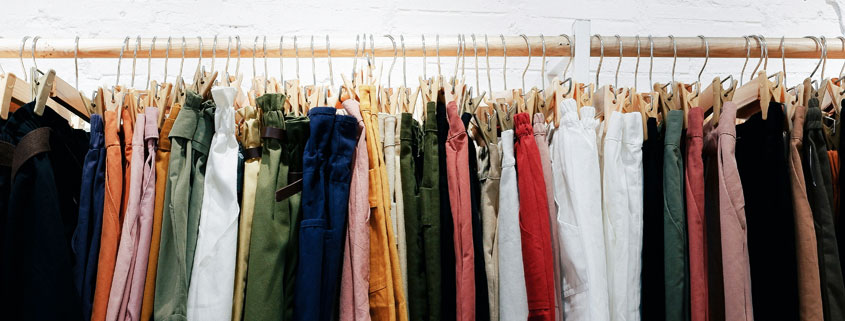
In this new landscape, many people approach clothing strategically rather than aspirationally. They think in terms of coverage, versatility, comfort, and durability. This does not mean style disappears. It means style becomes embedded in systems rather than statements. A wardrobe is no longer a rotating display of trend compliance. It becomes a toolkit. Pieces are evaluated based on how they interact with one another, how they support movement between contexts, and how they hold up over time. This shift favors modularity. Garments that can be layered, adapted, and worn across situations gain value. Loud trend pieces that dominate attention, but limit flexibility lose appeal. The logic resembles architecture more than costume. Clothing must function structurally, not just visually.
The Psychological Turn in Dressing
Fashion has always been tied to psychology, but the relationship is becoming more explicit. Clothing is increasingly expected to regulate mood, confidence, and comfort rather than project status. After years of disruption, uncertainty, and blurred boundaries between work and personal life, people gravitate toward garments that reduce friction. Softness, stretch, breathability, and ease of movement are no longer casual luxuries. They are baseline expectations.
This emphasis does not signal a retreat into shapelessness. Instead, it reflects a recalibration of priorities. Clothing that causes physical discomfort or self consciousness is increasingly rejected, regardless of its fashion credibility. The body is no longer treated as something to be disciplined by style, but as something style must accommodate.
The Decline of Formality as Social Signal
Formality once functioned as a clear indicator of occasion, hierarchy, and respect. Suits, dresses, heels, and tailored separates communicated seriousness and status. Casual wear was reserved for leisure. These distinctions have weakened. Remote work, flexible schedules, and changing workplace norms have collapsed the divide between professional and personal attire. Many people now move through multiple roles in a single day without changing clothes.
As a result, formality loses its signaling power. Wearing formal clothing no longer guarantees authority, just as casual clothing no longer implies lack of seriousness. What matters more is coherence. Does the clothing align with context, not in terms of rules, but in terms of intent and self-possession. This shift places greater emphasis on individual judgment. Without strict codes, people must decide for themselves how they wish to appear. Fashion becomes interpretive rather than prescriptive.
Fashion and the Question of Authenticity
The language of authenticity appears frequently in contemporary fashion discourse, often stripped of precision. At its core, authenticity in dress reflects alignment between inner identity and outer presentation. When trends dictated appearance, authenticity was often framed as resistance. Dressing differently signaled individuality. In a fragmented fashion environment, the challenge reverses. When everything is available, authenticity requires selection rather than opposition.
People curate wardrobes that reflect personal history, body experience, cultural background, and practical reality. This process is not always aesthetic. It is often reflective. Clothing becomes a way of negotiating how one wishes to be seen without performing an identity that feels false. This negotiation explains the rise of understated dressing that resists easy categorization. It also explains why overtly performative fashion can feel hollow in certain contexts, even when executed skillfully.
Sustainability as Constraint Rather Than Marketing
Sustainability has become a dominant theme in fashion, but its most significant impact is structural rather than rhetorical. Beyond marketing language, sustainability introduces constraints that alter design, production, and consumption. Constraints slow fashion down. They discourage constant replacement. They prioritize longevity, repairability, and material integrity. These priorities align naturally with the shift toward clothing as infrastructure.
When garments are expected to last, design decisions change. Trends that rely on novelty lose appeal. Neutrality, adaptability, and timelessness gain relevance. Sustainability does not eliminate style. It changes the criteria by which style is judged. This shift also transfers responsibility. Consumers are no longer passive recipients of fashion cycles. They become participants in maintaining, repairing, and reusing what they own. Clothing acquires narrative weight. It carries memory and continuity rather than obsolescence.
The Body as Collaborator, Not Canvas
Traditional fashion often treated the body as a canvas onto which ideals were imposed. Fit standards prioritized visual effect over lived experience. Discomfort was normalized as the price of beauty. That model is increasingly rejected. The body is no longer expected to conform to clothing. Clothing is expected to negotiate with the body.
This negotiation manifests in inclusive sizing, adaptive design, and attention to diverse movement patterns. It also appears in subtler ways, through adjustable waistlines, forgiving silhouettes, and fabrics that respond to temperature and motion. The result is not homogeneity. It is variation rooted in reality. When clothing respects bodies as they exist, style becomes more diverse, not less.
Fashion Without a Center
One of the most profound changes in contemporary fashion is the absence of a single center. There is no dominant city, look, or authority defining what matters. Influence circulates laterally rather than vertically. This decentralization creates confusion for those expecting clear signals. It also creates opportunity. Local styles, subcultures, and personal aesthetics coexist without requiring validation from a central gatekeeper.
Fashion becomes plural. It allows contradiction. It tolerates overlap. Aesthetic coherence emerges within communities rather than across an entire culture. This pluralism undermines the idea of universal trends. It replaces them with micro languages that matter deeply to those who speak to them and not at all to those who do not.
The Emotional Labor of Getting Dressed
Getting dressed is often treated as trivial, yet it involves daily emotional labor. Decisions about appearance intersect with identity, self-worth, and social navigation. In an environment saturated with images and options, this labor intensifies. Choice overload creates fatigue. Comparison undermines confidence. The promise of perfect style becomes a source of anxiety rather than pleasure.
The turn toward functional wardrobes can be understood as a response to this pressure. Reducing choices reduces cognitive load. Establishing personal uniforms restores ease. This does not mean surrendering style. It means relocating style from constant decision making to a stable system that supports daily life without demanding attention.
Fashion as a Record of Time
When clothing is no longer disposable, it becomes a record. Garments accumulate wear, memory, and personal history. They reflect changes in body, environment, and circumstance. This temporal dimension restores a relationship to fashion that was weakened by fast cycles. Instead of chasing novelty, people develop attachment. Clothing gains emotional durability. This durability shifts the meaning of value. A garment is valuable not because it is new, but because it continues to function and resonate over time.
The Future Is Already Unevenly Distributed
Fashion’s future is not uniform. Some segments will continue to produce spectacle, trend acceleration, and aspirational fantasy. These will coexist with quieter movements toward longevity, function, and personal coherence. The difference lies in what people seek from clothing. Those looking for transformation through appearance will gravitate toward expressive extremes. Those looking for stability, support, and alignment will continue to build wardrobes that behave more like infrastructure than display. Neither impulse is wrong. What has changed is the hierarchy. Aspiration no longer dominates by default. It competes with practicality, psychology, and lived experience.
Dressing Without a Script
Perhaps the most defining feature of contemporary fashion is the absence of a script. There is no single way to dress correctly. There is only the ongoing task of choosing how to appear in a world where rules are flexible and visibility is constant. This freedom is demanding. It requires self-knowledge. It requires restraint. It requires the willingness to dress in ways that feel coherent rather than impressive.
Fashion has not lost meaning. It has moved closer to the ground. It now operates at the level of daily life, where clothing must support bodies, moods, and movement rather than project distant ideals. What remains unresolved is whether the industry will fully adapt to this shift or continue to produce aspiration for a world that no longer organizes itself around it. In the meantime, individuals are already answering the question for themselves, one garment at a time, not by asking what fashion wants from them, but by deciding what they need fashion to do.

