
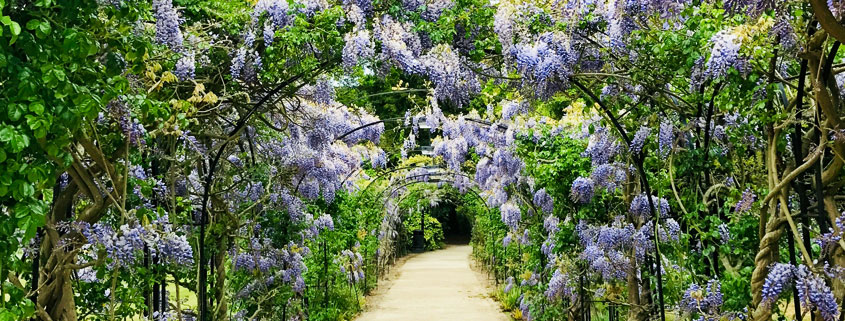
A garden is one of the few places where human intention and natural will confront each other daily without pretense. You can plan, measure, amend, prune, and design, yet the soil ultimately decides what will thrive, what will struggle, and what will disappear without explanation. This is what separates a garden from decoration. It is not a static arrangement. It is a continuous negotiation between desire and reality, patience and urgency, discipline and acceptance. Anyone who has truly tended a garden understands that it is never fully obedient, and never fully wild. It exists in the tension between those states, and that tension is precisely what gives it meaning.
Modern life is engineered to eliminate uncertainty. Systems are built to respond predictably, interfaces to behave consistently, and outcomes to align with intention. The garden resists this logic. It demands attention without offering control. It rewards effort while refusing guarantees. In a world increasingly shaped by abstraction and optimization, the garden remains stubbornly physical, seasonal, and indifferent to human timelines.
Gardening as a Relationship With Time
Gardening forces a reconsideration of time that few other activities require. It does not operate on deadlines or milestones. It follows cycles that cannot be rushed without consequence. Seeds germinate when conditions allow, not when the calendar demands. Roots establish themselves underground long before any visible change appears above the surface.
This temporal structure conflicts with modern expectations of productivity. Progress in a garden is often invisible for long stretches. Work done today may not reveal its value for weeks or months. This delay challenges the impulse for immediate reward and trains a different kind of attentiveness, one oriented toward anticipation rather than confirmation.
Over time, gardeners develop a sensitivity to subtle indicators. Soil texture, leaf color, insect presence, and moisture levels become meaningful signals rather than background detail. This sensitivity is learned through repetition and observation, not instruction alone. It is the kind of knowledge that cannot be downloaded or accelerated.
The Illusion of Mastery and the Reality of Practice
Beginner gardeners often approach the garden with a mindset shaped by instruction manuals and curated images. They expect techniques to produce consistent outcomes. When plants fail despite correct execution, frustration follows. This moment marks an important transition.
Experienced gardeners understand that mastery in gardening does not mean control. It means responsiveness. It involves adjusting to weather anomalies, pest cycles, soil variability, and plant behavior that defies expectation. Knowledge becomes probabilistic rather than prescriptive. This shift mirrors a broader truth. Gardening teaches that competence is not the elimination of uncertainty, but the ability to work within it. Each season becomes a conversation rather than a performance. The gardener listens as much as they act.
Soil as the Foundation of All Garden Meaning
Soil is often treated as a medium rather than a system. In reality, it is the garden. Everything else is an expression of what happens beneath the surface. Healthy soil is a living network of microorganisms, fungi, organic matter, minerals, air, and water. Its structure determines whether roots can breathe, whether nutrients are available, and whether water drains or stagnates.
Gardening cultures that focus exclusively on surface aesthetics often neglect this foundation. The result is dependency on external inputs, fertilizers, pesticides, and constant intervention. When soil is treated as inert, the garden becomes fragile. Gardeners who invest in soil health practice a different philosophy. They feed the system rather than the plant. Composting, mulching, crop rotation, and reduced disturbance encourage resilience. Over time, the garden becomes more self-regulating, less reactive to stress, and more forgiving of mistakes. This approach requires patience. Soil improvement is slow and cumulative. It resists dramatic transformation. Yet it rewards commitment with stability that no product can replicate.
The Garden as a Classroom Without Lessons
Gardening teaches without explanation. It offers feedback through outcomes rather than instruction. Plants fail quietly. They do not announce errors. The gardener must infer cause from effect, often with incomplete information.
This form of learning cultivates humility. Assumptions are tested continuously. Certainty dissolves. Even experienced gardeners encounter seasons that defy their understanding. The absence of explicit lessons encourages reflection. Gardeners review decisions, observe patterns, and adjust strategies incrementally. This iterative learning builds intuition rather than rigid rule adherence. Unlike formal education, the garden does not reward memorization. It rewards attentiveness. The gardener becomes a student of place, climate, and timing rather than technique alone.
Gardening and the Ethics of Care
To garden is to accept responsibility for living systems that cannot advocate for themselves. Plants depend entirely on the gardener’s decisions regarding placement, water, protection, and disturbance. Neglect has consequences. Excess has consequences. The margin for correction exists, but it is finite.
This responsibility fosters a particular ethic of care. Gardening encourages measured action. Overwatering, over fertilizing, and excessive pruning often do more harm than restraint. The gardener learns that care is not synonymous with intervention.
This ethic extends beyond the garden. Many gardeners find their sense of responsibility expanding to include pollinators, soil organisms, and surrounding ecosystems. Choices about plant selection, chemical use, and habitat preservation acquire moral weight. In this way, gardening becomes an education in interdependence. It reveals how individual actions ripple through complex systems, often in ways that are not immediately visible.
The Role of Failure in Garden Wisdom
Failure is inevitable in gardening. Seeds fail to sprout. Plants bolt prematurely. Pests arrive unexpectedly. Weather disrupts plans. These failures are not exceptions. They are the norm. What distinguishes seasoned gardeners is not avoidance of failure, but relationship to it. Failure becomes data rather than indictment. It informs future decisions without discouraging effort.
Gardening cultures that celebrate perfection often obscure this reality. Images of flawless beds and abundant harvests create unrealistic expectations. They imply that success is the result of technique alone. In practice, success emerges from persistence. The garden teaches resilience by normalizing loss. Not every plant is meant to thrive every year. Acceptance of this truth reduces frustration and deepens engagement.
The Garden as Resistance to Speed
Gardening resists acceleration. There are no shortcuts that do not extract a cost elsewhere. Artificial lighting, chemical growth enhancers, and climate control can force outcomes, but they reduce resilience and increase dependency. This resistance makes gardening a countercultural act in a world obsessed with efficiency. It insists that some processes require duration. It values continuity over optimization.
Many gardeners describe the psychological relief of this pace. The garden offers a refuge from constant urgency. Time spent tending plants has a different texture. It is repetitive without being monotonous. It is purposeful without being pressured. This altered experience of time recalibrates attention. Gardeners become more patient observers in other areas of life, less reactive to minor disruption, more tolerant of gradual progress.
Seasonal Awareness and the Return of Cyclical Thinking
Modern life often flattens seasons into aesthetic backdrops rather than lived realities. Climate controlled environments, global supply chains, and digital work obscure seasonal constraints. Gardening restores seasonal awareness forcefully. Each season brings distinct tasks, challenges, and opportunities. Planning happens in winter. Preparation in spring. Maintenance in summer. Reflection and rest in fall.
This cyclical structure counters linear productivity narratives. It affirms that rest is not failure, that dormancy is not waste, and that repetition can be generative. Gardeners who embrace seasonality align their efforts with natural rhythms rather than resisting them. This alignment reduces burnout and fosters sustainability, both ecological and personal.
The Garden as a Social Artifact
Gardens are rarely solitary in impact, even when tended alone. They influence neighbors, communities, and local ecologies. A pollinator friendly garden supports surrounding plant life. A neglected garden can harbor pests. A shared garden creates common ground. Historically, gardens have served as social infrastructure. Community gardens, kitchen gardens, and shared green spaces foster cooperation and knowledge exchange. They distribute food, skills, and responsibility.
Even private gardens communicate values. They signal priorities regarding beauty, ecology, and stewardship. They shape local environments in subtle ways. In an era of social fragmentation, gardens offer nonverbal dialogue. They connect people through shared cycles and visible care rather than argument or ideology.
Gardening and the Reclamation of Skill
Gardening involves practical skills that cannot be fully outsourced. Observation, timing, and physical labor remain essential. While tools and technology can assist, they cannot replace attentiveness. This reclamation of skill contrasts with broader trends toward abstraction. Many modern activities involve interfaces that separate action from consequence. Gardening collapses that distance. Actions have direct, visible effects. As a result, gardening restores a sense of competence grounded in reality. Success is earned through engagement, not simulation. This competence is deeply satisfying because it is embodied rather than symbolic.
The Garden and the Question of Scale
Gardening reveals how scale alters responsibility. Small gardens demand intimacy. Large gardens require systems. What works at one scale may fail at another. This awareness translates to broader thinking. Gardeners become sensitive to the limits of expansion. They recognize when complexity exceeds capacity. They appreciate the value of manageable systems. This perspective challenges narratives that equate growth with success. In a garden, unchecked growth often leads to collapse. Balance matters more than size.
The Emotional Geography of a Garden
Gardens accumulate emotional history. Certain beds recall successful seasons. Others carry memories of loss or struggle. Plants inherited, gifted, or grown from saved seed carry personal significance. This emotional geography deepens attachment. The garden becomes a record of time and experience. It reflects changes in knowledge, circumstance, and intention. Unlike digital archives, gardens age visibly. They change even when neglected. This impermanence reinforces the transient nature of effort and outcome.
Gardening in an Era of Ecological Uncertainty
Climate instability has altered gardening profoundly. Unpredictable weather, shifting pest populations, and changing growing zones challenge traditional knowledge. Gardeners adapt by experimenting, observing, and sharing information. The garden becomes a site of localized adaptation rather than adherence to static rules.
This adaptability highlights the importance of small-scale observation in responding to large scale change. Gardens function as sensors. They register environmental shifts early and viscerally. Through gardening, abstract ecological issues become immediate. Climate change is no longer a distant concept. It is felt in failed crops, altered bloom times, and stressed soil.
The Garden as an Act of Hope Without Naivety
Gardening requires optimism tempered by realism. Each season begins with intention despite uncertainty. Seeds are planted without assurance of harvest. This act is not naive. Gardeners understand loss intimately. They plant anyway.
This balance between hope and acceptance is rare in modern life. Many systems promise certainty or deliver cynicism. The garden offers neither. It offers possibility contingent on effort, patience, and cooperation with forces beyond control. This posture fosters resilience. Gardeners learn to invest without attachment to guaranteed outcome. They learn to begin again without denial.
The Enduring Relevance of the Garden
Despite technological advancement, the garden remains relevant because it addresses fundamental human needs. It reconnects people with food, with land, with seasons, and with consequence. It resists commodification in its truest form. While gardening products abound, the core experience cannot be purchased. It must be lived.
The garden does not scale easily. It does not automate fully. It does not reward shortcuts. These limitations are precisely why it endures. In a world increasingly mediated by screens and systems, the garden insists on presence. It asks for attention, care, and humility. It gives back unpredictably, slowly, and generously.
What remains unresolved is not whether gardening will persist, but whether its lessons will be heard beyond the fence line. The garden quietly demonstrates an alternative way of engaging with the world, one grounded in relationship rather than domination, patience rather than speed, and stewardship rather than extraction. Whether that way of thinking spreads may determine not only the future of gardens, but the resilience of the systems that surround them.
