
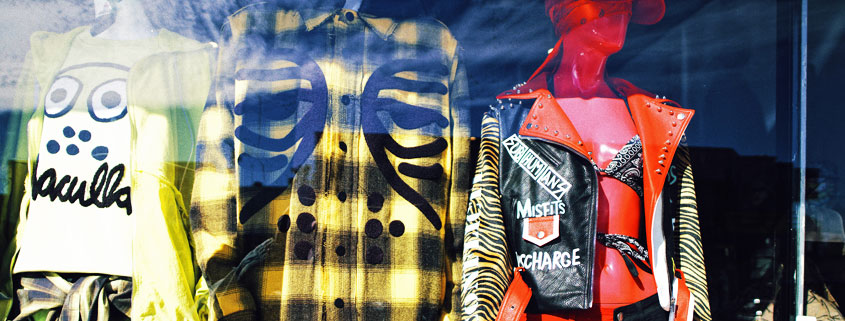
Fashion now moves at a pace that would have been unrecognizable a generation ago. The acceleration is not only about how quickly clothes are produced and sold. It is also about how quickly meaning is assigned, copied, diluted, and discarded. A trend can be born in a single viral clip, reproduced by thousands within days, and feel exhausted by the end of the month. In that atmosphere, clothing stops behaving like a language and starts behaving like a feed, endlessly refreshed, endlessly replaced, always offering the next thing while quietly erasing the ability to develop a stable sense of self through what you wear.
This is not nostalgia for a slower era. It is a recognition that speed changes the function of style. When fashion becomes primarily about keeping up, it shifts from expression to compliance. It turns wardrobes into temporary staging areas for social belonging. The consequence is subtle but profound. People become fluent in trends and illiterate in themselves. They know what the internet is wearing, but they struggle to identify what actually feels like them. The return of personal style is not a rejection of trends. It is a rebellion against being governed by them.
How Trend Saturation Shrinks Choice While Pretending to Expand It
The modern consumer is surrounded by choice. Online stores offer infinite scroll. Social platforms deliver endless outfit inspiration. Yet paradoxically, trend saturation can shrink choice. When a single aesthetic dominates, people begin to treat it as the default. They internalize its proportions, its palette, its silhouettes, and its signals. Even when options are abundant, the perceived acceptable range narrows.
This happens because trends do not only sell clothes. They sell social permission. They tell people what will be understood, what will be rewarded, what will be read as attractive, current, or tasteful. When a trend becomes a dominant cultural script, stepping outside it can feel like speaking a dialect nobody understands. The risk is not simply looking different. The risk is being misread.
In that environment, choosing becomes less about preference and more about safety. People choose what already has a social explanation attached to it. They buy the look that comes with a ready made narrative. The illusion is freedom. The reality is that the narrative is doing the choosing.
The Algorithm as a Stylist That Never Learns You
Personal style develops through feedback that is slow and embodied. You wear something, you live in it, you notice how it changes your posture, how it affects your movement, how it interacts with your day. You learn which fabrics calm you and which ones irritate you. You learn what silhouettes give you confidence and which ones feel like costume. This learning requires time and repeated contact.
Algorithms do not operate that way. They learn your clicks and your pauses, not your comfort or your self perception. They reward novelty and engagement, not coherence. They push you toward what you are likely to consume next, not what will help you develop a stable aesthetic identity.
This is why someone can feel constantly inspired online while becoming increasingly confused in real life. The algorithm provides stimulation without orientation. It offers a new version of you every day, which can feel exciting until you realize you have become a person who is always rehearsing and rarely inhabiting.
When Clothing Stops Being Personal and Becomes a Performance Metric
Fashion has always involved performance. Clothing communicates. It signals status, tribe, mood, and aspiration. What has changed is the intensity of constant evaluation. In an era where images are posted, compared, and reacted to in real time, style can begin to feel like a scoreboard. Outfit choices are made with an invisible audience in mind, even when no one is watching.
This performance dynamic encourages specific behaviors. People choose items that photograph well rather than wear well. They prioritize striking visuals over functional comfort. They purchase statement pieces that generate immediate reaction, then abandon them when reaction fades. Clothing becomes content.
The deeper cost is that performance prevents intimacy with the self. Personal style requires private experimentation, the ability to try something, feel wrong, adjust, and try again without humiliation. When every choice feels public, experimentation becomes dangerous. People retreat into trend templates because templates reduce the risk of misstep.
The Difference Between Dressing for Attention and Dressing for Authority
Attention seeking in fashion is not inherently shallow. It can be playful, expressive, and artistic. The problem arises when attention becomes the primary reason for dressing, because attention is unstable. It demands escalation. It creates a cycle where yesterday’s novelty becomes today’s baseline.
Authority in dress operates differently. Authority is not about being loud. It is about coherence. A person who dresses with authority looks like they have made decisions rather than followed instructions. Their clothes appear intentional, even if simple. Authority does not require expensive pieces. It requires internal clarity.
This is one of the most underrated transformations in personal style. Many people assume style is about becoming more daring. Often, the real shift is becoming more selective. Instead of asking what will impress, the person asks what will endure. Instead of asking what is trending, they ask what reads as stable. Authority is not a look. It is a relationship to choice.
The Psychology of Trend Adoption and the Fear of Being Outdated
People often adopt trends not because they love them, but because they fear being left behind. Fashion is a social signal, and being outdated can feel like being invisible or irrelevant. That fear is amplified by the rapid cycle of online aesthetics, where trends are presented as urgent, time sensitive opportunities to be current.
This creates a subtle form of anxiety. The wardrobe becomes a problem to solve rather than a language to develop. People feel pressured to update constantly, even when their lives do not require it. The result is accumulation without satisfaction. Closets fill with items that were momentarily persuasive but never truly integrated. The fear of being outdated is rarely about clothes. It is often about identity. It is the fear of being excluded from the cultural conversation. Personal style is one way to reclaim agency, because it reduces dependence on that conversation. It allows a person to remain visible on their own terms.
Why Fabric and Construction Matter More Than Aesthetics in the Long Run
Trends are usually discussed in terms of aesthetics, color, shape, vibe. Yet the long term stability of a wardrobe depends more on fabric and construction. A silhouette can be timeless, but if the material pills, stretches, or loses structure quickly, the piece cannot remain part of a personal style narrative. It becomes disposable by physics, not by taste.
Personal style deepens when a person begins paying attention to how garments behave over time. How does cotton soften, how does wool hold shape, how do synthetics trap heat, how does linen wrinkle in a way that looks intentional rather than sloppy. These realities are not romantic. They are practical, and practicality is often the foundation of elegance. When people shift from trend chasing to style building, they often become more sensitive to quality. Not because they want luxury, but because they want continuity. A personal style is hard to maintain if the clothes collapse after a few wears.
The Wardrobe as an Ecosystem Rather Than a Collection
Trend driven wardrobes often function as piles of isolated pieces, each purchased for its moment. Personal style wardrobes function more like ecosystems. Pieces relate to one another. They share a vocabulary of color, texture, proportion, and purpose.
This ecosystem approach changes shopping behavior. Instead of asking whether an item is attractive, the person asks whether it belongs. Does it interact with existing pieces. Does it fill a gap or create redundancy. Does it support the life the person actually lives, not the life they imagine for a photo. A wardrobe ecosystem also reveals the difference between aspiration and costume. Many people buy for a fantasy version of themselves. The clothes remain unworn because the lifestyle does not exist. Personal style is less fantasy and more biography. It is what makes the wardrobe wearable.
The Return of Tailoring and the End of Universal Fit
One of the quiet revolutions in personal style is the rediscovery of fit. Trend cycles often promote universal silhouettes that look good on models and influencers but do not translate well to diverse bodies and daily movement. Many people interpret this mismatch as personal failure. They think their body is wrong.
Tailoring reveals the opposite. Clothes are often wrong. Adjusting length, taper, waist placement, and shoulder structure can transform a garment from awkward to inevitable. Fit creates confidence because it reduces friction. It makes the wearer feel aligned rather than managed by the garment. The return of tailoring is not elitism. It is respect for the fact that bodies are real and varied. A personal style becomes possible when a person stops trying to fit into the trend silhouette and starts shaping clothes to their own proportions.
How Color Becomes a Signature Instead of a Trend
Color trends are seductive because they feel like instant renewal. A new shade appears, and suddenly the world feels refreshed. The problem is that color trends can quickly make a wardrobe incoherent if they are added without restraint.
Personal style often involves developing a color logic. This does not mean wearing only neutrals. It means understanding which tones harmonize with your skin, your hair, your environment, and your existing pieces. It means choosing color in a way that creates continuity. A signature color is not about branding yourself. It is about building recognition. When color is chosen consistently, it becomes part of your visual identity. People sense it before they analyze it. That sense is what makes style feel like presence rather than costume.
The Influence of Place on Style and Why It Matters
Fashion is often discussed as global, but personal style is local. Climate, architecture, transportation, and cultural norms shape what is practical and what reads as appropriate. Someone living in a humid city will have a different relationship with fabric than someone in a dry climate. Someone walking daily will prioritize different footwear than someone commuting by car.
Ignoring place leads to wardrobes that look good in theory and fail in practice. Many style frustrations come from trying to wear clothes designed for a different environment. Personal style becomes easier when it is grounded in reality. Clothing should cooperate with the life you live. This is why some of the most compelling personal style is not trend forward. It is context forward. It fits the place so well that it looks natural, and naturalness is often the most persuasive form of elegance.
The Ethics of Trend Speed and the Meaning of Ownership
Fast trends create waste, not only physical waste but also psychological waste. They encourage a relationship with clothing that is disposable. People buy, wear briefly, discard, and repeat. This cycle erodes the sense of ownership. Clothes become temporary rentals, even when they are purchased.
A personal style approach changes the ethics of ownership. When clothes are chosen for longevity, they are treated differently. They are cared for. They are repaired. They become part of life rather than part of consumption. This relationship is not only environmentally beneficial. It is psychologically stabilizing. Ownership creates continuity, and continuity creates calm. This does not require perfection or purity. It requires awareness. It requires recognizing that a wardrobe is not just a set of items. It is a pattern of behavior.
How to Recognize Your Style Without Reducing It to Rules
Many people search for personal style by trying to define it in rules, a uniform, a capsule, a strict aesthetic label. Rules can help, but they can also become a new form of compliance. Personal style is not a prison. It is a pattern.
A better approach is to notice what you repeat willingly. Which pieces do you reach for when you want to feel grounded. Which shapes make you stand differently. Which fabrics make you calmer. Which colors make you feel clear rather than disguised. Style emerges from these repetitions. It is built from preference, not from theory. Over time, these choices become coherent, and coherence becomes identity.
The Quiet Power of Wearing the Same Things Again and Again
There is a cultural assumption that repeating outfits is a failure. In reality, repetition can be a form of confidence. Wearing the same pieces repeatedly suggests you have found something that belongs to you. It also allows the clothes to develop character. Fabric softens. Leather changes. The garment begins to look lived in rather than purchased.
This lived in quality is often what separates personal style from trend compliance. Trend clothing often looks new, but it rarely looks owned. Personal style looks owned because it is. Repeating outfits also frees attention. When you are not constantly solving the problem of novelty, you can focus on living. This is a subtle but real liberation.
What Fashion Becomes When It Stops Chasing Approval
When trend speed dominates, fashion becomes a conversation about permission, who is in, who is out, who is current, who is behind. When personal style returns, fashion becomes something more mature. It becomes a conversation about meaning, presence, and self knowledge.
Trends will continue to exist. They can be fun, and they can offer inspiration. The question is whether they govern you or whether you borrow from them selectively. The healthiest relationship is neither rejection nor obedience. It is discernment. Personal style is not an aesthetic achievement. It is a form of clarity. It is what happens when you stop asking what will be liked and start asking what will last.

