
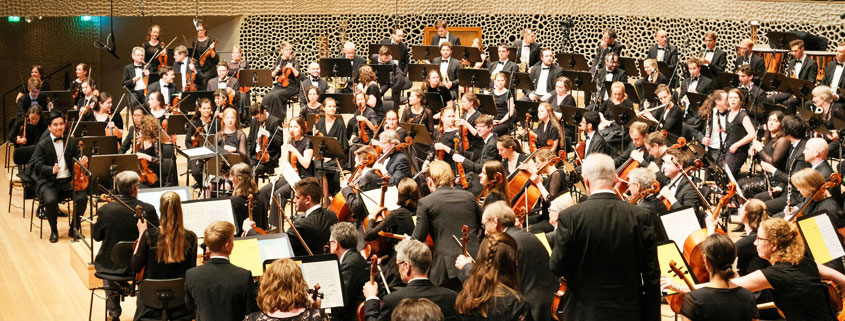
Silence used to be obvious. In a concert hall, it had weight, you could feel it settle when the conductor lifted their hands, or when an audience collectively realized it had been holding its breath. In recorded music, silence has been treated more like an inconvenience, a gap to be filled, a dead zone that might invite the listener to skip, drift, or doubt the value of what comes next. Yet silence is not the absence of music. In many of the most affecting recordings ever made, silence is one of the primary instruments, shaping emotion, tension, intimacy, and even truth.
The modern listener is surrounded by sound. Music in stores, music in cars, music in headphones while walking, music beneath social media videos, music used as a functional layer to soften life. In this environment, silence starts to feel unfamiliar, even suspicious. A pause can feel like an error. A space between notes can feel like a mistake. This is part of why contemporary production often compresses the dynamic range, thickens the midrange, and fills the frame, so that nothing drops below a certain perceived intensity. It is also why the recordings that still dare to let silence exist can feel almost shocking. They can feel like someone turned on the lights in a room that had been kept dim on purpose. Silence in music is not only a compositional choice. It is a cultural statement about what we allow ourselves to feel, and what we are trying to avoid.
Silence Is Where Musical Meaning Becomes Legible
A note does not mean much without its edges. In language, meaning emerges not only from words but from the timing between them, the hesitation, the breath before a confession, the pause that signals a thought too heavy to rush. Music functions similarly. The spacing between sounds determines how they land. A melody delivered without room to resonate can feel decorative. The same melody, given space, can feel like a message.
In recordings, silence often performs three jobs at once. It clarifies structure, separating phrases so the listener can perceive shape. It intensifies emotion, allowing anticipation to build. It creates realism, because real rooms contain quiet, and real human performance contains breath, movement, and micro hesitation. When those elements are erased, the track can sound perfect and still feel oddly absent of life.
This is one of the paradoxes of modern production. Technical polish can remove the very cues that the nervous system uses to interpret sincerity. Silence can reintroduce those cues. It reminds the listener that something is happening in real time, even inside a recording, that a person is present, making decisions, living through the performance rather than merely executing it.
Why the Ear Craves Contrast and the Brain Craves Relief
The human auditory system is built to detect change. It notices differences, not constants. A sustained wall of sound becomes background. A moment of quiet resets attention. This is not just a preference, it is a biological function. The brain treats novelty and contrast as information. Silence is one of the most powerful contrasts because it changes the entire field, not just a frequency band.
This is why a well placed pause can feel like a door opening. It gives the listener a place to stand. It provides relief, which makes the next sound feel more vivid. Without relief, intensity becomes monotone. This is true even in aggressive music. A heavy breakdown lands harder after a sudden drop. A chorus feels larger after a restrained verse. A whisper can feel more intimate after a quiet room has been established around it.
Silence also reduces cognitive load. When a track is dense at every moment, the listener is forced to process continuous information. That can be exhilarating for a short period, but it can also become fatiguing. The listener may not consciously know why they feel tired, but their nervous system does. Silence offers recovery inside the song itself, not as a break from music, but as an element within music.
The Loudness War and the Disappearance of Breath
For decades, commercial music has been shaped by a competition that is not about melody or harmony. It is about apparent loudness. The so called loudness war pushed many releases toward heavy compression and limiting, reducing dynamic range so that quiet parts are not truly quiet and loud parts are not truly loud. Everything sits near the ceiling. The track feels immediately forceful, and in certain contexts that can be useful. In other contexts it becomes a form of emotional flattening.
When dynamic range is reduced, silence becomes difficult to include because the entire aesthetic is built on continuous presence. Quiet moments can feel awkward if the rest of the track is constantly inflated. Engineers sometimes fill these moments with noise, reverb tails, background pads, or subtle percussion so that the listener never experiences a true drop. The intention is often to maintain engagement. The cost is that the music loses its lungs.
A recording with lungs can inhale and exhale. It can move between states. It can surprise. It can create intimacy, then expansion. It can make the listener lean in. When every second is packed, the listener never leans. They are pushed constantly, and eventually they tune out. Silence is not only an aesthetic choice. It is the mechanism by which a record can breathe.
Silence as Emotional Honesty in Vocal Performance
Listen closely to a great vocal take, not only the notes, but the breaths, the moments when the singer slightly delays a phrase, the tiny pause before a word that matters. These are not mistakes. They are emotional decisions. The listener’s brain reads them as cues of sincerity, vulnerability, and human presence.
In many modern recordings, breaths are edited out. Timing is tightened. Phrases are aligned to grids. Pitch is corrected. The result can be clean and impressive, but it can also feel detached. When everything is optimized, the performance can lose the feeling that something is at stake. Silence is part of what makes stakes audible. It signals that the performer is not rushing past feeling.
This does not mean every breath must be left in, or that editing is inherently bad. It means that the removal of silence can remove the emotional contour of a performance. A singer who pauses for a fraction of a second is telling the listener that a thought is forming. A singer who takes a breath audibly is telling the listener that the body is involved. These cues are powerful because they are pre verbal. You cannot argue with them. You feel them. In the most affecting recordings, silence around the voice is treated as part of the message. The room tone, the distance, the quiet between lines, all of it shapes how the words land.
The Studio as a Place Where Silence Can Be Manufactured or Discovered
Silence in recording is rarely pure. Even in a quiet room, there is air movement, electrical noise, the subtle hum of equipment. Engineers often chase a certain kind of silence, not absolute absence of sound, but controlled quiet that allows desired sounds to emerge.
There is a difference between manufactured silence and discovered silence. Manufactured silence is created by gating, noise reduction, aggressive editing. It removes background so thoroughly that the track feels surgically clean. Discovered silence is what happens when the engineer listens for the natural quiet of a space and decides to preserve it. It may include room tone, the faint sound of fingers on strings, a chair creak. These artifacts can make the silence feel alive.
The choice between these approaches is not purely technical. It reflects a philosophy about what a recording should be. Should it be an idealized version of performance, polished to remove reality, or should it be a document that retains traces of the world? Many listeners cannot articulate this distinction, but they can feel it. They can sense when a track feels sterile, and they can sense when it feels inhabited.
Silence is where that philosophy becomes audible. If silence is treated as something to erase, the recording becomes less like a moment and more like a product. If silence is treated as part of the moment, the recording becomes closer to a human encounter.
The Power of Negative Space in Arrangement
Arrangement is often discussed in terms of what you add, instruments, layers, harmonies, counter melodies. The most decisive arrangers understand that subtraction is often the more advanced move. Negative space is the art of leaving room so that each element can speak.
A crowded arrangement can feel impressive, but it can also feel indistinct. When too many parts compete, the listener’s brain cannot decide what to follow. Silence solves this by creating hierarchy. It tells the listener, this is the main thing now. It clears the stage.
This is one reason great grooves feel so satisfying. The space between hits is as important as the hits themselves. In funk, the pocket is partly made by what is not played. In jazz, the swing breathes because not every subdivision is filled. In hip hop, a sparse beat can feel heavier because the silence amplifies the kick and snare. In minimal electronic music, repetition gains hypnotic power because small changes occur against a quiet background. Negative space also creates tension. When an expected sound does not arrive, the listener anticipates it. That anticipation is energy. A good arranger uses that energy deliberately, not by constantly filling, but by making the listener wait.
Silence and Rhythm, The Hidden Relationship
Rhythm is not simply timing. It is expectation and deviation. Silence plays a central role because silence is often where expectation lives. The beat is felt not only in the hits, but in the spaces that imply the hits.
In many traditions, silence is rhythmic vocabulary. A rest is not nothing. It is a counted event. In classical notation, rests have precise durations because they are part of the structure. In improvised music, silence can function as a conversational gesture. A musician pauses to let someone else answer. A drummer drops out to create suspense. A band stops together to create impact, then returns with force.
In recorded music, rhythmic silence can be enhanced or destroyed by editing. If everything is quantized too tightly, the silence becomes mechanical. If timing is allowed to breathe, the silence becomes expressive. A slightly late entrance can feel like longing. A slightly early entrance can feel like urgency. These micro timing choices live in the spaces between notes. Silence is where groove becomes personality.
The Listener’s Role, How Silence Invites Participation
One of the most profound aspects of silence is that it changes what the listener must do. When a track is constantly full, the listener can remain passive. The sound carries them. When silence appears, the listener becomes involved. They lean in. They fill the space with attention. They bring their own emotion into the gap.
This is why silence can feel intimate. It makes the listener feel addressed rather than entertained. It is also why silence can feel uncomfortable. It does not distract. It invites presence. In a culture that often uses music as a tool to avoid feelings, silence can be perceived as threatening because it reduces the ability to hide.
Some of the most enduring recordings understand this. They do not treat the listener as a consumer to be kept stimulated. They treat the listener as a participant. Silence becomes a doorway, a moment where the track says, now you are here with me, not just hearing me.
This participatory effect is one reason live recordings can feel so powerful. You hear the audience quiet down. You hear the room hold. That shared silence creates a communal tension that studio recordings often lack. Yet studio recordings can create their own form of participatory silence if the production is designed with that in mind.
Silence as a Marker of Power and Confidence
In public speaking, confident speakers use pauses. They do not rush to fill every gap. They let their words land. Music operates with the same psychology. A composer or producer who allows silence is demonstrating confidence that the listener will stay. They are not afraid of losing attention. They are willing to risk quiet.
This confidence can be heard across genres. In classical works, silence can create grandeur. In singer songwriter recordings, silence can create honesty. In heavy music, silence can create menace. In electronic music, silence can create anticipation. In experimental music, silence can become the material itself.
The fear of silence often reveals insecurity. It suggests the creator believes the music cannot hold the listener without constant reinforcement. In some commercial contexts, that fear is encouraged by platform incentives. But the records that people return to over years are often the ones that trust the listener’s patience. Silence is often the signature of mature taste.
Room Tone, Tape Hiss, and the Myth of Clean Sound
Many people assume that cleaner is better. Yet some of the most beloved recordings include noise, tape hiss, room tone, hum, the faint sound of space. These elements provide context. They tell the ear, this is a place, not a vacuum.
Room tone is especially important because it makes edits invisible. When a vocal is comped from multiple takes, room tone helps stitch the pieces. When room tone is removed entirely, edits become abrupt. The track may feel disjointed even if the performance is strong. Engineers sometimes add artificial ambience to compensate, but artificial ambience can sound generic. Real room tone has character.
Tape hiss, once considered a flaw, has been re embraced by some producers because it creates continuity. It provides a gentle bed that makes silence feel less like a digital cut and more like a living environment. This is not nostalgia for its own sake. It is an acknowledgment that the ear interprets context as authenticity. Silence in recorded music is rarely silence. It is the sound of a room existing.
Silence as Narrative, When the Song Tells a Story Without Words
Some songs use silence as plot. The pause becomes a turning point. The dropout becomes the moment of realization. The space after a lyric becomes the weight of what was said. This narrative silence is especially powerful when the content is emotionally heavy. It prevents the song from rushing past its own truth.
In songwriting, many of the most haunting lines are followed by a moment where nothing happens. That nothing is the listener’s reaction time. It is where the line becomes personal. If the music continues immediately with new information, the previous line can be lost. Silence allows the song to trust its own meaning.
In instrumental music, narrative silence can indicate transition. A piece can move from one emotional landscape to another through a pause. The pause acts like a cut in film. It resets the viewer’s orientation. It prepares the ear for a new world. In this sense, silence is editing. It is pacing. It is the difference between a story that unfolds and a story that merely dumps events.
The Risk of Silence in the Streaming Era
The streaming era has changed how music is consumed. Many listeners discover music through playlists, algorithms, and rapid sampling. Tracks are often judged in the first seconds. If a song begins with too much quiet, it may be skipped. Producers and labels know this, and it influences arrangement choices. Intros become shorter. Hooks arrive earlier. Silence is treated as dangerous.
This creates a tension between art and platform. Silence, which often requires patience, is less compatible with an environment that rewards immediate engagement. The result is a subtle cultural shift toward constant stimulation.
Yet there is also a counter movement. Some listeners crave relief from overstimulation. They seek music that creates space. They seek recordings that allow them to breathe. In that context, silence becomes a differentiator. It signals that the track is not designed solely for algorithmic success. It signals that the music is willing to be experienced rather than skimmed. Silence may be risky in the streaming era, but risk is often where lasting art lives.
How Musicians Learn to Use Silence, and Why It Takes Time
Using silence well is not intuitive for many musicians. Beginners often fill space because they fear emptiness. They equate activity with value. This is understandable. Silence requires trust, trust in the groove, trust in the melody, trust in the listener, trust in yourself.
Experienced musicians learn that silence can say more than extra notes. They learn to phrase. They learn to leave room for others. They learn that impact is often created by restraint. This is especially visible in ensemble playing. A band that plays constantly can sound busy. A band that leaves space can sound powerful. The power comes from coordination and confidence, not from volume of notes.
In recording, this lesson becomes even sharper. The microphone hears everything. If you play too much, the track becomes cluttered. The space you thought you were filling becomes noise. A mature musician learns to ask a different question, not what can I add, but what can I remove so the main idea becomes unmistakable. Silence is one of the final skills because it requires ego control. It requires accepting that you do not need to prove yourself every second.
The Future of Silence, What Happens When Music Learns to Breathe Again
As technology advances, the capacity to manipulate sound becomes almost infinite. Engineers can edit every breath, align every transient, remove every imperfection. This power can be used to create extraordinary clarity. It can also be used to erase the human element that makes music feel necessary.
Silence is one of the simplest antidotes because it cannot be faked easily. You can simulate reverb, saturation, and warmth, but you cannot simulate what silence does to a listener’s attention without actually giving them space. Silence changes the listener’s posture. It changes their breathing. It changes how they receive sound.
If the future of music is only about more, more volume, more density, more constant stimulation, then the listener’s inner life will continue to thin, and music will become another form of noise. If the future includes a return to space, then recordings may become places again, not just products, places where the listener can step inside and feel time slow down. Silence is not nostalgia. It is a reminder that music is not only sound. It is the shaping of attention. It is the creation of meaning through contrast. It is the courage to let a moment exist without immediately filling it.

