
Most people arrive in a new city the way they arrive at a website. Eyes forward, scanning for the obvious, collecting highlights, clicking through neighborhoods as if they were tabs. Sound is treated as background, an unwanted tax on attention, something to escape with noise canceling and closed windows. Then, without warning, a place slips into the body through the ears and refuses to leave. A late train’s metallic cough under an old viaduct. The particular softness of footsteps on stone worn concave by centuries of rain. The way a harbor breathes at night, ropes tapping masts in irregular little arguments. Long after the photos blur together, the sound remains intact, almost embarrassingly precise.
Sound is travel’s forgotten evidence. It is the part of a trip that cannot be fully staged, cannot be flattened into a postcard, cannot be edited into the same shade of blue. It reaches you whether you are ready or not, and it carries information the eyes routinely miss. It tells you what a neighborhood values, what it fears, how it works, how it rests, how it sells, how it celebrates. If you learn to listen on purpose, travel stops being a scavenger hunt and becomes something stranger and richer: a lesson in how environments shape minds.
The Soundscape Is the True Map
Every place has a soundscape, a living mixture of signals, habits, machines, weather, architecture, and human rhythm. You can think of it as an invisible map that your body reads automatically. In an unfamiliar setting, the nervous system listens harder because sound is often the first hint of danger or belonging. The brain does not wait for translation. It categorizes. It predicts. It calibrates. That is why you can step off a plane and feel alert or drained before anything “happens.” Your ears have already informed your physiology.
The soundscape also reveals the working truth of a place, not the brochure version. A district marketed as historic might sound like an active construction zone, full of jackhammers and reversing trucks, which tells you a different story about what is being preserved. A beach destination might be acoustically dominated by generators and leaf blowers, which says something about labor that tourists rarely acknowledge. A supposedly quiet mountain town might produce a constant drone from traffic climbing grades, a reminder that “nature” and infrastructure are braided.
People often confuse “quiet” with “authentic.” In reality, authenticity has a texture, and that texture is frequently noisy. Markets, workshops, harbors, bus stations, schools at dismissal, religious processions, evening promenades, all produce a social hum that signals community. Silence can be beautiful, but it can also be a kind of erasure, the quiet that arrives when a neighborhood has been hollowed out by second homes, short term rentals, or economic flight. Listening makes these dynamics harder to ignore.
Vision Lies Easily, Sound Lies Differently
A photograph can be framed to exclude what is inconvenient. You can cut out the trash bins, the security gate, the line of tourists, the police barriers. Even video, which feels honest, is still a choice about angle and duration. Sound is more stubborn. It pours over the edges of your intention. It reveals what is happening behind you. It reveals what is happening above you. It reveals the presence of people you cannot see.
Sound also carries emotion in a way images rarely match. The same street can look charming in daylight and feel threatening at night. Often the difference is not visual, it is auditory. The ratio of voices to footsteps, the frequency of engines, the distance between sounds, the way laughter carries or doesn’t. A place that feels hospitable often has a layered social soundtrack, multiple small interactions occurring without tension. A place that feels brittle often sounds sparse, with sudden sharp noises and fewer human cues to soften them.
This is why seasoned travelers sometimes seem to possess an instinct that looks mystical. It is not mysticism. It is pattern recognition. They have learned to trust what the ears report. They notice when a train platform goes quiet in an unnatural way. They notice when a crowd’s tone changes. They notice when the usual public soundtrack is missing. Their bodies register changes before their minds form explanations. Listening becomes a safety skill, but it is also a cultural skill, because it teaches you that every community has its own audible language of comfort and boundary.
Airports and the First Act of Listening
The first sound you hear in a new country is rarely the charming one. It is often the procedural noise of travel itself, announcements, rolling luggage, ventilation, the synthetic cheer of duty free. Many travelers treat this as dead time. Yet even airports contain clues. The cadence of announcements, whether they are stern or gentle, whether multiple languages are used, how people queue, how staff speak to each other, the presence of music or its absence. These details are not trivial. They are early indicators of a society’s relationship to order, privacy, and public space.
The same is true of the route from the airport into the city. A taxi ride can sound like a private studio, quiet and sealed. A train ride can sound like the actual social world, full of phones, conversations, silence, laughter, fatigue. If you take that ride with open attention, you begin to feel how sound is distributed, who is allowed to be loud, who chooses quiet, and what the baseline level of public noise suggests about stress and politeness.
Even a small act, removing your headphones for the first hour in a new place, changes your orientation. You may feel exposed at first. That feeling is data. It means you have been using audio insulation as a default, which is understandable in modern life, but it also means you have been traveling partly deaf. The first hour without that insulation can be disorienting, then clarifying. The place begins to feel less like a set of images and more like an environment with depth.
Architecture Is an Instrument You Walk Through
Cities are not silent containers for human activity. They are acoustic machines. Materials shape reverberation. Narrow streets amplify footsteps and conversation. Open squares let sound dissipate. Trees absorb high frequencies. Stone and tile reflect. Water softens. Traffic creates an audible ceiling that compresses everything beneath it.
If you want to understand a city, notice how sound behaves in different spaces. In some old quarters, voices bounce between walls in a way that makes quiet conversation carry farther than you expect. In certain modern districts, glass and concrete create a harsh brightness, a sensation that the air itself is hard. In cities with extensive canopies, sound can feel muffled, as if wrapped in cloth, even when there is plenty of activity.
This matters because acoustics influence behavior. In a reverberant alley, people may speak more softly, knowing their voices travel. In a loud boulevard, people may shout, then grow exhausted, then avoid public conversation altogether. In a quiet neighborhood, the arrival of a single motorbike can feel intrusive, producing social pressure toward calm. In a constant roar, there is less incentive to protect quiet, because quiet has already been lost.
Travelers often attribute differences in “vibe” to culture alone. Culture is real, but architecture conducts it. A city that sounds gentle invites gentler interaction. A city that sounds aggressive can harden people, not because they are inherently harsher, but because their environment demands constant auditory effort. Listening helps you separate personality from pressure.
The Ethics of Recording and the Trap of Capturing Everything
Once you start listening, the temptation is to document. Phones make it easy to collect audio the way we collect photos. Yet sound recording raises ethical issues that are more intimate than photography. A recorded voice can expose identity. A snippet of conversation can become a betrayal. A ritual can be flattened into content, removed from context, then spread without consent.
If you record, do it with restraint. Ask yourself what you are taking, and why. Some sound is public, the general murmur of a crowd, the distant bell, the subway’s rhythm. Some sound is personal, a vendor’s voice, a family’s argument, a child’s laughter. The line is not always clear, but your intent matters. Recording for private memory is different from recording for display. When audio becomes a souvenir meant for social media, it can turn living people into scenery.
There is another trap. The urge to capture can prevent you from hearing. The moment you hold up the phone, you shift from participant to collector. The ear becomes a microphone. You begin to judge the sound for how it will play back, not for how it feels. Travel becomes extraction. Listening becomes consumption. The richest moments of a soundscape are often unrecordable anyway, because they rely on spatial depth, on temperature, on the way multiple sources overlap. A recording is a flat shadow of a three dimensional experience.
A better practice is to keep a sound journal in words. Describe what you heard with as much specificity as possible. Describe the pitch, the distance, the rhythm, the way it made you feel. Words are imperfect, but they force attention. They also avoid the ethics of capturing strangers. Over time, your descriptions become a personal archive that is more revealing than audio files, because it records what your mind noticed, not just what a device captured.
Restaurants, Cafes, and the Politics of Volume
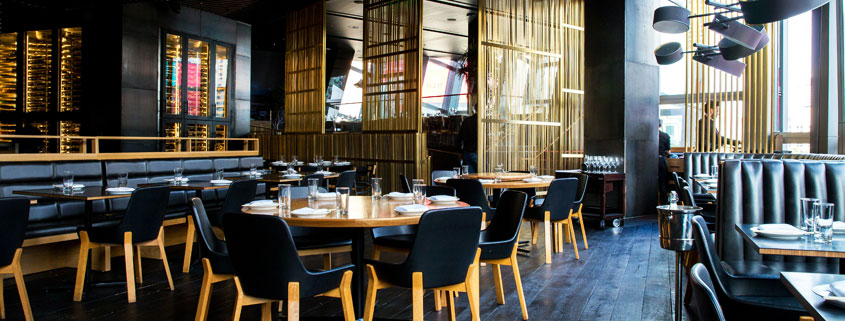
Food travel is often framed as taste. Yet the sonic character of eating tells you as much as flavor does. The clatter of plates, the distance between tables, the presence of music, the pace of service, the density of conversation. These elements shape how people relate to one another.
In some cultures, restaurants are loud because sociability is expected. Conversation is not meant to be private, it is meant to be shared, and the room becomes a collective performance. In other places, restaurants are quieter because intimacy is valued, or because the design protects privacy. Sometimes the volume is not cultural but economic. Loud rooms turn tables faster. Music can mask awkwardness and encourage spending. Acoustically harsh spaces are cheaper to build.
Notice also who is allowed to be loud. In some settings, children’s voices are welcomed as part of life. In others, children are managed quickly, and the room’s quiet is guarded. Notice whether staff speak softly or loudly, whether they use formal tones or casual ones, whether the kitchen is exposed or hidden behind walls that contain its sound. These choices reveal a society’s hierarchy, and also its sense of what hospitality means. Hospitality can mean lively inclusion, or it can mean controlled comfort. You can hear the difference.
Transit as a Daily Soundtrack
Tourists often take transit as a practical tool, but transit is one of the best classrooms for hearing a place. It contains every layer of society, compressed into a moving room. It also reveals how public systems are maintained. A subway that squeals unbearably might indicate aging infrastructure. A bus system that is quiet and smooth suggests investment. A train platform that plays gentle chimes may signal a concern for stress reduction, or it may be a tool for crowd control. Even the sounds of ticket machines and turnstiles, their harshness or softness, reflect design priorities.
Transit also teaches you about social boundaries. Are phone calls common, or considered rude? Do people play audio out loud? Does music leak from headphones? Do strangers speak? Are announcements frequent, or minimal? Is silence the norm, or is conversation? These patterns are not just cultural quirks. They reflect density, safety, trust, and the sense of shared space.
The most revealing moments often occur at transitions: the station exit, the bus stop at dusk, the ferry terminal. You can hear the shift from controlled environment to street life. You can hear whether the street welcomes you with human voices or overwhelms you with engines. You can hear whether the night belongs to nightlife, to families, to workers, to emptiness.
Nature Travel and the Myth of Pure Quiet
Many travelers seek nature as an escape from noise. They imagine wilderness as silence. Yet true silence is rare, and most natural environments have complex soundscapes that are easily missed if you are only listening for absence.
Forests contain layered frequencies, insects, birds, wind, branches moving, distant water. Deserts have their own acoustic signatures, shifting sand, sudden gusts, the thinness of air that changes how distance feels. Coastal environments are constantly rhythmic, waves, pebble movement, wind, the occasional sharp sound of seabirds. Mountains have an uncanny ability to amplify distant noises, a far off dog bark traveling across valleys, a rockfall echoing, the hum of a road you cannot see.
Listening in nature also reveals human impact. The distant drone of aircraft, the far reach of highways, the periodic interruption of recreational engines. You begin to realize that “untouched” is often a marketing term. Nature travel becomes less about escaping humanity and more about learning where humanity ends, where it intrudes, and how even small mechanical sounds can dominate large landscapes.
This awareness can deepen respect. It can also create discomfort, because it forces you to confront how rare acoustic refuge has become. For some travelers, this becomes the beginning of environmental sensitivity. Noise is not only annoyance. It is ecological pressure. It affects animal behavior and human stress. A travel experience that teaches you this does something more valuable than entertain. It reshapes what you notice at home.
Sound and the Body, Why Some Trips Exhaust You
Travel fatigue is often blamed on logistics, long flights, time zones, unfamiliar beds. These are real, but sound is an overlooked contributor. Constant noise is not just a sensory detail, it is physiological work. The brain expends energy filtering. The heart rate can rise subtly. Cortisol can stay elevated. Sleep becomes lighter, not only because of new surroundings, but because the ear stays vigilant.
This is why some destinations feel strangely draining even when the itinerary is relaxed. If the room is exposed to traffic, if the walls are thin, if the neighborhood is loud late into the night, you can lose restorative depth without realizing it. The next day feels cloudy. You attribute it to travel itself. In reality, you have been acoustically taxed.
Experienced travelers sometimes develop strategies that look like luxury but are actually health preservation. Choosing a room that faces an interior courtyard, not a road. Using simple earplugs, not as a constant barrier, but as a tool for sleep. Taking breaks in quieter spaces such as libraries, parks, museums, or even churches, places designed to hold sound differently. This is not about avoiding the life of a city. It is about pacing exposure so that listening remains a pleasure rather than a burden.
There is also a difference between noise and richness. A place can be loud but meaningful, full of human texture. A place can also be loud in a way that feels pointless, dominated by machines. Learning to distinguish those kinds of loudness can help you choose where to linger and where to retreat.
Learning the Local Sound Etiquette
Travel advice often focuses on visual etiquette, what to wear, where to stand, how to tip. Sound etiquette is just as important, and it is where many travelers become unintentionally disruptive. The volume of speech, the use of speakerphone, the expectation of privacy, the acceptable time for noise, these vary widely.
In some places, public voice carries a sense of confidence. Speaking loudly is normal and not aggressive. In others, loud voices read as invasion. Some cultures accept music in public spaces as communal enjoyment. Others treat it as disrespect. The line can shift not only by country but by neighborhood. A nightlife district has different norms than a residential one. A market has different norms than a museum.
Listening gives you a shortcut to this etiquette. If people speak softly on a train, do not be the loud foreigner. If a café is filled with conversation, do not treat it like a library. If a religious site has a hushed soundscape, adjust your presence accordingly. When you match the sound level of a space, you reduce friction and increase your chances of being welcomed.
This is also a way to travel without dominating. Many tourists unintentionally impose themselves by being louder than everyone around them, not out of arrogance, but out of habit. Habits formed in one environment become rude in another. The simplest remedy is attention. The ear can teach humility faster than any guidebook.
Finding the City’s Daily Rhythm Through Sound
Every city has a daily rhythm that can be heard. Morning begins with certain sounds, deliveries, shutters, coffee machines, school gates, early traffic. Midday has its own intensity, commerce and transit. Afternoon softens in some cultures, hardens in others. Evening reveals whether public space belongs to strolling, dining, or retreat. Late night reveals whether a city dissipates or intensifies.
Travelers who only chase sights can miss this rhythm. They can visit famous places and still not feel they understand the city. Listening to the rhythm is a way of belonging without pretending to be a local. You begin to anticipate the mood of certain hours. You know when streets will be lively. You know when certain neighborhoods will quiet down. You know when a plaza will fill with families, when a waterfront will become contemplative, when a market will shift from selling to cleaning.
This auditory rhythm can also guide you toward experiences you would not plan. If you hear a burst of music in the distance, you might follow it and discover a neighborhood festival. If you hear a particular call from vendors, you might realize a market is beginning. If you hear chanting, bells, or a procession, you might witness a ritual that is not in any itinerary. The ear can be a compass that points toward real life rather than curated highlights.
Travel as Listening Practice Changes How You Return Home
The most surprising outcome of sound based travel is not what it gives you abroad. It is what it gives you when you come back. After you have learned to hear places, your own environment becomes more legible. You notice the constant hum you had tuned out. You notice how certain streets make you tense. You notice which rooms feel restorative. You notice how your city changes by season, not only visually, but acoustically, the different pitch of winter, the density of summer, the way rain reshapes everything.
This can be unsettling. It can also be empowering. If you can hear the sources of stress, you can sometimes change them. You can seek quieter routes. You can create acoustic comfort in your home. You can recognize when you are overstimulated and need refuge. Travel becomes not a temporary escape but a training ground for attention.
It also changes what you value in future trips. You may begin to choose lodging not only by location but by sound exposure. You may choose neighborhoods with human texture rather than mechanical roar. You may seek spaces that have acoustic character, courtyards, arcades, libraries, old theaters, markets at dawn. You may stop treating sound as inconvenience and start treating it as the signature of place.
If travel is meant to expand perception, listening is one of the most direct ways to do it. It asks you to surrender a little control. It asks you to accept that you cannot curate everything. It asks you to be present in an environment that continues to exist whether you like it or not. That is the point. A place does not need your approval. It needs your attention. When you learn to hear it, you stop collecting destinations and start encountering worlds.

