
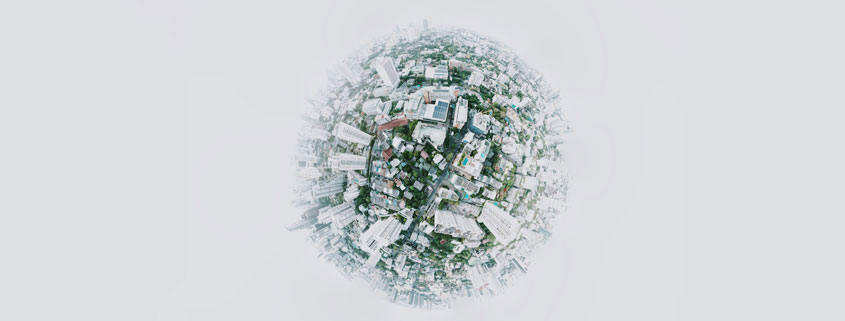
There is a particular kind of discovery that feels almost rude, the moment you realize the world has been happening without you, perfectly content in your absence. A city keeps its own schedule. A coastline reshapes itself overnight. A forest floor runs a silent economy of decay and renewal. Even the objects inside your own home live lives you rarely notice, the slow shifting of wood, the dust that settles like weather, the small wear patterns that record your habits more honestly than your memory. We often treat discovery as a heroic act, as if the universe were waiting to be revealed. In practice, the most profound discoveries are often humiliating in the best way. They reveal that the world is not incomplete until you arrive. It was complete all along.
That realization can feel like relief, and it can also feel like loss. Relief because it dissolves the pressure to perform importance at every moment. Loss because it punctures the fantasy that you are the center of your own story in the way you imagined. Discovery, at its deepest level, is not collecting facts. It is a reorientation of scale. It changes what you think a life is for.
The category of “discover” sounds clean, like a cheerful invitation to explore. Yet the experience of genuine discovery rarely feels tidy. It can unmake certainty. It can force you to admit how narrow your routines have become, how quickly you accept the familiar as the whole. The mind prefers stability, and modern life makes stability easy. We learn to live inside a set of controlled exposures, the same streets, the same screens, the same range of people and information. We call that living. Then something interrupts it. A book opens a window. A conversation reveals a hidden map. A place changes your sense of time. You realize the world you inhabit is not the world, it is a small negotiated settlement with reality.
Discovery Is Not Motion, It Is Contact
Many people confuse discovery with movement. They assume you must travel, change jobs, relocate, find a new hobby, collect new experiences, and keep the calendar full. Movement can help, but it can also be an elaborate way to avoid contact. You can cross oceans and remain psychologically sealed. You can take photographs of everything and see nothing. You can visit a museum and never meet the art, because your attention is already committed to the idea of being someone who visits museums.
Contact is different. Contact is what happens when you allow something outside your preferences to have consequences inside your perception. It is not simply learning that a thing exists. It is allowing that existence to alter your internal arrangements.
Contact often requires slowness. The mind needs time to register detail, to compare, to question its first reaction. The faster you move, the more you rely on assumptions. Assumptions are efficient and deadly to discovery. They allow you to navigate without paying. True discovery is expensive. It charges you attention, patience, and humility.
There is also a moral dimension to contact. When you truly meet something unfamiliar, you cannot easily turn it into a prop. You cannot reduce it to a souvenir. You must acknowledge its autonomy. That might be a landscape, a person, a culture, a body of knowledge, or even an inner experience you have avoided naming. Contact insists that what you meet is not obligated to fit your story.
This is why the most meaningful discoveries often happen in places you did not plan. The planned itinerary tends to preserve the ego. It selects experiences that confirm the traveler’s expectations. Unplanned contact destabilizes, and that destabilization is the point. Discovery is not entertainment. It is transformation, sometimes gentle, sometimes disruptive.
The Hidden Cost of Familiarity
Familiarity is not the enemy. It is one of the ways humans survive. We learn patterns so we do not have to re-evaluate everything constantly. Yet familiarity has a shadow. When it becomes total, it turns the world into a closed system. You stop noticing. Your attention becomes a loop.
The greatest danger is not boredom. It is the narrowing of perception that masquerades as competence. People often feel confident in their routines because routines reduce friction. They can predict outcomes. They can manage their environment. Over time, that predictability becomes a definition of what life should feel like. Anything that interrupts it is interpreted as stress rather than information. The person begins to avoid discovery without realizing it. They avoid it by choosing environments that minimize surprise.
This is one reason modern life can feel simultaneously comfortable and claustrophobic. The systems around us are designed to remove unpredictability, from recommendation engines that pre-select taste to navigation tools that eliminate getting lost. We celebrate this as convenience, and it is convenient. It also means the mind is rarely forced into genuine orientation. It rarely has to ask, “Where am I, really?” It rarely has to listen.
Discovery begins when the mind encounters a mismatch between expectation and reality and chooses curiosity over defense. That sounds abstract, but it appears in daily life. A person hears a piece of music that does not resolve the way they want and feels irritation, then decides to listen again rather than dismiss it. A reader encounters an argument that threatens their identity and chooses to examine it rather than mock it. A traveler enters a neighborhood that does not cater to them and chooses to observe rather than judge. A gardener notices a plant failing and chooses to learn the plant’s needs rather than impose their own.
Each of these moments is a small rebellion against the tyranny of the familiar.
The Art of Getting Lost Without Performing It
Getting lost has become fashionable, which is unfortunate, because fashion often strips a concept of its seriousness. In the popular imagination, getting lost is aesthetic. It is wandering with good lighting and an open schedule. Real getting lost is not always pleasant. It can produce anxiety, embarrassment, even fear. It reveals how dependent we are on control.
Yet getting lost remains one of the most reliable engines of discovery, precisely because it disrupts the automatic mind. When you are lost, your senses sharpen. You begin to scan. You notice signs. You pay attention to the texture of streets, the angles of buildings, the direction of light. You become present, not because you have mastered mindfulness, but because the environment demands it.
There is a psychological equivalent. You can get lost in a new discipline, a new language, a new genre of thought. That kind of lostness is cognitively uncomfortable. You cannot rely on expertise. You feel slow. You feel exposed. Many people avoid this sensation because it threatens their self-image. They prefer to remain competent rather than become curious.
The serious practice of discovery requires a willingness to look ignorant. It requires the humility to be a beginner again, not as a performance, but as a condition you accept. Beginners are not romantic figures. They are people who fail repeatedly in public and keep going. They ask naive questions. They misunderstand. They waste time. They also see the world with fewer filters.
In adulthood, we often treat beginnerhood as a temporary phase to rush through. The discovery-minded person treats it as a recurring home. They return to it intentionally, because they know competence can become a cage.
Discovery in the Small: The Infinite Nearby
It is easy to imagine discovery as something that requires faraway places, rare experiences, or specialized access. This belief flatters the idea that discovery is exclusive. It also creates an excuse. If discovery requires extraordinary circumstances, then ordinary life can be lived without curiosity. That is a quiet tragedy.
The truth is harsher and more hopeful. The nearby world is infinite. The problem is not lack of material. The problem is attention.
Consider the geography of your immediate environment. Most people could not name the trees on their street. They could not identify the birds they hear. They do not know where their water comes from, where their trash goes, how their electricity is produced, how the history of their neighborhood shaped the architecture they pass daily. These are not obscure facts. They are the basic structures of reality that we ignore because we can.
The same applies to the human environment. Many people do not know the stories of the people they work with. They do not know what their elders experienced. They do not know the invisible labor that keeps their city running. They do not know the histories embedded in the names of places. They do not know what their friends fear but do not say. They do not know what they themselves believe until something challenges it.
Discovery is often an act of looking where you have already looked, but with a different question. It is taking the ordinary and treating it as layered rather than flat. That shift is not sentimental. It is investigative. It requires you to accept that you have been living alongside complexity without noticing it, and that your ignorance is not a moral failure but an invitation.
When you begin practicing discovery in the small, the world becomes less like a stage and more like a living system. The grocery store becomes a map of global logistics and agricultural decisions. The sidewalk becomes a narrative of weather, maintenance budgets, and time. The body becomes a daily experiment in energy, rhythm, and adaptation.
The world does not become magical. It becomes real, which is better.
The Interior Frontier and Why It Is Harder Than Travel
External discovery is often easier than internal discovery, because external discoveries can be narrated. You can tell people where you went, what you saw, what you ate. You can turn it into a story with a beginning and an end. Internal discovery is less cooperative. It does not fit neatly into posts. It can be slow, ambiguous, and sometimes uncomfortable.
Internal discovery begins when you stop assuming you know yourself. Most adults carry a stable identity that is useful for social life. They know what they like, what they dislike, what they believe, what they do. That identity is partly real and partly defensive. It helps them navigate the world without constant re-evaluation. It also hides parts of the self that do not fit the narrative.
Discovery is what happens when you encounter those hidden parts and refuse to pretend they are not there. A person discovers that their ambition was not chosen but inherited. They discover that their relationship patterns repeat an old wound. They discover that their anger covers grief. They discover that their generosity is sometimes a way to control. They discover that their taste is more conventional than they imagined. They discover that they want a different life than the one they built.
These discoveries can feel destabilizing. They can also be liberating, because they return you to agency. You cannot choose what you refuse to see. You can only choose what you admit.
Internal discovery is also connected to creativity. Many creative blocks are not technical. They are psychological. They come from the fear of what will be revealed if you make the work you truly want to make. The work might expose an unpopular belief. It might show longing. It might reveal tenderness. It might display confusion rather than mastery. The creator senses this and unconsciously retreats into safer output, work that is competent but emotionally protected.
To discover oneself is not to achieve self-knowledge as a trophy. It is to become more honest about what is actually happening inside. That honesty makes external discovery richer too, because your attention becomes less defensive. You can see more because you need to protect less.
The Role of Difficulty and the Myth of Effortless Exploration
A culture that sells discovery often sells it as ease. The imagery is light. The language is smooth. The promise is that discovery will feel like liberation without cost. Real discovery is not always pleasant, and difficulty is often a signal that something is being learned.
Difficulty can appear as cognitive strain, the feeling of reading something challenging and realizing your old categories are inadequate. It can appear as social discomfort, the sensation of entering a community where you are not fluent in the norms. It can appear as physical challenge, the fatigue of a long walk, the awkwardness of a new movement pattern, the adaptation to a different climate. It can appear as emotional vulnerability, the exposure that comes from asking honest questions.
In each case, difficulty is not a punishment. It is information. It tells you where your comfort has been acting as a boundary.
There is a difference between difficulty that is meaningful and difficulty that is performative. Meaningful difficulty expands capacity. Performative difficulty is chosen for status. The person does it so they can say they did it. Their attention remains on their image. Meaningful difficulty moves attention outward. It makes the environment vivid. It makes the mind responsive. It produces contact.
The most powerful discoveries often come with the feeling of being slightly overwhelmed, not by chaos, but by complexity. You realize you have been living with oversimplified maps. Your first reaction might be anxiety. If you stay with it, that anxiety can become awe. Awe is the emotional signature of discovery. It is the feeling that the world is larger than your models, and that this largeness is not a threat but an invitation.
Curiosity as Discipline, Not Personality
Curiosity is often treated as a trait. Some people are curious, others are not. This is a comforting belief because it absolves the uncurious. It turns curiosity into temperament rather than practice. In reality, curiosity behaves more like a discipline. It can be strengthened or weakened by environment and habit.
Modern environments often train curiosity out of people. They provide quick answers, pre-selected options, simplified narratives, and immediate entertainment. The mind becomes used to receiving rather than seeking. Over time, seeking begins to feel like effort. Effort begins to feel like pain. Pain begins to feel like a sign that something is wrong. This is how curiosity dies, not through censorship, but through convenience.
To practice curiosity as discipline is to tolerate not knowing. It is to resist the urge to reduce everything to a quick conclusion. It is to remain in contact with questions longer than is socially comfortable. This discipline has a social cost. Curious people can be misunderstood as indecisive or difficult. They can irritate those who want certainty. They can appear slow in a culture that prizes instant opinion.
Yet curiosity is one of the most important forms of intelligence, not because it collects information, but because it preserves openness. It keeps the mind plastic. It prevents ideology from hardening into identity. It allows a person to revise their understanding without humiliation.
The disciplined curious person develops a distinct posture toward the world. They do not treat newness as entertainment. They treat it as potential instruction. They are willing to be surprised, and surprise is the seed of discovery. Without surprise, life becomes a script.
The Ethics of Discovery and the Problem of Extractive Attention
Discovery has a shadow in the modern imagination, the tendency to treat the world as material for personal enrichment. A person goes somewhere and uses it as backdrop for self-expression. They learn about a culture and extract aesthetic elements without understanding. They enter a community and take stories without giving anything back. They treat discovery as consumption.
This is not merely a moral issue. It affects the quality of discovery itself. Extractive attention produces shallow understanding because it does not allow the discovered thing to remain complex. It reduces it to an asset.
Ethical discovery requires respect for autonomy. It requires the humility to admit that what you are encountering is not primarily there for you. It requires consent in the metaphorical sense, the willingness to be a guest rather than an owner. It requires acknowledgment of context. It requires learning the histories that make a place or practice what it is, rather than cherry-picking the parts that look attractive.
Ethical discovery also applies to personal relationships. Some people approach conversations as opportunities to harvest insight, turning friends into sources of content or emotional labor. They extract novelty. They confuse depth with disclosure. Ethical discovery in relationships respects boundaries. It understands that some knowledge is not owed to you. It values presence more than revelation.
When discovery is ethical, it becomes richer because it stops being about the discoverer. It becomes about the relationship between the self and the world. That relationship is the real prize.
The Unrepeatable Moment of First Seeing
One of the reasons discovery matters is that it changes time. The first time you truly see something, it creates a marker in your life. You can remember who you were before you saw it and who you became after. Not every discovery is dramatic. Some are quiet, and yet they reorganize everything.
The first time you hear a piece of music that alters your inner rhythm, you cannot return to the person who had never heard it. The first time you learn the true history behind a familiar narrative, you cannot unlearn it. The first time you realize your body responds to a certain kind of rest, food, movement, or environment, you cannot pretend you did not notice. The first time you witness a kind of kindness that disrupts your cynicism, you cannot fully return to cynicism.
Discovery creates irreversible changes in perception. That irreversibility is why it can be feared. If you discover something, you might be obligated to change. Many people resist discovery for that reason. They prefer the comfort of their current story. Discovery threatens the story’s stability.
Yet the opposite is also true. Without discovery, life becomes repetitive. Not because events repeat, but because the self does not evolve. The same situations produce the same reactions. The same conflicts recur. The person becomes older without becoming deeper. That is a form of stagnation that can look like stability from the outside.
The value of discovery is not novelty. It is renewal. It renews the mind’s relationship with reality, and that renewal is what makes a life feel like more than a series of days.
When Discovery Becomes a Way of Living
A discovery-minded life is not one where every day contains adventure. It is one where attention remains awake. It is a life that refuses to let reality become wallpaper. It is a life that expects complexity and is therefore less shocked by it. It is a life that allows for revision, because discovery keeps revealing new angles.
The most interesting people are rarely those with the most impressive experiences. They are those who maintain an active relationship with what they encounter. They ask questions that are not performative. They notice details that others ignore. They allow themselves to change their mind. They have a kind of quiet courage, the courage to be influenced.
Influence is often treated as weakness, as if to be influenced is to be unstable. In truth, the capacity to be influenced is one of the strongest signs of vitality. Only dead things remain unchanged by their environment. A living mind is porous in a selective way. It lets the world in, then integrates what matters.
That selective porosity is what discovery ultimately builds. It builds the ability to meet the world without being swallowed by it, to learn without being reduced, to encounter without extracting, to change without losing coherence. It is not a hobby. It is a stance, a way of standing in the world with eyes open, not because the world is always pleasant, but because it is always more than you thought.

