
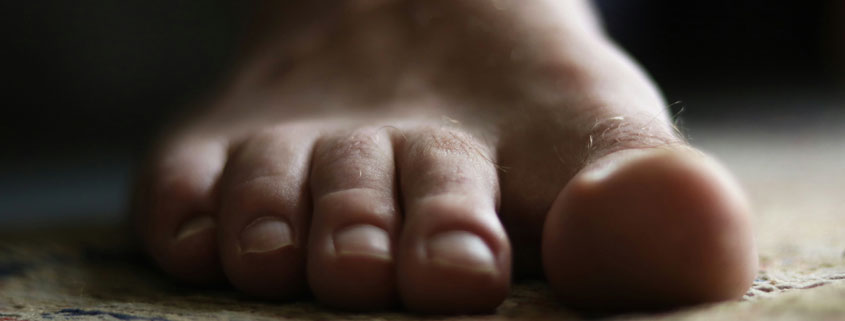
The modern body carries a strange contradiction. We can measure our heart rhythm to the millisecond, track our calories to the gram, and map our genomes with casual confidence, yet we treat the part of the body that literally negotiates gravity as an afterthought. Most people spend their days inside a soft cast made of foam and rubber, moving across surfaces engineered to be flat, predictable, and forgiving. The result looks like comfort. The cost is subtle, cumulative, and often misdiagnosed, because when the foot loses its language, the rest of the body starts speaking in pain.
Foot problems rarely stay in the feet. They migrate into the knees, into hips that feel tight for no obvious reason, into lower backs that ache after standing, into necks that carry tension like a second collarbone. They also leak into balance, into how confidently an older adult steps off a curb, into whether a runner’s stride remains elastic or becomes a series of controlled falls. A healthy foot is not a rigid block at the bottom of the leg. It is a sensory organ, a shock absorber, a propulsion engine, and a negotiation table where the nervous system and the environment reach an agreement about safety.
When that agreement is made on muted input, the body compensates. Compensation is brilliant in the short term. Over years, it becomes a kind of quiet debt.
What a Foot Actually Is, When You Stop Treating It Like a Shoe Insert
The architecture of the human foot is lavish. Each foot contains dozens of bones, joints, ligaments, and tendons, plus layers of muscle that are often ignored until they fail. The arches are not decorative bridges. They are dynamic springs that store and release energy with each step. The toes are not just endpoints for nail clipping. They widen and grip, they stabilize, they help the body sense where it is in space, and they contribute to the last, decisive push that turns standing into walking.
The plantar surface, the part that meets the ground, is packed with mechanoreceptors that respond to pressure, texture, temperature, and vibration. These receptors provide continuous updates to the brain about the surface beneath you. That information influences more than gait. It affects posture, muscle tone up the chain, and even how braced or relaxed your body feels while simply standing in line.
A foot is also a timing device. It coordinates pronation and supination, two movements that are commonly reduced to simplistic warnings. Pronation is not inherently bad. It is part of how the foot absorbs force and adapts to uneven ground. Supination is not inherently virtuous. It is part of how the foot becomes a lever for propulsion. Problems emerge when timing is distorted, when a shoe or a habit locks the foot into one strategy, or when weakness and stiffness force the foot to choose extremes because it cannot access the middle.
Treating the foot as a static platform misses its real function. The foot is a living system built to alternate between softness and stiffness at exactly the right moments. Take away the moments, and you take away the learning.
The Strange Deal Modern Life Made With the Ground
Most human movement for most of human history happened on variable terrain. Soil, rock, grass, sand, roots, slopes, and uneven stone demanded constant micro-adjustments. Those adjustments were not a nuisance. They were training. They kept intrinsic foot muscles responsive, kept ankles agile, and kept the nervous system fluent in balance.
Modern environments removed that variability. Floors are flat. Sidewalks are consistent. Stairs are regulated. Even parks are often leveled and managed. Shoes completed the deal by padding the sensory interface. The foot stopped feeling the ground, which meant the brain stopped receiving rich feedback. When feedback decreases, the nervous system often increases protective tension. The body becomes less curious about movement and more cautious, even if you do not consciously feel fear.
This is one reason people can feel “tight” without an obvious injury. Tightness is sometimes weakness, but it is also sometimes a nervous system strategy. If the foot is unstable or numb to detail, the system may stabilize elsewhere. Calves become overactive. Hip flexors grip. Lower back muscles brace. The body finds solidity wherever it can.
In the short term, cushioned footwear can be a relief. In the long term, the absence of sensory conversation can make movement less adaptable. A person becomes strong at walking on a predictable surface and strangely fragile when the environment becomes unpredictable, which is exactly when resilience matters most.
Footwear as a Technology That Shapes Anatomy
Shoes are not neutral. They are a tool that changes the behavior of the body. Narrow toe boxes encourage toes to compress and drift. Elevated heels shift weight forward and alter how the ankle moves. Thick soles dampen feedback. Stiff uppers restrict midfoot motion. Arch supports can be helpful in specific circumstances, yet when they become permanent, they can also function like a brace that replaces muscular contribution.
This does not mean everyone should abandon supportive footwear. It means shoe choice should be understood as an input with consequences, not a purely aesthetic preference. A shoe can solve one problem while quietly creating another. A rigid sole can reduce pain in an irritated joint by limiting movement, but it can also reduce strength and mobility over time. A cushioned heel can make standing feel easier today, but it can also encourage a gait that lands heavily and relies on padding instead of control.
One of the most common misunderstandings is that comfort equals health. Comfort is a sensation. Health is a capacity. A shoe can feel wonderful while narrowing your foot’s functional range, much like a chair can feel comfortable while reducing your tolerance for sitting upright.
Fashion adds its own layer. Many styles prioritize a silhouette that the foot was not designed to occupy. This is not a moral judgment, it is biomechanics. The body adapts to what it repeats. If repeated footwear demands a compressed forefoot or an altered ankle angle, the body will adapt, then complain, often years later, in forms that seem unrelated.
How Small Foot Changes Become Whole-Body Problems
Pain rarely appears at the first point of dysfunction. The body is too smart for that. It reroutes forces, changes muscle recruitment, and alters movement patterns to keep you moving. That intelligence is why you can sprain an ankle and feel it, months later, in the opposite hip. It is why plantar fascia irritation can show up alongside knee pain. It is why a bunion can influence how the pelvis rotates during walking.
When the big toe loses its ability to extend properly, propulsion changes. The body may roll off the outside of the foot, or avoid pushing through the toe altogether. That shift can increase load on the lateral ankle and the knee. When the arch collapses without control, the tibia may rotate inward more than it should, changing how the knee tracks. When the ankle loses dorsiflexion, the body may compensate by turning the foot outward or by lifting the heel early, which can stress the forefoot and overload the calf.
These patterns are not always visible in normal life because they can be subtle. Yet subtle changes repeated thousands of times a day become loud eventually. Walking is not a gentle activity in terms of repetition. It is a high-volume motor skill. If a movement pattern is off by a small degree, the accumulated effect can be significant.
Balance is part of this story too. The foot is a primary source of proprioceptive input, which is the body’s ability to sense position and movement. When proprioception is dulled, the nervous system may rely more on vision and on tension in larger muscles. That can reduce efficiency. It can also increase fall risk with age, especially in low light or on uneven ground.
The foot is not just about pain. It is about confidence.
The Myth That Strength Training Automatically Fixes Everything
Strength training is invaluable. It improves bone density, metabolic health, and resilience. Yet it can also bypass foot function if it happens in shoes that remove sensation and if it focuses on large muscle groups without addressing the smaller stabilizers. A person can deadlift heavy weight and still have weak intrinsic foot muscles. A person can squat deeply and still lack toe mobility. Strength does not always translate into control at the ground interface.
This matters because the foot and ankle complex often acts like a foundation. If the foundation cannot adapt, the rest of the structure must stiffen or compensate. In some people, lifting strengthens the compensations rather than resolving them. Calves and hamstrings become dominant. The foot remains passive. The body becomes strong, but not necessarily balanced.
There is also a cultural habit of ignoring pain until it demands attention. Foot pain is often dismissed as normal aging, normal standing, normal running. Yet pain is information. It may be the only remaining signal that the body can no longer compensate quietly.
The more helpful question is not whether you are strong. It is whether your strength is distributed in a way that matches the job you ask your body to do.
The Case for Restoring Sensory Life to the Sole
The sole of the foot is designed to feel. That does not mean you must walk barefoot everywhere. It does mean that your body benefits from some exposure to texture and variation. Sensory input teaches the nervous system to calibrate. Calibration reduces unnecessary tension. It also sharpens coordination.
Many people notice that walking barefoot at home feels strange at first. The floor feels hard. The foot feels sensitive. That sensitivity is not weakness. It is feedback returning. If the body has been insulated for years, normal sensation can feel intense. With gradual exposure, that intensity often settles into clarity. The nervous system learns that the ground is not an emergency.
This is why gentle barefoot time can be useful, especially on safe, clean surfaces. It allows toes to spread naturally. It allows the arch to work. It invites the ankle to move through small adjustments. It also reveals limitations quickly. A person may realize that one toe barely touches the ground, or that the foot collapses inward without control, or that the calf tightens immediately. Those discoveries are not reasons for shame. They are useful diagnostics.
Sensory restoration also includes attention to temperature and circulation. Cold feet can be a vascular issue, a stress response, or simply a sign that the foot is not moving enough. The feet are far from the heart. They rely on muscle action and vessel regulation to maintain warmth. Movement, toe articulation, and varied loading can improve circulation over time.
The goal is not to romanticize barefoot living. The goal is to restore a conversation that has been muted.
Building Capacity Without Turning It Into a Trend
Foot health has been pulled into extremes, especially in fitness culture. On one side is the belief that cushioned support is always necessary. On the other is the belief that everyone should immediately adopt minimalist footwear and run as if modern surfaces do not matter. Both extremes ignore the reality that tissues adapt gradually, and that adaptation has limits.
If someone has worn supportive shoes for decades, sudden minimalist use can overload calves and Achilles tendons. Tendons do not respond well to abrupt change. They like progressive load. Similarly, someone with significant deformity or nerve issues may need support, at least part of the time, to function safely. Support is not failure. It is a tool.
A more intelligent approach treats footwear like a dial. There is a place for protection, especially on harsh surfaces or during long days. There is also a place for thinner soles, wider toe boxes, and greater flexibility, especially during activities meant to retrain foot function. The best choice can vary across the day.
The principle that matters is progression. The foot becomes capable by being asked to do slightly more than it is used to, then being allowed to recover. A foot becomes fragile when it is either never challenged or suddenly overwhelmed.
This is also where humility matters. Many foot problems are not solved by a single trick. They are solved by changing what is repeated.
The Overlooked Trio: Toe Function, Calf Behavior, and Hip Strategy
The foot does not operate in isolation. If you want a realistic view of why feet hurt, you have to look at the trio that often drives the pattern.
Toe function is the first. Toes should be able to extend, flex, and spread. The big toe, in particular, needs enough extension for efficient walking and running. If it cannot extend, the body finds an alternate route, often through twisting or rolling outward. Over time, that can create stress elsewhere. Toe weakness can also reduce stability. When toes do not contribute, the foot loses a major stabilizing mechanism.
Calf behavior is the second. Calves are powerful, and they often become overworked when foot mechanics are inefficient. Tight calves are sometimes tight because they are doing too much. They may be acting as stabilizers when the foot is not stable, or as propellers when the hip is not contributing properly. Calf tightness is sometimes a symptom, not the root cause.
Hip strategy is the third. Many people think of hips as separate from feet, yet gait is a chain. If the hip does not extend well, stride length changes. If glute engagement is inconsistent, the body may rely more on the lower leg. If the pelvis is unstable, the foot may grip the ground in a compensatory way. Sometimes the foot hurts because the hip is asking it to solve a problem it cannot solve elegantly.
This trio also explains why some interventions help temporarily and then fail. Stretching the calf can provide relief, but if the foot remains weak and the hip remains underused, the calf tightness returns. Insoles can change pain, but if the toes remain compressed and the ankle remains stiff, the pattern persists. The body returns to what it knows.
A lasting change usually involves at least some attention to all three, even if one is the primary driver.
Running, Walking, and the Difference Between Movement and Impact
People often assume that if walking hurts, running must be worse, or that running injuries are inevitable. The reality is more nuanced. Running is higher impact, but it is also more elastic when done well. The body can store and release energy efficiently, like a spring. When the foot and ankle complex is stiff in the wrong way, that spring becomes a hammer.
Many running injuries are less about running itself and more about how impact is managed. A runner who overstrides and lands heavily may rely on cushioning rather than on controlled loading. A runner with weak intrinsic foot muscles may collapse in ways that stress the plantar fascia. A runner with limited ankle dorsiflexion may compensate by turning the foot outward or by rotating the knee inward.
Walking can also be impactful when done with poor mechanics, especially if someone pounds the heel into the ground and relies on shoe padding to absorb force. A shoe can hide impact from your awareness while your joints still experience it.
This is why gait awareness matters. Not as performance anxiety, but as information. People can learn to walk more quietly, to allow the ankle and midfoot to share the load, to use toes during push-off, and to let the hip contribute. These shifts are often small. Their effects accumulate.
If movement is the medicine, then impact management is the dosage.
Aging, Falls, and Why Foot Health is a Longevity Issue
Foot health is often treated as a comfort issue, something to address when pain becomes annoying. It should be treated as a longevity issue. Falls are one of the major threats to independence as people age. Balance is not just a brain skill. It is a whole-body skill that depends heavily on foot sensation, ankle strength, and the ability to adjust quickly.
When feet are numb, weak, or rigid, the body becomes slower to respond to perturbations. When toes cannot grip, stability decreases. When ankles cannot move through a normal range, stepping strategies become limited. A person may become cautious, which reduces movement, which reduces capacity further. It becomes a loop.
There is also the issue of confidence. Someone who has stumbled a few times may start walking differently, taking smaller steps and stiffening. That stiffness can actually increase fall risk because it reduces adaptability. The solution is rarely just “be careful.” The solution is capacity, built gradually, with attention to sensation and control.
Foot care is part of this too. Skin integrity, circulation, and nerve health matter. Conditions like diabetes can reduce sensation and increase risk of injury. In those cases, professional medical guidance is essential. Even outside of specific diseases, basic foot care, including nail health and skin monitoring, can prevent small problems from becoming disabling ones.
Longevity is not only about organs. It is also about the ability to move through the world without fear.
Pain, Diagnosis, and When Self-Experiment Stops Being Wise
A health-oriented approach to feet should include a sober respect for the limits of self-management. Many issues respond well to gradual strengthening, mobility work, and better footwear. Some do not. Sudden severe pain, persistent swelling, numbness, significant deformity, fever, or pain that worsens rapidly deserves evaluation. Stress fractures, nerve entrapments, inflammatory arthritis, and vascular issues can present as ordinary foot pain until they become serious.
Plantar fasciitis is a common example of a condition that is often simplified. It is not always the same problem in every person. Sometimes it involves overloaded tissue. Sometimes it involves limited ankle mobility. Sometimes it involves a big toe that cannot extend. Sometimes it is driven by long periods of standing on hard surfaces without adequate adaptation. A generic stretch might help one person and irritate another.
The point is not to scare anyone. The point is to treat the foot with the respect you would treat any other complex system. If the pain is persistent or confusing, expertise matters. Good physical therapy, podiatry, and sports medicine can be transformative, especially when they look at the whole chain rather than only the point of pain.
A garden does not thrive by guessing at pests. A body does not thrive by guessing at chronic pain.
The Most Radical Idea is Simple, and It is Not Instant
The most radical idea in foot health is not a product. It is not a shoe. It is not a viral method. It is the decision to rebuild capacity gradually, patiently, and with attention to sensation. That decision changes how you walk through your home. It changes what you notice when you stand at the sink. It changes whether you allow your toes to spread or keep them compressed by default. It changes whether your feet spend their entire lives cushioned, or whether they sometimes experience the world directly enough to learn from it.
The foot is honest. It will tell you what you have trained it to be. If you have trained it to be passive, it will become passive. If you train it to be responsive, it will become responsive. If you train it to be protected at all costs, it may eventually demand protection because it has lost its own competence. If you train it to tolerate variation, it will start returning that tolerance to the rest of you.
There is a particular kind of health that cannot be purchased. It has to be built. It feels less like winning and more like returning to something you forgot you had, a quiet confidence that the ground beneath you is not something to fear, and that the body knows how to meet it.

