
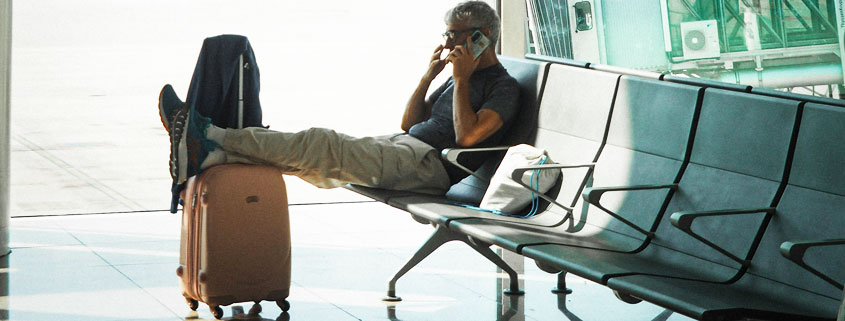
The most honest part of modern travel is the part nobody posts. It happens under fluorescent light, with a boarding pass creased from too many pockets, while the clock insists on moving and the body insists on staying. It happens when a person realizes that the trip is not made of landmarks, it is made of waiting rooms, corridors, announcements, and small negotiations with fatigue. The photographs come later. The layover comes first, and it exposes what the rest of the journey politely hides.
A layover is not simply time between flights. It is a temporary citizenship in a place designed to prevent belonging. Airports, bus terminals, ferry ports, and train stations are built to keep you moving, yet they must also absorb millions of bodies that cannot move for reasons that are rarely noble. Weather. Maintenance. missed connections. Overbooked cabins. cascading delays. The layover is where travel becomes less like a story and more like a system, and systems have a way of revealing the truth about what they value.
What they value is predictability, compliance, and spending.
You can learn more about the modern world in four hours of forced waiting than in a week of curated sightseeing. In transit, the hierarchy is visible and literal. Some people pass through velvet ropes and disappear into lounges where the air seems quieter. Others sleep on the floor under departure screens because every chair has an armrest that punishes lying down. Some travelers move with the practiced ease of habit. Others look as though the building itself is an accusation, a maze built to mock their language, their passport, their budget, their body.
The layover is a city that pretends it is not a city. It has rules, prices, policing, architecture, and social classes. It also has a strange intimacy, because everyone is temporarily unmoored. Nobody is fully at home, and nobody is fully a visitor in the usual sense. That unstable identity changes behavior. People become more polite than they feel, or less polite than they usually are. They spend money they would not spend elsewhere, because time feels like a leak and consumption feels like plugging it. They form brief alliances, sharing outlets and information, then part without names.
If travel is supposed to broaden a person, the layover is where that broadening is tested. This is where you meet the global economy at eye level, not as an abstraction but as an environment that controls your hours.
The Architecture of Controlled Waiting
Transit spaces are among the most psychologically sophisticated buildings most people will ever inhabit. They are engineered to shape movement and mood. The ceilings are often high enough to inspire a faint awe, but not warm enough to invite lingering. The paths are wide until they are narrow, creating moments of flow and moments of compression. The signage uses a language of calm authority, a promise that confusion is your fault because the information is right there, even when the information is contradictory.
There is a particular form of anxiety that comes from being in a place that is designed to be legible and still feels disorienting. The disorientation is not accidental. Airports must handle enormous volumes, and volume requires simplification. The simplification becomes a kind of control, because it trains people to follow arrows and accept fences. The body learns to surrender small freedoms, not from fear alone, but from habit.
Waiting is then packaged as comfort. A terminal offers chairs, but the chairs are rarely comfortable in the way a living room chair is comfortable. They are comfortable enough to keep a person compliant, uncomfortable enough to prevent true rest. Lighting stays bright even when it is midnight outside. The building refuses to acknowledge night because sleep would disrupt consumption. In many terminals, the absence of darkness is not only aesthetic, it is economic.
Even the sounds are curated. Announcements punctuate silence so that silence never fully arrives. Music loops in retail corridors to keep the brain in a state of mild stimulation. The constant presence of rolling luggage becomes a metronome for mobility, an acoustic reminder that the purpose of your body is to move forward.
Airports often feel oddly sterile, yet they are full of touchpoints, railings, trays, kiosks, buttons, and screens. Sterility is the visual style of control, not the actual condition. The style comforts people because it suggests order. In a layover, order is a form of relief. The traveler wants to believe the system is competent, because competence is what makes the next connection feel possible.
When the system fails, the building’s design becomes more obvious. A delay turns a gate area into a crowded waiting room, and the thinness of comfort reveals itself. Outlets become scarce resources. Power becomes social currency. People cluster around sockets like miners around a vein, phones dangling from cords like lifelines. The architecture did not forget outlets. The architecture rationed them, because a person with a dying phone is easier to push into buying something, or at least easier to keep anxious and attentive.
A layover is not passive time. It is time spent inside a behavioral environment.
The Economics of Friction Removal
Travel has become smoother in ways that feel miraculous. Tickets are digital. Navigation is instant. Payments are contactless. Yet the layover persists, stubborn and universal, because it is not a glitch. It is where the system stores its uncertainty.
Modern transport networks are optimized for efficiency, which sounds like a virtue until you realize efficiency often means there is less slack. Less slack means smaller disruptions create larger cascades. One delayed departure can ripple across multiple airports, multiple crews, multiple aircraft rotations. Layovers become longer not because planners enjoy wasting human time, but because the system needs buffers to survive its own tightness.
Those buffers are not distributed equally. A traveler in business class may experience the buffer as a lounge with food and showers and silence. A traveler on a budget may experience the buffer as an extra unpaid half-day inside a terminal that sells bottled water at luxury pricing. The same delay produces different realities because the market has learned how to monetize friction.
Friction used to be something the travel industry tried to minimize. Now friction is also a product. Fast-track security. priority boarding. flexible tickets. seat selection. early check-in. lounge access. Each of these is sold as convenience, but collectively they form a toll system. The traveler pays to escape discomfort that the system has normalized.
The layover is where that toll system becomes visceral. You can watch the social geometry of the terminal shift when a flight is delayed. Some people retreat into enclosed spaces that are invisible to others. Some people arrange their bodies on the floor because no seating remains. Some people approach customer service counters with the wary aggression of someone who knows they are about to beg for what they already purchased.
Delays expose the truth of modern travel: the ticket buys transportation, but it does not necessarily buy care. Care is sold separately, in upgrades and memberships and tiers. The layover is the moment when people discover what their fare class truly means.
This is not only about airlines. It is about the broader logic of how contemporary systems treat human inconvenience. In many industries, discomfort is not an accident. It is a lever.
The Layover as a Psychological Threshold
There is a peculiar emotional state that arises when a person is in transit for too long. The mind becomes both hyper-attentive and strangely numb. You monitor screens for gate changes while forgetting why you opened your phone. You feel a constant low-grade urgency without a clear task. The hours do not feel like hours. They feel like suspended time.
Part of this comes from circadian confusion, especially when travel crosses time zones. Part of it comes from the lack of private space. But a large part comes from identity. In a layover, you are not where you were and not yet where you will be. You have exited your ordinary life, but you have not entered the new one. The future is close enough to feel real, yet distant enough to feel uncertain.
Humans are not built for sustained liminality. We can handle short transitions. We struggle when the transition becomes the environment. The layover turns transition into a habitat, and the body responds with irritability, sadness, impulsivity, or blankness. People buy things they do not want. They eat food that does not satisfy them. They become unusually sensitive to small frustrations. They cry in bathrooms, not always for a specific reason, but because the nervous system has been kept on alert for too long.
This is why the smallest kindness in a terminal can feel enormous. A stranger saving a seat. A staff member who speaks gently instead of mechanically. A person offering an outlet. These gestures matter because the layover strips away the protective rituals of normal life. When you are tired and dislocated, you notice care in a way you might not notice it at home.
The layover also has a strange clarity. It can force reflection, because the usual distractions are either absent or insufficient. A person can scroll endlessly, yet still feel confronted by time. The body is stuck in a chair. The mind wanders. Some people discover that travel does not make them feel free. It makes them feel managed. That realization can be unsettling, especially for those who associate travel with autonomy and adventure.
A layover does not offer a destination’s romance. It offers a mirror.
Status, Surveillance, and the Quiet Theater of Security
Security is one of the defining rituals of modern travel, and the layover is shaped by it long after the checkpoint. Surveillance does not end once you remove your shoes. It becomes ambient.
Transit hubs are spaces where observation is both expected and normalized. Cameras, patrols, controlled access doors, ID checks, biometric gates. Most travelers accept this because they accept the premise that safety requires monitoring. Yet the experience of being monitored is not neutral. It changes how people inhabit the space. It encourages self-policing, a subtle performance of harmlessness.
For some travelers, this performance is barely conscious. They move through with confidence because the system rarely challenges them. For others, the performance is heavy. They carry the awareness that they will be scrutinized differently. Passport, name, accent, skin tone, clothing, religious markers, disability. The layover becomes a stretch of time where a person cannot fully relax because they feel permanently examinable.
Status intersects with this scrutiny. There are travelers whose status allows them to glide through special lanes and private rooms, and travelers whose status subjects them to questioning and delay. The airport makes these distinctions physically visible. The building itself becomes a map of privilege.
Even the language of security has changed travel’s emotional texture. The traveler is not simply a guest or customer. The traveler is also a risk category. This produces a baseline tension that never fully disappears. It can be managed by routine, but it returns whenever something goes wrong.
In a disruption, security logic often conflicts with human needs. People want to sit, rest, and sleep. The space is designed to keep people upright and observable. A person who lies down may be treated as a problem, not because lying down is dangerous, but because it interrupts the visual order of the space. The layover reveals how strongly modern systems value legibility over comfort.
The paradox is that the layover is where people are most exhausted, and exhaustion is when people are least able to perform compliance smoothly. This is why delays can lead to conflict. The system asks for patience while offering conditions that make patience difficult. It asks for calm while maintaining constant stimulation and constant observation.
Security is necessary in many ways, but it also shapes what travel feels like. The layover is where that feeling accumulates.
The Gate Area as a Temporary Society
Sit at any gate long enough and you can watch a society form and dissolve. There are leaders who provide information, often unofficial, reading updates aloud to others who cannot see. There are caretakers who entertain children. There are people who claim territory with bags and jackets, creating invisible borders. There are quiet negotiations over armrests and charging outlets that resemble diplomacy.
The gate area is one of the few places in modern life where strangers are forced into prolonged proximity without a shared purpose beyond waiting. The result can be tense or strangely communal. People learn each other’s destinations. They trade stories of missed flights and family emergencies and unexpected detours. They complain together, which becomes a bonding ritual. They share snacks and phone chargers as though these are offerings.
This temporary society is also shaped by power. The airline staff behind the counter have authority, but not full control. They are intermediaries between passengers and a system that may be deciding things elsewhere. They can become targets for anger that belongs to the larger machine. Their emotional labor becomes part of the layover’s hidden infrastructure.
Gate societies also reveal cultural differences in how people handle public waiting. Some travelers treat the gate as a queue that should be respected. Others treat it as a space to cluster, ready to surge. Some line up early, anxious to secure overhead space. Others remain seated, trusting that the process will be fair. These behaviors are not just personality traits. They are learned responses to systems that have rewarded certain tactics.
The boarding process itself often feels like a test of human dignity. People who have waited for hours are then asked to stand and compete for limited bin space. The layover, which was already uncomfortable, ends with a ritual that can feel like a mild scramble. This is not accidental. It is the result of aircraft designs and business models that maximize passenger volume while minimizing storage and comfort.
A traveler might arrive at a destination and think the trip was about the city they visited. Yet their body remembers the gate area more vividly than they expect. The body remembers fluorescent light, cramped seats, and the moment the loudspeaker changed the plan.
The Terminal as a Mall With Wings
No one walks through a terminal without noticing how much of it is shopping. Retail is not a side feature. It is structural. Many airports are designed so that the path to the gate passes through stores, not around them. The traveler is guided past perfumes, watches, liquor, luxury goods, fast fashion, and novelty souvenirs that are not tied to any specific place. The merchandise is often generic, which is revealing. The terminal sells a global identity, not a local one.
This retail environment is not only about profit. It is about filling the emotional void of waiting. Shopping provides a task. Eating provides a marker of time. A coffee provides a ritual that makes the layover feel purposeful. The system offers consumption as a substitute for agency.
Prices in terminals are famously high, and travelers often accept this as the cost of convenience. Yet it also reflects the monopoly nature of captive audiences. In a layover, you cannot easily leave to find cheaper options. The building is a controlled environment. The traveler is a temporary captive. Captivity creates pricing power.
The mall logic extends into aesthetics. Terminals are increasingly filled with “experience” spaces, curated lounges, branded installations, and quiet zones that resemble premium waiting rooms. These features create a sense of choice while reinforcing hierarchy. The traveler can choose the nicer chair, if they pay. The traveler can choose the quieter space, if they qualify.
In this way, the terminal becomes a microcosm of a broader economic pattern. Discomfort is widespread. Relief is sold.
This does not mean every airport is cynical or cruel. Some airports invest in comfort, local culture, and public amenities. Yet even in the best terminals, the retail logic is present. A place designed for movement has become a place designed for spending while moving.
The layover is the time when this logic has the most power over you, because you are tired, bored, and aware that you have nothing else to do.
Why Some Travelers Seek Layovers on Purpose
Not all layovers are accidents. Some people choose them deliberately. They choose long connections to reduce ticket prices. They choose stopovers to break up a long journey. They choose certain hubs because they trust the reliability of a particular airline, or because they want access to a certain lounge, or because they are collecting loyalty points.
There is also a growing group of travelers who treat the layover as a form of travel itself. They explore airports that have become famous for architecture, art, gardens, spas, or food. They plan around stopover programs that allow a brief visit to a city between flights. They treat transit as a chance to inhabit multiple zones of the world in a single trip.
This behavior reflects a broader shift in how travel is understood. The journey is no longer just the means to an end. It is part of the experience. Yet even this more romantic attitude reveals the system’s influence. The traveler who enjoys a layover is often enjoying a curated environment of comfort and amenities. Their experience is not the same as the traveler who is sleeping on the floor.
The idea that an airport can be a destination is both fascinating and unsettling. Fascinating because it shows how infrastructure can become culture. Unsettling because it suggests how thoroughly the travel industry has absorbed space into commerce. The terminal becomes a place worth visiting because it is filled with consumption opportunities and polished aesthetics.
A truly humane travel system would not require travelers to romanticize transit to tolerate it. It would simply make transit bearable.
The Hidden Skill of Traveling Well
There is a skill that experienced travelers develop, and it is rarely discussed because it is not glamorous. It is the skill of managing limbo.
This skill includes practical knowledge, how to pack so essentials are accessible, how to choose seats near outlets, how to read gate patterns, how to anticipate delays. It also includes emotional regulation, how to accept uncertainty without spiraling, how to conserve energy, how to create small rituals that keep the mind steady. It includes social intelligence, knowing when to ask for help, how to speak to staff respectfully while advocating for yourself, how to navigate crowds without becoming cruel.
Travelers often assume the destination is the main challenge. In reality, the challenge is often endurance. The layover tests endurance because it offers little reward for effort. You cannot speed it up through willpower. You can only manage your response to it.
This is why people who travel frequently can appear calm in environments that make others frantic. Their calm is not always a personality trait. It is an acquired strategy. They have learned which parts of the process can be controlled and which cannot. They have learned to treat travel as a sequence of small decisions rather than as a single event.
Yet there is a darker side to this skill. It can become a form of resignation. The traveler becomes so accustomed to discomfort that they stop expecting better. They accept that cramped seating and overpriced food and constant surveillance are normal. They internalize the system’s demands.
The layover is where resignation becomes visible. You can see it in the blank stare of a person who has accepted that they will be delayed and that their body’s needs are secondary. You can also see the opposite in the person who still expects care, still believes they deserve humane treatment, and therefore feels outraged when the system fails.
Neither response is irrational. They are different ways of surviving the same environment.
The Future of Transit and the Question of Dignity
As travel continues to grow, transit spaces will become even more important. They are not only infrastructure. They are the public rooms of a globalized world. They are where people from different countries, languages, and social classes are forced into the same air. They are where public policy meets private profit. They are where climate debates become tangible, because every departure board is a map of emissions.
The question is not whether layovers will exist. The question is what they will mean. Will they remain zones of managed discomfort where people are sorted and monetized. Or will they become spaces that treat human time as valuable, not only as something to be extracted.
A dignified transit future would not require luxury. It would require basics. Seats that allow rest without punishing the body. Quiet zones that acknowledge sleep as a human need. Water that is accessible without price gouging. Charging infrastructure that recognizes phones as modern necessities. Transparency in delays that respects people’s planning. Policies that do not treat exhaustion as suspicious.
Most of these changes are technically easy. What makes them difficult is incentive. The current travel ecosystem profits from scarcity and segmentation. Comfort is often positioned as a premium feature rather than a baseline. Yet the baseline matters because it defines what kind of world we are building. A system that moves millions of people should not require millions of people to accept indignity as the entry fee.
The layover will never be romantic in the way a mountain sunrise is romantic. It will never be as satisfying as arriving where you want to be. But it can become something else, a humane threshold, a place that acknowledges the reality of travel without punishing the traveler for participating in it.
A person does not measure their life in layovers, yet the hours accumulate. They become part of memory in a strangely stubborn way, the taste of cheap coffee at 3 a.m., the cold air by the gate, the kindness of a stranger who shared a charger, the silence after a final boarding call. The layover is where travel stops pretending to be pure freedom and becomes what it always was, movement inside a system that reveals its values through how it treats you when you cannot leave.

