
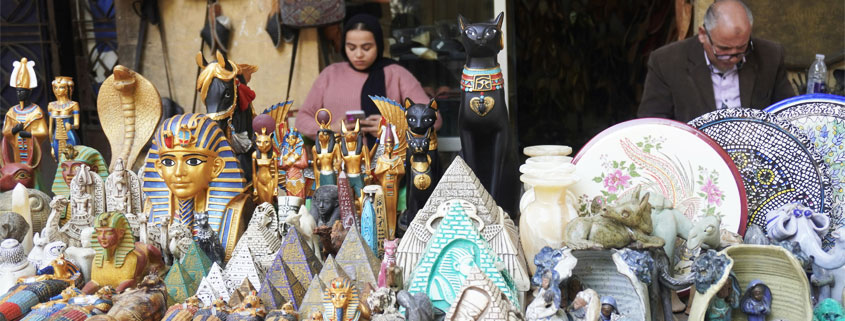
The moment you pick up an object in a shop far from home, a subtle negotiation begins. Part of you wants a token, something that can sit on a shelf and quietly insist that you were there. Another part of you feels the trap, the sense that you are being sold a place in miniature, compressed into a magnet, a mug, a scarf, a carved figure, a jar of sand. The object is light in your hand, yet it carries a weight that is not measured in ounces. It carries your desire to keep the trip from evaporating.
The modern souvenir is often treated as a minor detail, a last minute purchase made near an exit sign. In reality it is one of travel’s most revealing rituals, because it exposes what people believe a journey is supposed to do. It also reveals what destinations are pressured to become. The souvenir is where memory meets commerce, where culture meets packaging, where intimacy meets logistics, where a city’s identity is flattened into a font and a skyline silhouette.
Souvenirs matter because they are a private attempt to take a place home, and a public system designed to turn that impulse into revenue.
The Souvenir as Proof and as Comfort
Long after the flight, a person may forget the exact street name or the order of landmarks. Yet they can still remember the sensation of a particular afternoon, the angle of light on stone, the smell of rain hitting hot pavement, the feeling of being temporarily unrecognizable. Travel is full of moments that feel vivid while they occur and then blur, not because they were unimportant, but because the mind cannot keep everything.
A souvenir functions as a wedge against that blur. It reassures you that the experience was real and that it belongs to you. It is proof in a gentle sense, not proof for strangers on social media, but proof for your future self, the version of you that might wonder if you imagined the whole thing.
This is why some souvenirs are deliberately mundane. A transit card, a receipt from a café, a museum ticket, a matchbook. These objects are not impressive, yet they are intimate because they retain the texture of ordinary life in a different place. They say, “I moved through this world in a normal way.” That is often what travelers want most, not spectacle, but a brief permission to feel like they belong somewhere else.
The souvenir soothes a particular anxiety of modern travel, the fear that the trip will become just another set of images in a crowded mental feed. The object sits still. It does not scroll away.
The Airport Shop as an Exit Interview
The most common setting for souvenir buying is also the most revealing: the airport, the station, the cruise terminal, the border town strip mall. These are spaces designed for departure, not dwelling. People buy objects there because the trip is ending, and endings trigger urgency. The traveler becomes emotionally porous, susceptible to the idea that without a physical token, the experience will slip out of reach.
The infrastructure understands this. Exit corridors are lined with stores that sell the same curated version of identity: neutral enough to offend no one, stylized enough to feel local, durable enough to survive transit. The traveler is not browsing for discovery. They are choosing a symbol that can survive travel time and suitcase pressure and still look like meaning.
This is one reason souvenirs have become standardized. The supply chain wants predictability. The traveler wants immediate recognition. The destination wants branding. Those three forces meet in a narrow aisle under fluorescent lights, where the outcome is often a product that gestures toward culture without demanding any engagement with it.
When people complain that souvenir shops all look the same, they are noticing a deeper shift. Travel has created a global aesthetic of “elsewhere,” a visual language that signals difference while remaining safely familiar.
Authenticity Is Not a Property of Objects
Travelers often chase “authentic” souvenirs as if authenticity were a label hidden somewhere on the underside. They want to avoid the feeling of being fooled. They want to avoid buying something mass produced in a factory thousands of miles away. They want the object to contain the place, not just reference it.
Yet authenticity is rarely an attribute that can be stamped on a product. It is a relationship between the buyer, the maker, and the story that connects them. An embroidered cloth bought directly from the person who stitched it can feel authentic because you witnessed labor, skill, and personality. The same cloth, sold anonymously in a chain store, can feel hollow even if it was made in the same region using the same technique.
This is uncomfortable because it means authenticity cannot be guaranteed by simple rules. “Made locally” helps, but it is not sufficient. A local factory can mass produce kitsch with enthusiasm. A global factory can collaborate with local artists and pay fairly. The ethics and the meaning live in details that are harder to see than a price tag.
What travelers often want is not purity, but connection. They want to feel that the object is not a costume for their shelf, but a trace of a real exchange, even if brief.
The Souvenir Industry as a Mirror of Inequality
Souvenirs also expose the unevenness of tourism. Many destinations depend on visitor spending while simultaneously struggling with the distortions that visitors create. The souvenir market can become a pressure valve, a way to turn cultural identity into money without handing over land or housing. In places where residents are being priced out, the souvenir becomes a strange compromise, a way of selling symbols instead of space.
At the same time, souvenir labor can be precarious. The person carving wood or weaving textiles may be part of a family tradition, or they may be a worker in a workshop producing for tourist demand, paid modestly while middle layers capture profit. Some craftspeople become performers of their own heritage, asked to repeat the same patterns because they sell, even if their creative curiosity wants to move elsewhere.
Tourists often romanticize artisanship without noticing the business reality. An artist who must sell thirty small items a day to pay rent does not have the luxury of making one masterpiece a month. The market shapes what is made, how fast it is made, and which parts of culture are emphasized.
A souvenir is never only an object. It is a small economic contract, and the terms are often invisible to the buyer.
Cultural Compression and the Problem of the Single Icon
Every destination has the burden of simplification. A city might be defined by one skyline view, one famous dish, one historical monument, one animal, one pattern, one color palette. These icons become souvenirs because they offer quick recognition. They also erase complexity.
This is not always malicious. People need symbols to navigate the world. The problem is what happens when the symbol becomes the destination’s main export. A place begins to perform itself for visitors, shrinking its public identity to the things that sell.
Sometimes this creates friction inside the destination. Residents see their home represented by clichés that feel incomplete or even insulting. Local artists may resent the demand for repetitive imagery. Meanwhile businesses rely on those clichés because they are economically reliable. The souvenir market becomes a tug of war between dignity and survival.
The traveler participates in that tug of war, often unintentionally, simply by buying what is available. The fact that a place offers certain souvenirs is not proof that those souvenirs represent it well. It is proof that those souvenirs sell.
The Rise of the “Experience Souvenir”
A growing number of travelers are suspicious of physical souvenirs. They do not want clutter. They do not want to contribute to waste. They do not want to fly home with a suitcase full of objects that will gather dust. They want something else, a souvenir made of experience.
That desire has created a new category of purchase: the workshop, the cooking class, the guided walk, the tattoo, the professional photo session, the local craft lesson, the tasting. These are sold as memories rather than objects, yet they are still souvenirs in a deeper sense. They are packaged experiences designed to be carried home as stories.
This can be beautiful when it is done with respect and intimacy, when the traveler is genuinely learning and participating. It can also become another standardized product, a scripted performance of “local life” delivered on schedule. The traveler buys an experience and leaves with a story that feels personal, even if it is identical to the story that hundreds of other visitors bought that week.
The experience souvenir is not automatically more ethical than an object. It can be more extractive, depending on labor conditions, cultural sensitivity, and how the profits are distributed. It can also be more meaningful, because it involves relationship and attention rather than possession.
What matters is not whether the souvenir is tangible. What matters is whether it deepens contact with the world, or merely decorates the traveler’s identity.
Digital Souvenirs and the Private Archive Nobody Curates
Modern travel produces an enormous quantity of digital residue: photos, videos, voice notes, maps with saved pins, screenshots of menus, booking confirmations, and messages exchanged across time zones. This is a new kind of souvenir, often unintentional.
Unlike a carved object that sits on a shelf, digital souvenirs hide inside devices. They are less visible, which makes them feel less sacred. Yet they can be more emotionally powerful because they preserve moments exactly, sometimes too exactly. A candid video can bring back a day with startling intensity. A photo taken without thinking can become more precious than any purchased item.
Digital souvenirs also create a paradox. People capture more than they can ever revisit. The archive grows, but retrieval becomes rare. The traveler returns home with thousands of fragments and no clear way to integrate them into memory.
This is one reason physical souvenirs persist. They do not require sorting. They demand a single decision. They occupy a visible spot in daily life. They become part of a room’s landscape, a quiet reminder that interrupts routine.
The future of souvenirs may not be a battle between physical and digital. It may be a question of which forms of memory can survive attention scarcity.
The Ethics of Buying a Place
Many travelers have begun to worry about the ethics of travel, not only in terms of emissions and overcrowding, but in terms of how money moves through a destination. The souvenir is one of the few purchases where a traveler can, if they choose, direct money toward local hands rather than large intermediaries.
That choice is not always easy. A small shop may sell imported goods. A market stall may offer mass produced items. A museum store may support conservation projects, or it may primarily support a vendor relationship. “Local” is often a story told by packaging.
Still, the traveler has leverage. The most ethical souvenir purchase is often the one that involves visible skill and a direct exchange, where you can talk to the maker or at least talk to the seller in a small operation that is embedded in the destination. It is also the purchase that avoids exploiting sacred symbols or culturally restricted patterns sold as decorations for outsiders.
A traveler does not need to become an expert to make better choices. They need only to recognize that every purchase is a vote for a particular version of the destination. Buying a cheap cliché is a vote for a place that exists as a logo. Buying a piece of craft that took time is a vote for a place that values labor and continuity. Buying nothing can be a vote too, sometimes a thoughtful one, sometimes just indifference.
The souvenir is a moral object because tourism is an ethical system.
Gifts Are Not Souvenirs, Even When They Look Like Them
When travelers buy souvenirs for other people, the purchase changes meaning. The object becomes a translation, a way of explaining a place to someone who did not go. That can be generous, but it can also be performative. A gift souvenir often says as much about the traveler’s self image as it does about the destination.
There is also a pressure in gift souvenirs that does not exist in personal ones. The traveler wants the gift to be legible. They want the recipient to recognize the place immediately. This pushes buyers toward the most iconic, most branded options, even if those options are not the most meaningful.
A personal souvenir can be private, even strange. It can be a pebble from a beach, a particular spice, a small ceramic dish with an imperfect glaze. A gift souvenir often needs to communicate quickly, which is why it tends to look like a souvenir.
This distinction matters because it shapes what destinations sell. A large portion of the souvenir economy is built not around travelers remembering, but around travelers proving, presenting, and distributing proof to their social circle.
The Souvenir as a Tool for Grief and Transition
Not all travel is leisure. People travel for funerals, for breakups, for relocations, for medical care, for work assignments that stretch longer than expected. In these cases, the souvenir takes on a different tone. It becomes a marker of passage, something that helps the traveler anchor a difficult period in a physical form.
A person might buy an object not because the trip was joyful, but because it was important. They might want a reminder that they survived it, that they crossed a threshold, that they stood in a place where their life changed.
These souvenirs are rarely the stereotypical ones. They tend to be quiet, chosen with care, sometimes chosen without fully understanding why. A ring, a book, a stone, a piece of fabric, a small painting. Later, the object becomes a door back to a time when the world felt unstable, which can be painful and also strangely comforting. It is a way of making a chaotic period hold still. This is one of the reasons it is too simple to mock souvenirs as clutter. People use objects to process the fact that life moves and cannot be paused.
When a Souvenir Becomes an Heirloom
The most powerful souvenirs are the ones that outlive the traveler’s own memory. A small bowl bought on a trip can become the household bowl that everyone uses. A textile can become the blanket that belongs to childhood. A piece of jewelry can be passed down with a story attached to it, a story that becomes more mythic with each retelling.
In this way, souvenirs can become family artifacts. They carry not only the memory of a place, but the memory of the person who traveled there at a particular moment in their life. The destination becomes less important than the traveler’s version of themselves. The object becomes a portrait of their curiosity, their freedom, their willingness to leave home.
This is also how travel shapes identity across generations. Children inherit not only possessions but narratives of movement. They grow up around objects that imply the world is larger than their street. A souvenir in this sense is not consumerism. It is a signal, a quiet claim that life includes elsewhere.
It is easy to forget this when we reduce souvenirs to magnets and keychains. The cheap versions exist because the human impulse is real. People want to carry the world with them. Sometimes they do it clumsily. Sometimes they do it with grace.
The Afterlife of the Trip
Every trip has two lives. The first is the days spent away. The second is the way those days echo afterward, in conversations, in habits, in small changes of taste and expectation. Souvenirs are part of the second life. They are one of the few ways travel resists being swallowed by routine.
A good souvenir does not merely represent a destination. It reactivates attention. It makes you pause while making coffee, noticing a mug that came from a different coast. It makes you remember a scent when you open a spice jar. It makes you run your fingers over a texture and feel, for a split second, the weather of another place.
The best souvenir is not the most expensive. It is the one that keeps reopening a door.
The uncomfortable truth is that modern travel often produces fewer doors than it promises. Much of it is logistics, queues, crowds, itineraries, and predictive recommendations. The souvenir is where the traveler tries to recover something personal from that machine. Sometimes it becomes just another product. Sometimes it becomes a genuine anchor, a piece of the world that refuses to be disposable.
Travel, at its best, changes the traveler in ways that are hard to explain. A souvenir is one small attempt to give that change a shape, even if the shape is imperfect, even if it is made for sale, even if it sits quietly on a shelf while life speeds past.

