
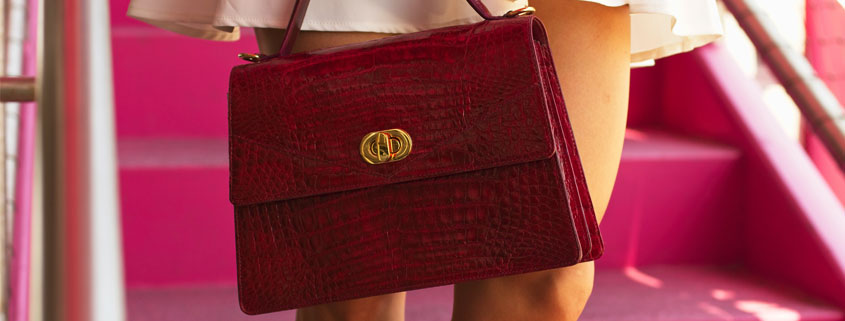
A small, glossy video can detonate a season now. One person holds up a handbag that resembles another handbag, speaks quickly, adds a price tag that feels like a prank, then tilts the camera to show stitching that looks convincing enough. In the comments, the moral vocabulary collapses into a single question that sounds practical and is anything but: “Is it worth paying more?”
That question is not about leather, or logos, or even craft. It is about what status has become when imitation is no longer embarrassing, when abundance is no longer aspirational, and when the most desirable skill in shopping is not discernment but decoding. “Dupe” is the modern word for a very old act, yet what it names is new. Dupes are not simply copies. They are arguments.
Fashion has always lived with imitation. Trends are systematized borrowing, and mass production is an engine for translating runway ideas into broadly wearable silhouettes. What has changed is the social arrangement around imitation. Dupes are no longer a guilty workaround for people who cannot access luxury. They are a badge for people who refuse to perform loyalty to luxury. They are also a tool for people who love luxury’s image but not its economics. Most importantly, they have become a way to speak about class without saying “class,” to speak about desire without admitting “desire,” and to participate in the status game while insisting you are above it.
The dupe is a paradoxical object. It says, I know what the expensive thing is, and I can demonstrate that knowledge by finding its twin. At the same time, it says, I will not pay for the official story. It is an act of recognition and rejection in the same gesture. That double move gives dupes their current cultural force. They are not merely products. They are social performances that travel faster than garments ever did.
When price stopped being proof
For decades, price served as a blunt instrument of meaning. High cost implied scarcity, exclusivity, better materials, more careful labor, and sometimes simply the power to waste. Even when those implications were partially fiction, the price tag itself carried authority. It told other people where you stood, and it told you, if you were honest, what you were willing to trade to be seen.
Dupes corrode the authority of price because they make the visual signal portable. When a look can be purchased at a fraction of the original cost, the expensive version stops being a stable marker. That destabilization is not evenly distributed. Some luxury goods still depend on materials and construction that are difficult to replicate. Some depend on controlled distribution and cultural gatekeeping. Yet much of what circulates as luxury style now is not a rare textile or a complicated cut. It is a recognizable shape, a familiar hardware detail, a color story, a vibe. Vibe is cheap to imitate.
Once vibe becomes the commodity, price becomes easier to interrogate. It also becomes easier to mock. The dupe thrives in the space between what luxury promises and what people have learned to suspect. Many shoppers have been trained by repeated disappointments: shoes that scuff too soon, sweaters that pill immediately, bags that look perfect but feel flimsy, “limited” drops that keep reappearing. The dupe does not have to be perfect to win the argument. It only has to expose that perfection was not reliably attached to price in the first place.
That exposure changes what status looks like. If a wealthy person buys the official piece, the purchase can be interpreted as taste, but it can also be interpreted as gullibility. If a less wealthy person buys the dupe, the purchase can be interpreted as savvy, but it can also be interpreted as aspiration. The same object becomes a Rorschach test depending on who holds it and who is watching.
The result is a new kind of status anxiety, less about owning the right thing and more about explaining why you own it. Fashion has always asked people to justify themselves, yet the justification used to be largely nonverbal. Now it is narrative. People want to be seen as intelligent consumers, ethical consumers, independent consumers. Dupes offer a ready-made story: I chose the smarter option.
The dupe as social camouflage
A dupe works because it can pass at a glance. But the passing is not only about fooling strangers. It is about managing friction in ordinary life. Most people do not dress for a runway. They dress for rooms where they will be read quickly by colleagues, acquaintances, relatives, and people they barely know but still care about. Clothing is a form of negotiation with those eyes.
In that negotiation, the dupe can function as social camouflage. It allows someone to carry the aura of a high-status item without the cost, yes, but also without the attention that a blatant fake might attract. “Dupe” sounds cleaner than “knockoff.” It frames the choice as aesthetic, not deceptive. It suggests you are buying a parallel design rather than counterfeiting a brand identity.
This linguistic shift matters. It tells you what people want to believe about themselves. Many dupe buyers are not trying to impersonate wealth. They are trying to avoid being punished for not having it. The dupe is a way to soften the penalties that come from appearing out of place in professional settings, social gatherings, or even online. It is also a way to avoid being categorized too quickly. A certain bag, a certain shoe, a certain coat can move you across invisible lines of credibility.
At the same time, dupes allow wealthy consumers to play with anti-elitism without surrendering style. A person who can afford the original might still purchase the dupe as a kind of wink. That wink is not always generous. Sometimes it is performance, the ease of someone who can dip into “budget” as a novelty. But sometimes it is genuine fatigue with luxury’s theater. Either way, the dupe has become a cross-class object, and that cross-class mobility is part of its power.
Fashion has always created class confusion, yet dupes accelerate it. They make the surface more democratic, which forces status to migrate elsewhere. It migrates into knowledge, timing, and authenticity of story. It migrates into who discovered the dupe first, who knows which version is “closest,” who can list the subtle differences, who can claim that the dupe is better because the original has declined.
In other words, the dupe economy does not abolish hierarchy. It redesigns it.
The rise of dupe literacy
To understand dupes is to understand the kind of intelligence modern consumer culture rewards. The coveted person is no longer merely fashionable, but fluent. Fluency looks like being able to identify a silhouette from a short clip, knowing which retailer will produce a similar version next month, knowing which materials will look expensive on camera, knowing what to avoid because it reads “cheap,” knowing how to style the imitation so it inherits the authority of the original.
This is not trivial knowledge. It is time-consuming, social, and constantly changing. It is learned through feeds, comments, side-by-side comparisons, and thousands of small corrections. In older fashion worlds, you learned taste from magazines, boutiques, and proximity to people with money. In the dupe world, you learn taste from friction. You learn it by watching what gets mocked, what gets praised, what gets “called out,” what gets forgiven.
Dupe literacy also turns shopping into a game of pattern recognition. People compare zippers, toe shapes, pocket placement, sheen, strap length, logo spacing, stitch density. The body becomes part of the evaluation. How does the dupe move when you walk. How does it crease when you sit. What does it do under flash. Does it squeak. Does it cling. The appraisal becomes forensic.
That forensic instinct spreads beyond dupes. It changes how people see clothing in general. Once you have spent time dissecting why a design looks “expensive,” you start noticing how often expensive is an illusion built from proportion, restraint, and finishing. You also notice how often brands monetize those illusions at scale. A dupe may feel like a rebellion, but it also trains shoppers to think like stylists and merchandisers. The buyer becomes an unpaid analyst of fashion’s tricks.
There is a quiet irony here. Dupe culture can look like an attack on luxury, yet it keeps luxury at the center. It makes luxury the reference point for what counts as good. Even the most anti-brand dupe narrative still relies on the brand as the original source of meaning. The dupe does not free you from the luxury object. It keeps you orbiting it.
That orbit can be exhausting. It encourages people to treat clothing as puzzles rather than pleasures, as signals rather than experiences. It can also turn personal style into a constant comparison, not with peers but with an imagined standard set by brand imagery.
Why dupes feel moral
In a culture saturated with pricing scandals, shrinking product quality, and corporate opacity, people hunger for a moral position that does not require sainthood. Dupes offer a convenient ethics. They allow consumers to say they are resisting markups, refusing brand manipulation, and sidestepping status traps. The dupe purchase becomes a vote against what feels predatory.
This moral coating is not always dishonest. Luxury pricing can be obscene, and many brands have trained customers to accept the insult. Some luxury goods are made with extraordinary skill. Others are expensive because they can be. Yet the moral clarity of dupes is fragile, because the dupe supply chain can be just as opaque, sometimes worse. Low prices often require corners to be cut somewhere, and the cuts can land on workers, environments, and product safety. The dupe may be a protest against one kind of exploitation while quietly relying on another.
Still, what matters socially is the story people can tell. A moral story can survive imperfect facts because it satisfies a psychological need. Dupes let people feel competent in a system designed to make them feel powerless. They transform consumption into critique. Buying becomes an argument you can wear.
The moral story also protects people from shame. In older status systems, not owning the original could feel humiliating. Dupes reframe that gap as intentional. They say, I could buy it, but I won’t. Even when the truth is, I cannot buy it, the dupe provides a socially acceptable stance. It is a shield against the cruelty of a world that reads price tags as character.
At their best, dupes can puncture the idea that value is guaranteed by branding. They can remind people that design can be appreciated without worshiping the institution that sells it. At their worst, dupes can become an excuse to buy more, faster, with less reflection, because the purchase is framed as clever rather than compulsive.
Designers in the crossfire
If you listen to independent designers talk about dupes, the conversation shifts. It stops being about whether luxury deserves its margins and becomes about survival. Smaller labels do not have the legal resources to fight copycats, nor do they have the distribution power to outrun them. A design can be released, photographed, circulated, and replicated before the original brand has recouped the cost of development.
This is not only a legal issue. It is a creative one. Designers are often motivated by the possibility that their work will be seen and felt as theirs. Duping blurs that authorship. It can also shift what designers dare to do. When the risk of being copied is high, the incentive is to design within safer boundaries, to make variations on known winners rather than to gamble on something that will be stolen and commodified by others.
At the same time, fashion’s history complicates any claim to pure originality. Designers borrow constantly. Streetwear borrows from sport, high fashion borrows from streetwear, luxury borrows from subcultures, mass market borrows from luxury. This circulation is part of fashion’s vitality. The ethical line is not always obvious.
Yet dupe culture can flatten that complex ecosystem into a single moral: brands deserve it. That flattening ignores the difference between a conglomerate with global power and a small studio trying to pay rent. It also ignores how much of what we call “fashion innovation” is carried by people and communities who rarely profit from it.
The dupe does not distinguish between targets. It replicates whatever is legible and desirable. In that sense, dupe culture is not only a consumer revolt. It is a machine that accelerates fashion’s tendency to eat its own future.
The camera changed what counts as quality
One reason dupes can thrive is that the primary arena of fashion is no longer the mirror. It is the camera. Clothing is evaluated in motion, in compression, in quick cuts, and at times in low resolution. Under those conditions, the details that separate an original from a dupe can disappear.
Camera-based fashion rewards silhouettes that read instantly and textures that catch light. It rewards contrast, recognizable outlines, and hardware that flashes. Many luxury designs are already built for recognizability. Their signature details are meant to be read from across a room. The camera amplifies that logic and makes it easier to exploit. If a dupe can capture the outline and the highlight points, it can win on screen.
Meanwhile, the forms of quality that matter in real life can be harder to display online. How a fabric breathes, how seams sit after hours of wear, how a lining protects the outer layer, how a shoe supports a foot. These qualities are felt, not filmed. Dupes create a dilemma: they can satisfy the online eye while failing the offline body. The buyer discovers the difference later, if at all.
This difference reshapes what people expect from clothing. If most validation comes from images, durability becomes optional. Fit becomes negotiable. Comfort is often sacrificed to a look that works for fifteen seconds. When a garment’s purpose becomes a post, the dupe’s weaknesses are easier to tolerate. In that environment, the original’s strengths may not justify its price, at least not psychologically.
Luxury brands respond by emphasizing heritage, scarcity, and experience, but those narratives also struggle on camera. A story about artisan training is less viral than a split-screen comparison. The dupe wins the attention war because it provides drama, and modern shopping is often driven by drama disguised as advice.
Microtrends and the appetite for disposability
Dupes do not only imitate luxury. They also imitate speed. They are optimized for a culture that wants novelty constantly. A microtrend is a short-lived visual idea that travels quickly and dies quickly. Dupes fit microtrends perfectly because they reduce the risk of investment. If a look will feel outdated in two months, paying less is rational.
This rationality, however, has a cost. A wardrobe built from short cycles becomes a wardrobe without memory. Clothes stop accumulating meaning because they are replaced before they can gather associations. People end up owning many items and feeling strangely underdressed, because the items do not anchor them. The closet becomes a churn rather than a home.
Dupes can intensify this churn. They encourage the thought that the “real” item is always out there, always just beyond, and the dupe is a temporary stand-in. Or they encourage the thought that everything is temporary anyway, so why treat clothing as something that should last. Either way, the relationship between person and garment becomes less intimate.
There is also a subtle psychological trick at play. A dupe can feel like you beat the system. That feeling is pleasurable, and pleasure can become addictive. The purchase is not only about owning. It is about winning. Winning creates repetition. Repetition creates accumulation. Accumulation creates clutter. Clutter creates dissatisfaction. Dissatisfaction creates more shopping. The cycle resembles other modern loops where consumption offers a short burst of control in exchange for longer-term unease.
Dupes and the disappearance of personal style
Personal style is often described as individuality, but individuality is not merely difference. It is coherence across time. It is the ability to return to certain shapes, textures, and colors because they resonate with your life rather than with the week’s mood. Dupes can either support or sabotage that coherence.
They can support it when they allow someone to access a silhouette that genuinely works for them, a cut they have searched for, a shoe shape that matches their body, a bag size that fits their daily habits. In those cases, the dupe is not a shortcut to status but a tool for fit. It can function like an affordable prototype that helps someone refine what they actually want.
They sabotage coherence when they become a way to chase other people’s identities. The dupe’s core promise is similarity, and similarity can become a way of outsourcing taste. If you are constantly buying versions of someone else’s look, you may never discover the quirks that make your own style vivid.
This is where the dupe intersects with a deeper cultural anxiety. Many people feel that their lives are not distinct enough to generate a wardrobe. They feel ungrounded, too busy, too online, too influenced. Dupes offer an identity kit. They say, borrow this aura, it will make you legible. The problem is that aura does not belong to your experiences. It belongs to a brand story and a feed.
Fashion becomes most compelling when it reveals a person’s particularity. Dupe culture can flatten that particularity by pulling everyone toward the same reference objects. The reference object changes each month, but the structure stays. The closet becomes a gallery of approximations.
What luxury does next
Luxury brands are not helpless in the dupe era, but their advantage is shifting. When the surface can be replicated, luxury has to sell what cannot be copied easily. That includes materials and construction, but also service, access, customization, and the theater of belonging.
Some brands will lean harder into coded details, subtle markers that only insiders can read. That creates a new kind of gatekeeping, less about logos and more about literacy. Others will push exclusivity through controlled drops and limited distribution, hoping that speed and scarcity can outrun imitation.
There is also a quieter strategy: making items that are difficult to dupe because they depend on complex manufacturing, unusual textiles, or cuts that require skill to execute. This strategy could, in principle, pull fashion back toward genuine craft. Yet it may also narrow the audience and deepen the divide between clothing as object and clothing as image.
Luxury may also adopt the dupe’s logic by offering lower-priced lines that mimic their own bestsellers, effectively duping themselves. That approach can protect brand relevance while diluting brand mystique. It is a gamble that many will take because relevance is oxygen, and oxygen is now measured in visibility.
The dupe era forces luxury to confront an uncomfortable truth: much of what it sells is not the thing, but the permission to feel a certain way. Dupes challenge that permission. They say the feeling can be purchased elsewhere. Whether that is true depends on what the feeling is. If the feeling is simply being seen in a recognizable silhouette, dupes can deliver. If the feeling is belonging to a rarefied world with its own rituals, dupes cannot.
Yet even that ritual is changing. Belonging used to require proximity. Now it can be simulated through content. When luxury itself becomes content, it becomes more copyable than it wants to admit.
A sharper question than “Is it worth it”
The dupe debate often gets stuck at the level of morality versus pragmatism, authenticity versus affordability. Those oppositions are easy because they allow people to choose sides. The more interesting terrain is underneath. Dupes ask what we actually want from clothing, and what we are willing to trade to get it.
If you want durability, you should demand construction, not storytelling. If you want beauty, you should learn which materials and proportions create it. If you want status, you should admit it, because denial makes you vulnerable to manipulation. If you want freedom from the status game, you should examine how often your closet still orbits its symbols.
Dupes are neither the collapse of fashion nor its democratization. They are a mirror held up to an industry that trained consumers to worship surfaces. They are also a mirror held up to consumers who want the power of surfaces without the shame of wanting it.
In the dupe era, the most radical act may not be buying the original or buying the imitation. It may be choosing the third path, the one that rarely goes viral: building a wardrobe that does not require constant comparison to anything else, a wardrobe that can survive being seen up close, in daylight, after years, by people who know you well enough to read the difference between a signal and a life.

