
People talk about lifestyle as if it lives in the calendar, morning routines, meal plans, gym schedules, productivity rituals. Then they go home to a space that quietly undermines every intention. A chair that makes you slouch. Lighting that keeps your nervous system on alert. A kitchen that makes cooking feel like a chore. A bedroom that resembles a media room. A hallway that becomes a dumping ground. A living room arranged for furniture, not for living. You can have the best plans in the world and still feel like you are struggling against your own environment, because you are.
A home is not a backdrop. It is a behavioral engine. It nudges you toward certain actions and away from others. It shapes how you rest, how you eat, how you focus, how you fight, how you recover, how you spend money, how you relate to the people you live with. It does this through friction and ease, through what is visible and what is hidden, through comfort and discomfort, through cues so subtle you stop noticing them.
If you want a serious lifestyle change, you can keep chasing willpower. Or you can design the place where your life actually happens.
The room you wake up in sets the emotional key of your day
The first minutes after waking are not neutral. Your brain is shifting states. Cortisol rises naturally. Attention is fragile. The environment becomes the first script your nervous system reads.
A bedroom that is cluttered, brightly lit, loud with notifications, or stocked with screens tells your brain that the day begins in stimulation and urgency. Even if you do not consciously think that, your body reacts. You reach for your phone. You scan messages. Your heart rate elevates. Your brain begins multitasking before it has even fully started.
A bedroom designed for sleep and calm sends a different signal. It tells the brain that the day begins from a stable baseline. Darkness and quiet are not aesthetic choices. They are physiological instructions. The problem is that many homes treat the bedroom as a storage unit and entertainment center, then wonder why sleep feels shallow and mornings feel scattered.
Lifestyle begins before you decide anything. It begins with the environment your eyes open into.
Friction decides what you actually do, not what you aspire to do
People often believe habits are built by motivation. In reality, habits are built by convenience. The human brain is constantly negotiating energy costs. It chooses the path of least resistance, especially when tired.
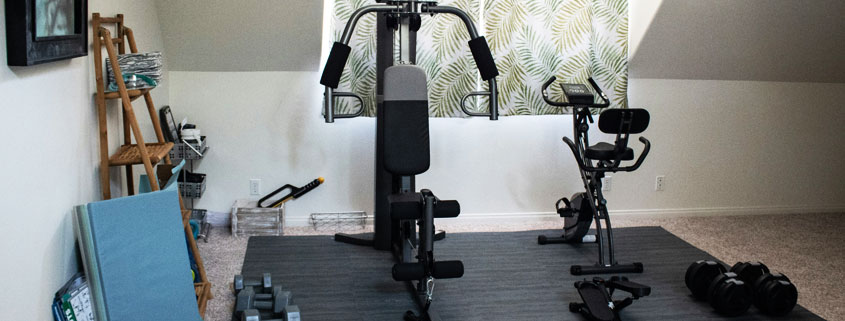
If the healthiest food is buried behind containers and confusion, the brain will choose something easier. If the exercise equipment is hidden in a closet and the area is cramped, movement will feel like a project. If the comfortable spot in the house is the one designed for scrolling, you will scroll. If the only clear surface is where you place deliveries and junk, clutter will spread.
Lifestyle is the sum of small choices made under fatigue. Fatigue is a predictable condition. The intelligent move is not to hope you will be disciplined forever. The intelligent move is to reduce friction around the behaviors you want and increase friction around the behaviors you regret.
The home is where friction is engineered.
Your kitchen is either a workshop or a vending machine
A kitchen can be a place where you build meals or a place where you assemble quick relief. The difference is not moral. It is structural.
A kitchen that supports cooking has clear counters, a predictable layout, and tools that are easy to reach. Ingredients are visible in a way that suggests possibility rather than scarcity. Storage is organized so that the default snack is not the first thing you see. Cleaning is manageable because the system supports cleanup rather than punishing it.
A kitchen that behaves like a vending machine is often overloaded and chaotic. You cannot find what you need. You do not want to make a mess. You avoid chopping because the cutting board is buried. You avoid cooking because cleanup feels overwhelming. Then you reach for packaged food because it produces less immediate friction.
This is why kitchen design influences health more than many people realize. A small kitchen can support excellent cooking. A large kitchen can sabotage it. The variable is usability. The kitchen is a behavior laboratory.
The way you store things determines the kind of person you become at home
Storage is not only about neatness. It is about identity reinforcement.
If your entryway has no place for keys, shoes, bags, and mail, your home will train you to be scattered. You will lose time and experience small stress spikes daily. If your storage is designed around what you wish you owned rather than what you actually use, your home will become full of friction and guilt. If you keep sentimental items in high-traffic zones, your attention will be pulled into memory and clutter constantly.
Good storage is honest. It says, this is who lives here, these are the objects that move daily, this is the speed of our lives, and this is where things belong when the day is messy. Bad storage assumes an ideal version of you that never arrives.
Lifestyle change often begins with a simple question. Where does this go when I am tired.
Lighting is a nervous system tool disguised as decor
Most people treat lighting as style. Warm bulbs, cool bulbs, floor lamps, overhead fixtures. The body treats lighting as information.
Harsh bright light at night can delay the brain’s transition toward sleep readiness. Dimmer warm light can signal safety and evening. Flickering or uneven lighting can create subtle agitation. A room lit only from above can feel clinical. A room with layered lighting can feel human.
Daylight is even more consequential. A home that allows morning light into common areas supports wakefulness, mood, and rhythm. A home that is always dim can make the day feel sluggish and psychologically heavy, especially in winter months.
When you adjust lighting, you are not only changing a room. You are changing a person’s internal timing. Many lifestyle struggles blamed on productivity or motivation are actually rhythm problems, and rhythm is shaped by light.
The placement of screens is the placement of your life
A screen is not neutral furniture. It is a portal that competes with everything else.
If a television dominates the living room, the room becomes a consumption space. Conversation becomes secondary. Reading feels like an alternative rather than a default. If screens are present in bedrooms, sleep quality suffers for many people, not only because of blue light but because of psychological association. The bed becomes a place of stimulation rather than rest. If work screens are placed in areas meant for leisure, stress follows you into the spaces that should help you recover.
Many people want better focus, better relationships, better rest. They attempt to achieve this through personal rules while leaving screens placed in the most dominant positions in the home. The environment keeps winning because the environment is always present.
Screen placement is lifestyle architecture. It decides what happens in a room without anyone saying a word.
Clutter is not mess, it is unfinished decisions
Clutter accumulates where decisions are postponed. A pile of papers is not paper. It is unresolved attention. A chair covered in clothes is not clothing. It is deferred sorting. A counter full of objects is not objects. It is a backlog.
This matters because unfinished decisions create cognitive load. You can enter a room and feel tired without doing anything because your brain registers the incomplete tasks represented by the clutter. The home becomes a low-grade stress field. You start avoiding areas. You start feeling guilty. You start using avoidance behaviors, scrolling, snacking, procrastinating, because the environment feels heavy.
A lifestyle is not only formed by actions. It is formed by the emotional climate in which actions occur. Clutter changes that climate.
The goal is not perfection. The goal is reducing the number of unfinished decisions your home keeps shouting at you.
Your home either encourages repair or encourages replacement
A subtle lifestyle shift involves the relationship with objects. Some homes are designed around maintenance. There are basic tools. There is space to fix things. There is a habit of mending, cleaning, adjusting, reusing. Other homes are designed around frictionless consumption. When something breaks, it is replaced. When something is inconvenient, it is discarded.
This is not just an economic story. It is a psychological story. A home that supports repair trains patience and competence. A home that supports constant replacement trains impatience and dependence. Repair culture also reduces waste and spending, but more importantly, it changes the person who lives there. It strengthens a sense of agency.
Lifestyle, at its most durable, is a relationship with reality. Repair is one of the most direct ways to build that relationship.
The living room is either a stage or a sanctuary
Many living rooms are designed for appearance, matching sets, fragile surfaces, arrangements that look good in photos. A living room built for living is different. It invites presence. It supports conversation. It allows comfort without anxiety. It can hold silence without feeling awkward.
This matters because many people do not have third places anymore. Fewer people gather in communal spaces regularly. The home is where relationships happen, where solitude happens, where recovery happens. If the home is not designed for those functions, life becomes thinner.
A living room that functions as sanctuary is not necessarily minimalist or maximalist. It is intentional. It prioritizes human behavior over showroom aesthetics.
The fastest lifestyle improvement is redefining what belongs where
Many homes struggle because zones are undefined. Work drifts into sleep space. Food drifts into every room. Shoes drift into living areas. Mail drifts across surfaces. Laundry drifts into corners. When zones blur, habits blur.
A home that supports lifestyle change creates clear boundaries. Not strict rules, but clear cues. This is where we eat. This is where we rest. This is where we work. This is where we play. These cues reduce decision fatigue. They also protect recovery.
Zone design is powerful because it shapes identity. When you sit at a table designed for eating and conversation, you behave differently than when you eat on a couch in front of a screen. When you work in a defined workspace, you can leave it. When you sleep in a room that is not filled with work cues, you can rest more easily.
The home becomes a map that guides behavior without moral struggle.
A home that supports your life will never be finished
The fantasy is that you redesign your home and then you are done. In reality, a good home evolves. Lives change. Bodies change. Work changes. Relationships change. Seasons change. A home that supports lifestyle change is not a fixed aesthetic. It is a responsive system.
This is why the most successful home transformations are not expensive renovations. They are ongoing adjustments that reduce friction, improve rhythm, and increase ease. A hook placed where it is needed. A lamp added where light was harsh. A bowl for keys. A chair moved so conversation happens. A screen relocated so sleep improves. A counter cleared so cooking becomes possible. Small changes that alter defaults.
Lifestyle change is often framed as internal transformation. The external world is shaping you every day, quietly, relentlessly, without asking permission. When you design your home with intention, you are not decorating. You are deciding what kind of life is easiest to live.

