
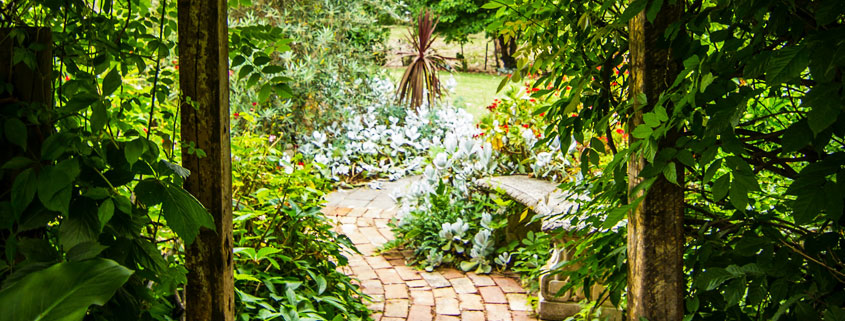
A garden can be watered with devotion and still refuse to flourish because the gardener has been arguing with the wrong element. Light is the invisible architect of every garden, shaping growth, flavor, disease resistance, bloom timing, and the very posture of a plant. Yet it is commonly treated as a background condition, a fixed stage that the gardener must accept. The result is a familiar pattern, people blame soil, fertilizer, pests, or their own supposed incompetence, while the real culprit is a mismatch between a plant’s light appetite and the garden’s light reality.
Light is not a single thing. It is intensity, duration, angle, color spectrum, seasonal timing, and the way trees and buildings sculpt shade into moving patterns across the day. A garden is not “sunny” or “shady” as if those were binary categories. It is a shifting mosaic. The gardener who learns to read that mosaic stops gambling. They begin designing with inevitability.
The most potent gardening skill is therefore not the ability to keep plants alive. It is the ability to place them where they can become themselves.
Light is a calendar, and plants read it with ruthless precision
Plants do not experience time the way humans do. They experience it through light. The length of day, called photoperiod, acts as a biological signal that tells plants when to grow leaves, when to flower, when to set seed, and when to enter dormancy. This is not a poetic metaphor. It is an internal mechanism. Many plants measure night length with astonishing sensitivity, triggering hormonal shifts based on the dark period, not only the bright one.
This explains why a plant can look healthy and still refuse to bloom. It can also explain why certain vegetables bolt, sending up flower stalks and turning bitter, even when they are watered. The plant is responding to an internal seasonal clock, and the clock is set by light and temperature together.
A gardener can fight this clock with fertilizer and irrigation. They will lose. A gardener can work with the clock by understanding the light conditions and choosing plants whose biological timing matches the site. The garden then stops feeling like a stubborn animal and starts behaving like a readable system.
The myth of “full sun” hides the complexity of intensity
Garden tags often use simple categories, full sun, partial shade, shade. These categories are convenient and inadequate. Full sun is usually defined as six or more hours of direct sunlight, but six hours of weak morning sun is not the same as six hours of afternoon glare. The angle of the sun, the heat load, and the spectral quality shift through the day. A western exposure in summer can be punitive. A southern exposure in winter can be generous.
Intensity also varies by region. A plant that tolerates full sun in a coastal climate may scorch in an inland heat bowl. A plant that thrives in shade in one place may languish in another because the shade is too deep, too dry, or too competitive with tree roots.
Even within one yard, intensity can vary dramatically. Reflected light from a pale wall can amplify heat and brightness. Dark mulch can increase soil temperature. Nearby pavement can radiate warmth into the night, changing stress patterns. A plant does not only receive light. It receives a microclimate shaped by surfaces and geometry.
When gardeners ignore intensity nuance, they misinterpret plant behavior. They may assume a plant is thirsty when it is actually sun-stressed. They may assume a plant is weak when it is simply placed in light that does not match its physiology.
Dappled shade is not the same as shade, and plants know the difference
A garden under a tree canopy is often described as shade, but shade is not uniform. There is deep shade, the kind under dense evergreen foliage. There is open shade, where the sky is visible but direct rays are blocked. There is dappled shade, shifting patches of sun that move like a living pattern across leaves.
Dappled shade can support a surprising range of plants, especially those adapted to forest edges or understory conditions. Deep shade, by contrast, demands plants that can photosynthesize efficiently in low light. These plants often have broader leaves and slower growth patterns. They are built for patience.
Many gardeners make the mistake of treating all shade as the same and then wonder why a plant recommended for shade fails. The plant might tolerate shade, but not root competition. Or it might tolerate shade, but not the dryness created by a tree’s canopy intercepting rainfall. Or it might tolerate shade, but not the stillness of air that encourages mildew.
Light conditions are rarely isolated variables. Shade often comes with other ecological companions, dry soil, reduced air movement, root pressure, leaf litter chemistry. A gardener who understands shade as a complex habitat stops trying to force sun-loving plants into it, and starts selecting species that interpret that habitat as home.
Etiolation is a plant’s confession that it is starving for photons
One of the most common garden failures looks like this: plants grow tall, thin, weak, and pale. They stretch toward a light source. Leaves become spaced out. Stems flop. Flowers are sparse. Gardeners often describe these plants as leggy, and then they try to fix the issue with pruning or fertilizer.
Legginess is not laziness. It is a plant reaching for survival. Etiolation is a physiological response to low light. The plant elongates cells to try to reach brighter conditions. This growth is structurally weak because it is not meant for strength, it is meant for escape.
Adding fertilizer to an etiolated plant can worsen the problem because it encourages more growth without solving the underlying energy limitation. The plant becomes bigger and weaker. It becomes more attractive to pests because soft tissue is easier to exploit. It becomes more vulnerable to disease because air flow decreases in a tangled structure.
Understanding etiolation changes the gardener’s approach. Instead of treating symptoms, they treat placement. They move the plant, thin the canopy, change the surrounding environment, or choose a species that thrives in the existing light.
The garden’s “shadow map” changes across seasons, and that is why summer success can become winter decline
Many gardeners evaluate their light conditions in summer, when the sun is high and days are long. They plant based on that impression. Then winter arrives. The sun drops lower. Shadows lengthen. The same spot that felt bright in July becomes gloomy in December. Plants that depended on light for vigor enter winter already weakened, making them more susceptible to cold damage, fungal disease, and root rot.
The reverse happens too. Deciduous trees drop leaves in winter, allowing sunlight to reach areas that are shaded in summer. That winter sun can benefit certain plants. It can also create stress for evergreens that experience winter burn when bright light hits frozen tissues, causing moisture loss the roots cannot replenish.
A garden is not only a daytime system. It is a seasonal light machine. A site that seems perfect for a plant during one part of the year may be a trap during another.
Gardeners who design with seasonal light patterns build gardens that mature gracefully. Gardeners who design with summer impressions often build gardens that feel like constant problem-solving.
Light is energy, and flavor is an energy story
The connection between light and plant flavor is one of the most overlooked truths in home gardening. Many vegetables and herbs develop their oils, sugars, and secondary compounds through photosynthesis and metabolic pathways that depend on light. Basil grown in adequate sun can be pungent and complex. Basil grown in low light can be mild, watery, and less aromatic. Tomatoes grown in high light tend to develop higher sugar concentration and richer flavor. Greens grown in intense sun can become tougher and more bitter, while greens grown in partial shade can be tender and sweet.
Even within the same plant, light matters. Fruit on the outer canopy of a pepper plant can ripen differently than fruit hidden inside. Grapes exposed to sun develop different chemistry than grapes shaded by leaves. Gardeners who thin foliage to expose fruit are manipulating not vanity, but biochemistry.
This is why a garden can be productive yet disappointing. If light is insufficient, yields may be lower. If light is mismatched, yields may exist but taste can be flat. Gardeners often blame variety or soil fertility, when the missing ingredient is energy, not nutrients.
Too much light is also a problem, especially in the era of hotter summers
Light does not only provide energy. It brings heat. In many regions, the challenge is no longer getting enough sun. It is protecting plants from excessive intensity and thermal stress.
Plants can experience sunscald, where tissues burn, especially on fruit and exposed stems. Leaves can bleach. Flowers can drop. Pollination can fail in extreme heat, particularly in crops like tomatoes and peppers where pollen viability declines at high temperatures. Soil can heat so much that roots slow or shut down, even if the plant is watered.
This is where shade becomes a tool rather than a limitation. Strategic shade cloth, companion planting that creates protective cover, or the use of structures that filter afternoon sun can preserve yields and extend seasons. A gardener who equates more sun with better outcomes may be designing a summer oven. A gardener who respects heat stress begins managing light as a spectrum rather than a maximum.
The garden’s future will reward those who learn to create intelligent shade without creating stagnation.
Trees are not only shade makers, they are light sculptors
Many garden light conflicts revolve around trees. Trees provide beauty, cooling, and habitat. They also create root competition and shade. The common response is either to fight the tree or to surrender to it.
A more useful approach is to treat trees as sculptors of light. The question becomes, how does this canopy distribute light across the day, and how can the garden be arranged within that distribution.
Pruning can change light patterns, but it must be done with respect for tree health. Removing too much canopy can stress a tree and invite disease. Raising the canopy can allow more light beneath without exposing the trunk to sunscald. Thinning certain branches can introduce more dappled light. Even the choice of understory plants can influence how light is used, some plants reflect light upward, others absorb it.
A garden beneath a tree can be a lush, layered habitat if you choose plants adapted to that relationship. It can also become a recurring disappointment if you treat the tree as an obstacle and the shade plants as compromises.
The healthiest shade gardens are not lesser versions of sun gardens. They are different gardens with their own aesthetics and strengths.
Walls, fences, and buildings create micro-light that gardeners can harness
Urban and suburban gardens often have structures that reshape light dramatically. A south-facing wall can create a warm pocket that supports plants that would struggle elsewhere. A reflective fence can brighten a shaded bed. A narrow side yard can become a wind tunnel with limited direct sun, requiring different plant choices than an open yard.
Morning sun and afternoon shade is often ideal for many ornamentals and some edibles because it provides energy without the harshest heat. A garden that receives bright shade, strong reflected light without direct rays, can support plants that would otherwise need more sun.
Understanding these patterns allows gardeners to use what they already have. Instead of seeing structures as limitations, they can be seen as tools. The garden becomes a study in geometry and time, not merely a patch of ground.
The real work is not planting, it is placement
Placement is the difference between a garden that demands constant intervention and a garden that behaves like it wants to live. This is why experienced gardeners often seem lucky. They are not lucky. They are placing plants where the light makes their lives easy.
The process is quieter than most advice suggests. It involves watching where shadows fall at different times. It involves noticing where morning light enters and where afternoon glare punishes. It involves recognizing that a plant’s label is not a promise, it is a loose guide. It involves acknowledging that your garden has its own personality, shaped by trees, buildings, latitude, and season.
When gardeners place plants well, they use less fertilizer because plants can synthesize energy efficiently. They use less water because root systems develop properly. They experience fewer pest crises because plants are less stressed. The entire garden becomes more coherent.
A light-aware garden does not feel like constant problem-solving. It feels like an environment where living things behave with dignity.
The garden that teaches you the most is the one you stop trying to force
There is a particular kind of grief in realizing you cannot grow everything you want in the space you have. That grief is also the beginning of real gardening. Gardening is not the fantasy of control. It is the craft of collaboration with a specific place.
Once you accept that light is the governing force, the garden becomes more honest. Sun lovers go where the sun is generous. Shade dwellers claim the quiet spaces. Heat-sensitive plants get protection. The garden becomes less about fighting your site and more about discovering it, the way a good traveler stops demanding the landscape behave like home and starts paying attention to what the landscape offers.
In that attention, gardens become more beautiful, not only because plants thrive, but because the gardener’s choices begin to reflect a deeper understanding of the place. Light, after all, is not just illumination. It is the garden’s daily story, written across leaves, soil, and walls, changing minute by minute, asking you to notice.

