
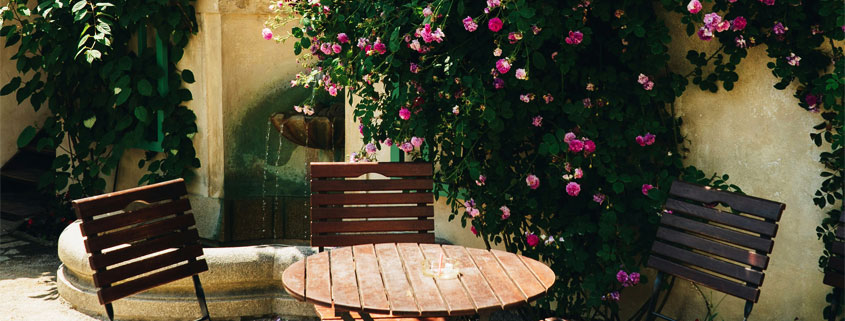
A garden is the rare place where impatience becomes visible. You can feel it in the hand that waters too often, in the shovel that moves soil before it is ready, in the sudden urge to prune because the plant is not “doing enough.” The garden does not punish cruelty so much as it exposes haste. It turns time into a material, and every choice you make is either a collaboration with that material or a refusal to accept it.
The modern world trains us to treat results as immediate, and gardening quietly contradicts that training. It insists that success is not a single event but a chain of conditions, many of which you cannot control. Sun changes. Wind arrives without asking. A late cold night can rewrite months of care. A week of heat can collapse a plan that looked intelligent on paper. Gardening is not only growing plants, it is learning how to live with a future that does not care about your schedule.
Soil is the first climate
Gardeners love to talk about plants, but the real drama happens beneath them. Soil is not a neutral medium, it is a living system that behaves like a small climate. It has temperature and moisture gradients. It has oxygen politics. It has microbial alliances. It has a memory of what has been planted, what has died, what has been added, what has been depleted.
When people say a plant “just didn’t like it,” they are often describing soil conditions that were never understood. Roots do not merely anchor, they negotiate. They trade sugars for nutrients with fungi. They signal distress to microbes. They respond to compaction as if it were a ceiling. They suffer when water fills the pores and pushes out oxygen. They hesitate when salts accumulate. A leaf can look healthy while a root system quietly fails.
The simplest mistake in gardening is treating soil as dirt, a passive substance you can ignore while focusing on what you see. Soil is closer to a city than a substrate. It has residents, infrastructure, traffic, and waste management. If you want a garden that lasts, you manage the city, not only the skyline.
Water is a story about oxygen
Most gardeners think of watering as giving something life. In reality, watering is a relationship between moisture and air. Roots need water, but they also need oxygen. The balance between the two is where many gardens succeed or collapse.
Overwatering is not merely “too much water.” It is a reduction in oxygen availability. When soil stays saturated, the pores that normally hold air become filled, and root respiration becomes difficult. Some plants tolerate this better than others. Many do not. The symptoms, yellowing leaves, wilting, slow growth, can be confused with thirst, which tempts the gardener to water again and deepen the problem.
Underwatering is also more complex than dryness. It is often a failure of the soil structure to hold water evenly. Hydrophobic soils repel moisture and cause water to run off or channel through cracks. Compacted soils prevent water from penetrating. Mulch can moderate evaporation and temperature swings, but it can also hide dryness if you do not understand what is happening underneath.
A skilled gardener does not ask, “Did I water enough.” They ask, “Is the root zone breathing.”
The garden runs on light, not on love
Gardening culture is full of language about care, attention, and devotion, and those things matter. Yet plants respond first to physics. Light is the primary currency. Without enough of it, everything else becomes a consolation prize.
Light is not only brightness. It is duration, angle, and spectral quality. Morning sun differs from late afternoon heat. Filtered light under a tree canopy is not the same as open shade near a reflective wall. A south-facing exposure can cook a plant in summer while providing glory in winter. A narrow courtyard can create a bright but brief window of sun that supports some species and starves others.
When a plant fails repeatedly, it is often because the light budget was misread. People may blame soil or water because those are easier to adjust, but light is architectural. It is shaped by buildings, trees, fences, latitude, and season. You do not fix it with fertilizer. You adapt by choosing plants that match the available light, or by changing the structure of the space.
Light also dictates flowering and fruiting. Many plants will survive in suboptimal light, but they will not perform. They will become leafy without producing what you planted them for. This is one of the cruelties of gardening, survival can look like success until you realize you were hoping for abundance.
Microclimates create winners and losers in the same yard
It is tempting to think of a garden as one environment. In truth, it is a mosaic of microclimates. A wall radiates heat at night. A low spot holds cold air. A windy corner desiccates leaves. A sheltered nook encourages fungal disease. A paved area reflects light and heat. An overhang redirects rainfall and creates drought conditions beneath it.
Microclimates explain why one plant thrives while its twin a few feet away struggles. They also explain why advice is often frustrating. A neighbor says a plant is easy, and in your yard it becomes a tragedy. The plant was not lying. The environment changed.
A gardener becomes effective when they stop treating the yard as a single stage and start reading it like a map. Where does frost linger. Where does soil dry fastest. Where does water pool after heavy rain. Which areas get winter sun. Which zones become ovens in late summer. Which sections are protected from wind.
The garden is a landscape of hidden differences, and those differences are the real design constraints.
Fertility is not feeding plants, it is managing cycles
Fertilizer culture often frames nutrients as a direct input, add this and the plant grows. That approach can work in containers or intensive systems, but in the ground it can become a long-term mistake. Fertility in a sustainable garden is not simply about adding nutrients, it is about managing cycles, decomposition, retention, and microbial processing.
Organic matter acts like a bank. It holds nutrients in forms that can be released. It improves structure, which improves water infiltration and oxygen availability. It supports microbial diversity, which stabilizes nutrient cycling. Compost is not magic because it is “natural.” It is magic because it brings carbon, microbial life, and structure in a package that improves resilience.
Excess fertility can be as damaging as deficiency. Too much nitrogen can create lush growth that attracts pests and becomes vulnerable to disease. It can delay flowering. It can encourage weak stems. It can wash away into waterways. A garden fed aggressively can look impressive for a season and then become dependent, fragile, and chemically unstable.
The best fertility strategies often look boring. They are consistent additions of organic material, careful observation, and patience. They do not create drama. They create a soil that can handle surprise.
Pests are often symptoms of imbalance, not invaders from nowhere
Garden pests are frequently described as enemies. This language makes sense emotionally, especially when a plant is being eaten with enthusiasm. Yet many pest outbreaks are less about invasion and more about imbalance.
Insects and diseases exploit weakness. A plant under drought stress emits signals that attract certain pests. Overfertilized plants can produce soft growth that is easy to chew. Monocultures create buffet lines. Lack of habitat for predators removes natural checks. A garden with constant disturbance and no shelter for beneficial insects becomes a place where pests reproduce without consequence.
This does not mean pests are imaginary. It means the response should be strategic rather than reactive. Spraying often solves a visible problem while creating invisible ones. It can harm pollinators and predators. It can lead to resistance. It can encourage a cycle where the garden becomes dependent on intervention.
An ecological approach focuses on creating conditions where pest pressure is manageable. Plant diversity matters. Habitat matters. Timing matters. Sometimes the most effective pest control is not a product, it is a redesign of the garden’s relationships.
Pruning is an argument about the future shape of a plant
Pruning is often taught as a technique, but it is really a philosophy. Every cut is a prediction. You are telling a plant where you want energy to go. You are deciding what to remove in order to shape what remains.
A common pruning mistake is treating it as cosmetic tidying. People cut because they want a plant to look disciplined, but the plant responds biologically, not aesthetically. It redistributes hormones. It triggers new growth. It changes airflow and light penetration. It can reduce disease pressure or worsen it depending on timing and method.
Pruning at the wrong time can sacrifice flowering, because many plants set buds on old wood. Heavy pruning can create vigorous shoots that are more susceptible to aphids. Over-thinning can expose branches to sunscald. Under-pruning can create dense growth that traps moisture and encourages fungus.
Pruning is powerful because it allows the gardener to collaborate with plant structure. It is also dangerous because it gives an illusion of control. A plant may obey temporarily and then express its own plan with stubborn regrowth.
The best pruners prune with humility. They cut with a clear reason and accept that the plant will respond in its own language.
Containers and raised beds change the physics of gardening
Growing in containers or raised beds can feel easier because it offers control. You choose the soil, you manage drainage, you can isolate plants from some soil-borne problems. Yet it also changes the physics. Containers heat faster. They dry faster. They freeze faster. Nutrients flush out more quickly. Root space is limited.
Raised beds can warm earlier in spring and drain well, but they can also dry out unpredictably, especially in windy climates. They can become saltier if irrigation water is hard. They can become nutrient hungry if organic matter decomposes quickly and is not replenished.
Container gardening rewards attentiveness. It punishes neglect. It can produce spectacular results because the conditions are curated, but it demands a different rhythm than in-ground gardening. It is closer to managing a small ecosystem with tighter margins.
Many gardeners fail in containers because they treat them like miniature ground beds. They are not. They are a different world.
The emotional economy of the garden
Gardening is often described as therapeutic, and it can be. Yet it also contains specific kinds of grief and disappointment. Plants die for reasons that remain unclear. Pests undo weeks of hope. A storm breaks a branch you were proud of. A seed packet promises abundance and delivers silence.
These failures can be painful because gardening invites attachment. You invest time, and time is intimate. The longer you care for a plant, the more it feels like a relationship rather than an object. When it fails, you do not only lose a plant. You lose the future you imagined around it.
At the same time, gardening can create a gentler relationship to failure. It teaches that loss is part of cycles. It teaches that the garden is not a museum. It teaches that the dead plant is also material, it becomes compost, it feeds something else. It teaches that perfection is not the goal, continuity is.
The emotional economy of the garden is built on accepting that you are not the author. You are a collaborator with weather, biology, and time.
Gardening as design, not decoration
Many people approach gardens as decoration, a way to make a space look pleasant. That approach can produce beauty, but it often collapses under the weight of maintenance. A decorative garden is often designed for immediate effect, which can mean plants placed without regard for mature size, soil needs, or long-term harmony.
A designed garden thinks in layers and years. It considers how plants will interact as they grow. It plans for succession, what happens after bloom, what fills the gaps, what holds structure in winter. It uses repetition to create coherence and variation to prevent monotony. It considers ecology as part of aesthetics, the presence of pollinators, the habitat for birds, the soil life beneath.
The most sustainable gardens often look less like curated displays and more like living communities. They have redundancy. They have resilience. They have room for change.
When gardening becomes design, maintenance becomes more like guidance and less like constant correction.
The radical patience of perennial thinking
Perennials are not simply plants that come back. They are a philosophy of investment. They ask you to think beyond a season, beyond the immediate payoff. They often look modest in their first year. They establish roots, negotiate with soil, and prepare for future performance. Their reward is not immediate. It is cumulative.
Annuals offer drama. Perennials offer depth. A garden built on perennials can become more beautiful with time, which is the opposite of many consumer experiences. It is one of the few places in modern life where patience yields a visible return that cannot be rushed.
Perennial thinking also changes how you view setbacks. If a plant fails one year, you do not assume the whole plan is broken. You adjust. You learn. You let the garden mature into its own stability.
The cultural value of gardening may be less about fresh tomatoes or flowers, and more about learning a rhythm that makes the rest of life feel less frantic.
The garden as a form of attention that resists speed
The garden does not reward the impulse to optimize every second. It rewards showing up at the right times and not doing too much at the wrong ones. It rewards noticing small changes, a leaf color shift, a new insect, a soil texture after rain, the way sunlight moves across the yard in late winter.
This is a kind of attention that many people have lost practice in. Gardening rebuilds it. It teaches you to observe rather than to scroll. It teaches you to wait without feeling empty. It teaches you to accept uncertainty as part of living systems. That is why gardening can feel like relief, not because it is easy, but because it restores a sense of relationship with the world that is not mediated by instant feedback. A good garden is not a finished object. It is a continuing conversation, one in which you never entirely get the last word.

