
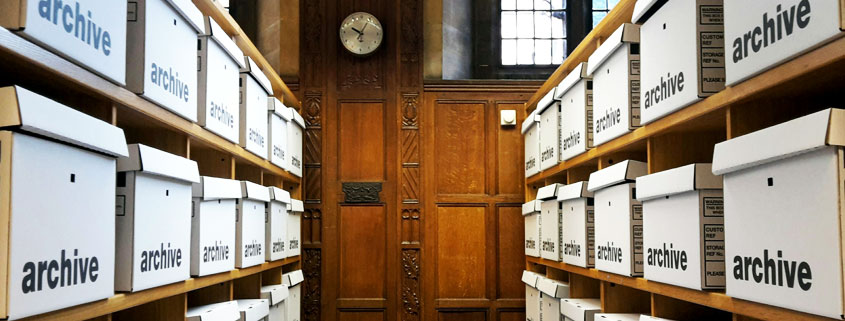
A teenager deletes a photo, and still it lingers, not in some melodramatic “cloud,” but in caches, backups, screenshots, mirrors, and the minds of strangers who now own a version of it by having seen it. An employee leaves a job, yet their name remains welded to old meeting notes and half-forgotten Slack jokes. A woman changes her politics, her faith, her relationship to her body, and years later a single search result resurrects a past self with the confidence of a courtroom exhibit. We built the most comprehensive memory machine in human history, then acted surprised when it started insisting that nothing should ever be forgiven, outgrown, or allowed to soften at the edges.
The strangest thing about digital permanence is that it is not primarily technological. It is cultural. Machines can forget. We simply rarely give them permission to, because our incentives keep pointing in the opposite direction. Storage is cheap, analytics are lucrative, training data is precious, legal risk feels lower when you keep receipts, and social power often accrues to the person who can produce a timestamped artifact. So we keep everything. We archive, index, duplicate, and synchronize. We treat data like a mineral deposit, and the past like raw ore.
Meanwhile, human beings remain stubbornly biological. We need memory, but we also need erosion. We depend on selective recall to keep living, to keep trusting, to keep changing. Forgetting is not a failure of the mind. It is one of its great inventions.
Forgetting Is Not the Opposite of Truth
In everyday talk, forgetting sounds like negligence, denial, or cowardice. Yet most of what we call “maturity” is a refined ability to let certain things lose their charge. A childhood humiliation fades not because it was unreal, but because it no longer deserves daily rent in the nervous system. A friendship ends, and the bitter details blur, leaving a simpler outline that allows gratitude without reopening the wound. Even whole societies rely on forms of forgetting, sometimes honorable, sometimes destructive, because memory at full volume can turn into a perpetual mobilization against yesterday.
There is a difference between erasing a crime and allowing an awkward phase to stop being searchable. There is a difference between hiding abuse and letting a foolish tweet from 2011 stop acting as a life sentence. Digital culture often collapses these distinctions, not because we have carefully reasoned our way into cynicism, but because our tools make all memory feel equally retrievable, equally current, equally admissible.
When the past is always one click away, time stops doing one of its quiet jobs. In older settings, distance created mercy. A story had to be carried by mouths. A mistake had to be remembered by people who also had to keep living with you. Memory demanded effort, and effort filtered what endured. The filter was imperfect, it protected the powerful at times, and it also gave ordinary people space to reinvent themselves.
Now the filter is algorithmic, which is another way of saying it is optimized for engagement, not for human development. What gets preserved, amplified, or resurfaced is often whatever produces a reaction, not whatever deserves ongoing relevance.
The First Great Shift Was Writing, Not the Internet
The dream of perfect recall predates servers and social apps. Plato already worried that writing would weaken memory, but there was another deeper transformation happening in the background. When a culture starts storing information outside the body, it changes the social meaning of remembering. A spoken promise becomes a document. A reputation becomes a record. Authority migrates toward whoever controls the archive.
Printing intensified this. Bureaucracy intensified it again. Photography, audio recording, and video made the record feel not only textual but sensory, which introduced a new kind of certainty. A person could say, “That is not what happened,” and someone could reply, “It is, because here is the tape.” That exchange can be justice, or it can be tyranny, depending on what is being recorded and why.
The internet did not invent the archive. It industrialized it, miniaturized it, and attached it to everyday identity. Most people are not afraid of memory as an abstract concept. They are afraid of being flattened by it, reduced to a single artifact, framed by context they cannot control, and judged by audiences who never had to negotiate a living relationship with them.
A record without relationship is powerful and crude. It offers evidence without empathy. It can be accurate and still distortive, because it captures an instant and then pretends the instant is the person.
What Permanence Does to a Self That Is Still Becoming
Human identity is not a statue. It is closer to a rehearsal, a draft that keeps being revised by new experiences, by grief, by love, by boredom, by mentorship, by humiliation, by the slow pressures of adult responsibility. Digital permanence interferes with this by insisting that every draft be preserved and searchable.
Young people feel this first. Adolescence is experimentation with social roles. It is a period defined by trying on voices and sometimes failing in public. Historically, it was contained by limited audiences. A mistake could be witnessed, punished socially, and then forgotten as the group moved on. That forgetting was not kindness alone. It was practicality. A community cannot function if it treats every lapse as definitive.
Online, a phase is not a phase. It is a permanent exhibit. The result is a new kind of self-surveillance. People learn to perform adulthood earlier, not because they have earned wisdom, but because the internet punishes the messy process of gaining it. The safest persona becomes a cautious, optimized one. You can still be playful, but it must be the right kind of playful. You can still be outrageous, but you must be strategically outrageous. You can still change your mind, but you must do it with a publicly legible narrative that anticipates hostile interpretation.
This pushes culture toward an aesthetic of preemptive defense. It is not only exhausting. It narrows the range of honest expression that a society can tolerate, because honesty includes contradiction, and contradiction is easy to screenshot.
The Invisible Mechanics of “Delete”
Most people think of deletion as a moral act, a small assertion of control. Technically, it is often closer to a request than a command. Modern data systems are built for resilience, which means replication. A photo travels from device storage to cloud storage to content delivery networks to caches, all optimized for speed and reliability. Backup systems keep older versions. Logs record actions. Analytics systems extract metadata. Third parties ingest content through integrations. Other users save copies.
Even when a service genuinely intends to honor deletion, it may still retain fragments for operational reasons. A system designed for high availability treats forgetting as an error condition. Engineering culture praises durability, not graceful decay.
Then there is the social layer. A platform can remove your post, but it cannot remove the private collections of people who saw it. It cannot remove the cultural residue, the way an image reshapes how someone remembers you. Memory is not only storage. It is interpretation, and interpretation is contagious.
So “right to delete” becomes a partial right, and everyone senses that partiality. That is why people increasingly curate their lives as if every moment is potentially permanent, which is a weird way to live, like carrying your future employer on your shoulder at a party.
The Economics of Keeping Everything
Permanence persists because it pays.
Data fuels personalization. Personalization fuels attention. Attention fuels advertising and subscription retention. Even outside the ad economy, stored behavior helps companies reduce churn, tune onboarding, and train models. Meanwhile, the cost of storage has dropped, but the value of historical data has climbed. In many organizations, keeping everything feels like prudence. You never know what might become useful.
There is also legal anxiety. Many entities fear deletion because they worry it looks like concealment. Yet retention can create its own liability, because the more you keep, the more you can be compelled to produce, the more you can leak, and the more you can be attacked for failing to protect it.
The broader social economy also rewards permanence. Call-out culture, investigative journalism, accountability movements, and ordinary interpersonal conflict all benefit from receipts. Sometimes receipts are essential. They protect victims when institutions would prefer plausible deniability. They challenge revisionist narratives. They prevent powerful people from laundering their histories through charm.
But the logic of accountability can metastasize. When receipts become a general-purpose weapon, the culture starts treating everyone as a suspect, everyone as a potential headline. People stop distinguishing between harm and embarrassment, between patterns of abuse and the evidence of being young, insecure, or wrong on the internet once.
An archive can be a tool of justice. It can also become a market for humiliation. The same mechanisms support both outcomes, which is why the question is not “Should we remember?” but “Who controls what resurfaces, and in what context?”
Context Collapse as a Design Problem
In physical life, context is natural. Your coworker sees you in the office. Your childhood friend sees you in a different posture. Your grandparent meets a version of you that is filtered through family. These contexts overlap, but they do not fully merge.
Online, they merge constantly. A post made for friends can be shown to strangers. A joke made in a subculture can be interpreted by an audience that assumes the worst. A statement made in a particular moment, under a particular emotional weather, can be read years later as if it was written today.
This is often described as a cultural problem, but it is also a design problem. Many platforms treat all content as equally portable. They make sharing frictionless and remove the subtle cues that signal intended audience. They also reward the stripping away of context, because outrage travels better as a fragment than as a full conversation.
A society cannot rely solely on good faith to solve this. Good faith is unevenly distributed, and incentives routinely punish it. If you want a culture where people can learn and change without constant fear, you need tools that respect the reality that identity is situational.
Ephemerality Was Supposed to Be the Answer, and It Wasn’t
Some platforms flirted with ephemerality. Stories disappear. Messages vanish. The design language implies impermanence, like footprints on a beach. Yet the promise is leaky. Screenshots exist. Screen recordings exist. Third-party apps exist. Even without those, the emotional consequences of something seen do not expire on schedule.
Ephemerality also creates a new tension: if content disappears, people may feel pressured to check constantly, which intensifies the attention trap. “It’s temporary” can become another hook, another way to keep users tethered.
There is a deeper issue too. Ephemerality is not the same as forgetting. A disappearing post is a timed deletion. Forgetting is a gradual loosening of importance. It is not binary. It is not a countdown. It is a reweighting.
What we need is not just content that vanishes, but memory that learns. Memory that can say, “This is old, and it should not be treated as a present-day claim.” Memory that can say, “This belonged to a teenager, and it should not be ranked as a defining adult trait.” Memory that can say, “This was part of a conflict, and what you are seeing is one slice.”
That kind of memory is harder to build, because it requires humility in the system. It requires admitting that raw retention is not the same as meaning.
The Morality of Search Results
Search feels neutral because it arrives with a clean interface and a sense of inevitability. But ranking is moral. Autocomplete is moral. The decision to show an old arrest photo before a person’s current work is moral. The decision to surface gossip before a correction is moral. Even the decision to keep a page indexed forever is moral.
The deepest cruelty of the permanent web is not that it stores our mistakes. It is that it can deliver them to someone else as a first impression, without warning, without context, and without the ordinary social process where you discover a person gradually.
First impressions matter because humans compress. We cannot hold infinite nuance. We rely on shortcuts. The internet supplies shortcuts at industrial scale, then acts offended when people behave like the shortcut is reality.
In a culture of searchable selves, people are not only living their lives. They are managing their discoverability. That pushes them toward a kind of preemptive public relations, even in private.
Forgetting as a Civic Capacity
A community needs mechanisms for consequence. It also needs mechanisms for reintegration. If a person is permanently marked, they lose incentive to improve. If change is not recognized, cynicism becomes rational.
Older societies had rituals for this, some formal, some informal. A public apology could be followed by a period of silence and then a return. A mistake could be remembered as part of a story, but not the whole story. A person could earn a new reputation through consistent behavior.
Digital permanence interrupts reintegration because it makes stigma easily renewable. A decade-old thread can be reposted, and suddenly a settled matter becomes current again. This can be necessary when genuine harm was never addressed. It can also be gratuitous, a way to resurrect conflict for entertainment.
A culture that cannot forget becomes brittle. It becomes a place where people hoard evidence instead of building trust. Where vulnerability feels unsafe because any confession can be weaponized later. Where forgiveness becomes rare not because people are morally stricter, but because the archive keeps reintroducing the offense as if it just happened.
This is a civic problem, not only a personal one. It shapes how societies handle disagreement, rehabilitation, and political evolution. It shapes whether people can defect from harmful movements without being permanently associated with them. It shapes whether public life becomes a purgatory of permanent suspicion.
Designing for Decay Without Designing for Impunity
The obvious objection arrives quickly: if we allow forgetting, won’t the powerful erase their wrongdoing? Won’t abusers hide patterns? Won’t history get rewritten?
These are serious concerns, and they are exactly why “forget everything” is not an answer. The point is not to dissolve accountability. The point is to distinguish between categories of memory and to build systems that treat them differently.
A society already distinguishes. Court records are not the same as gossip. Medical histories are not the same as party photos. Public officials are not the same as private citizens. Crimes are not the same as bad jokes. The web often ignores these separations because it was built as a giant flattening machine, a universal publisher that makes everything feel equally public once it is online.
Designing for humane forgetting means creating new layers, not erasing layers. It might mean stronger privacy defaults for ordinary life, while preserving rigorous archives for matters of public accountability. It might mean making search engines treat old material differently, reducing its prominence, attaching context, or making resurfacing require intent rather than accident.
It might mean shifting from an internet that assumes content should last forever unless deleted, to one that assumes content expires unless deliberately preserved. That would be a radical change, but radical does not mean reckless. It means acknowledging that our default settings currently impose a moral philosophy, whether we admit it or not.
The Quiet Power of Friction
One of the most underestimated tools in design is friction, the small pauses that ask, “Are you sure?” Friction is often maligned because it reduces growth metrics. Yet in human terms, friction can be mercy.
Consider how different online life would feel if resharing required a short annotation, if virality demanded a sentence of personal stake rather than a reflex. Consider if screenshots automatically carried a visible timestamp and source context, making it harder to launder an old moment into a present outrage. Consider if platforms discouraged anonymous mass amplification of private citizens, not through censorship, but through slowing down the ability of a mob to form around a single artifact.
Friction is not a solution to everything. It can be abused. It can be used to suppress dissent. But thoughtfully deployed, it can interrupt the worst dynamics of context collapse by giving people time to realize they are about to turn someone else into content.
Forgetting, in practice, might look like friction plus decay. The content remains accessible in appropriate contexts, but it is less likely to ambush people as a default narrative.
Data Minimization as an Act of Respect
One of the cleanest paths to humane forgetting is simple: collect less.
The internet normalized the opposite. Apps request contacts, location history, microphone access, browsing behavior, and then store it because it might be useful. But the moral question is not only what a company does with data today. It is what that data can be used for tomorrow, by future executives, future governments, future attackers, or future machine-learning systems that infer things a person never explicitly shared.
Data minimization treats people as more than sources. It recognizes that the safest breach is the one that cannot happen because the data never existed. It recognizes that consent is fragile, because people cannot foresee all future uses. It recognizes that “we keep it for your convenience” can become “we kept it for our leverage.”
A culture that values forgetting would treat minimal collection as good manners, like not recording every conversation you have with your friends just because you could.
The New Literacy Is Temporal
We teach media literacy as if the key problem is truth versus falsehood. Increasingly, the problem is time.
A statement can be true and still misleading if it is outdated. A statistic can be accurate and still irrelevant if the world has shifted. A person can hold a view sincerely at one point and reject it later. The archive does not naturally communicate this. It presents material with the cold confidence of permanence.
Temporal literacy means asking: When was this produced? What stage of life did it come from? What circumstances shaped it? Has the person addressed it since? Is this the kind of artifact that should travel across contexts?
Platforms could support this literacy by displaying time more prominently, by discouraging resurfacing without context, by attaching update pathways that let people annotate their own history rather than trying to erase it.
Imagine an internet where a person’s old posts were not buried, but were accompanied by a visible trail of subsequent reflection. Not a performative apology, not a PR statement, but a simple acknowledgment: “I no longer think this. Here is why.” That would convert permanence into growth documentation instead of permanence as a trap.
Of course, it could be gamed. Everything can be gamed. Still, the alternative is the current situation, where people either pretend they were always perfect or accept that their early self will be used against them indefinitely.
The Politics of Forgiveness in a Recorded World
Forgiveness has always been hard. In a recorded world, it becomes harder because forgiveness requires letting the past become less vivid. When evidence is always retrievable, the emotional intensity can be refreshed on demand. Anger becomes evergreen.
This shapes politics. It shapes activism. It shapes workplace culture. It shapes friendships. It turns every controversy into a potential archival weapon. It also shifts power toward those who are skilled at producing narratives from fragments, because in an attention economy, the best storyteller often wins, regardless of truth.
Yet there is a paradox: the archive can also protect the vulnerable. It can document patterns that would otherwise be dismissed. It can expose hypocrisy. It can keep institutions from quietly burying harm. People who call for forgetting sometimes do so as a strategy for escaping consequence.
So the ethical task is not to romanticize forgetting. It is to build a more mature relationship with memory, one that preserves what must be preserved and allows ordinary life to remain capable of softening. A society that cannot grant anyone the dignity of change is a society that will eventually be governed by fear and performance.
What a Humane Internet Would Feel Like
You would still be able to find things. Investigators could still investigate. Victims could still document. Historians could still archive. The difference would be in the default experience of being a person.
A humane internet would not treat your worst day as your most searchable feature. It would not make adolescent experimentation a permanent brand. It would not allow context stripping to serve as the main engine of engagement. It would assume that privacy is not secrecy, and forgetting is not corruption.
It would also recognize that some memories are too powerful to be left to automation. There would be clearer, enforceable norms about redistributing private material. There would be consequences for turning ordinary citizens into targets. There would be design choices that privilege repair over spectacle.
Most importantly, it would acknowledge what humans already know in their bones: that becoming someone new is not hypocrisy, it is the only way anyone survives time.
The question is not whether we can build machines that remember forever. We already did. The question is whether we can build a culture, and the technical choices that embody it, that can tolerate the messy, slow miracle of people changing while the archive watches.

