
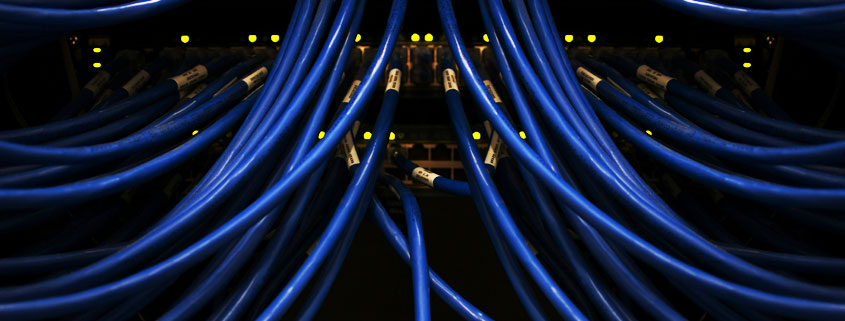
A message leaves your phone with the casualness of breath. It feels weightless, nearly spiritual, as if it dissolves into pure signal and reappears somewhere else by magic. In reality it behaves like an old-fashioned thing. It travels a route. It depends on chokepoints. It can be cut, dragged, mislaid, repaired by hand, and fought over like land. The internet, for all its talk of clouds, still has an address, and much of that address is wet.
Picture the ocean at the scale most people never picture it, not as scenery, not as a vacation, but as infrastructure. On the seafloor are cables no thicker than a garden hose, carrying the bulk of global data as pulses of light inside hair-thin fibers. They are laid with extraordinary care, then abandoned in plain sight of no one, stretching across trenches and continental shelves, passing near reefs and shipwrecks, threading between islands, and approaching coasts where the shoreline looks peaceful and utterly unaware of the nervous system hidden just offshore.
What makes these lines so unsettling is not merely that they exist. It is that they are both indispensable and strangely easy to harm. The planet’s most advanced economy rides, in part, on something that can be snagged by an anchor and fixed by a crew with specialized grapnels, patience, and a tolerance for rough seas. The true marvel is not the fragility. It is the fact that this arrangement works as reliably as it does.
A Map You Have Never Seen
If you could peel away the romance of the globe and look at it as a logistics problem, the first thing you would notice is that distance is uneven. Some regions are tied together by multiple redundant routes like braided rope. Others hang by a thread.
Most people imagine global connection as a uniform mesh, a kind of planetary Wi-Fi. The physical map is lopsided. Cables follow the economics of attention and trade, not the ethics of equal access. They cluster around wealthy coasts, major financial centers, dense corridors of population. Island nations sometimes depend on a small number of links that function as lifelines and liabilities at once. A coastal city with several landing points can absorb a break as an inconvenience. A region served by a single route can experience something closer to isolation, not necessarily total blackout, but a slow constriction that changes what the internet feels like. Pages hang. Calls stutter. Streaming degrades into apology.
These maps are not entirely secret, yet they rarely enter ordinary consciousness. Partly this is because the routes are technical, full of latitudes and bathymetry and landing stations. Mostly it is because we are encouraged to experience the internet as placeless. Placelessness is good for marketing. It is also good for certain kinds of power. If you do not know where connection is routed, you cannot easily ask who controls it, who can interrupt it, who can listen, or who benefits from its shape.
Even the word “backbone” misleads. A backbone suggests a central spine, one dominant structure. Undersea connectivity looks more like a set of habits, paths chosen over decades because of cost, politics, storms, and previous investment. The cable map is history written in glass.
The Strange Art of Choosing a Path Through Water
Laying a cable across an ocean is not a matter of drawing a straight line and paying for it. It starts with surveys that read the seafloor like an engineer reads a building site. The bottom is not a smooth basin. It is ridged, sloped, cratered, and strewn with hazards. Some hazards are obvious, like undersea mountains. Others are more mundane and more dangerous, like busy shipping lanes where anchors drag, or fishing grounds where trawling equipment can scrape anything within reach.
The route has to negotiate nature and humans at once. Too deep, and repairs become harder. Too shallow, and the cable lives in the violent zone where ships, currents, and coastal activity concentrate risk. Too close to a politically unstable coastline, and the business case begins to wobble. Too far from an expected traffic corridor, and you lose latency advantages that matter for finance, gaming, and real-time services.
The cable itself is an object of layered compromise. In the deep ocean it can be relatively light, because nothing is likely to touch it. Near shore it gains armor, steel wire and protective sheathing, sometimes buried beneath the seabed by plows that carve narrow trenches. What is elegant at depth becomes rugged at the margins, because the coast is where the world grabs things.
This is an odd inversion of intuition. We imagine the deep as hostile and the shore as safe. For cables, the deep is often calm. The coastal zone is where chaos lives.
Landing Stations, the Unromantic Gateways of Global Life
The most consequential places on the cable map are not in the middle of the ocean. They are the landings, those modest stretches of coastline where undersea lines come ashore and transition into terrestrial networks. A landing station can look like any other secure facility. It may sit behind fences and cameras, humming quietly while enormous volumes of traffic pass through.
These sites are bottlenecks disguised as real estate. They require stable power, physical security, and reliable access for maintenance. They also require legal agreements, local permits, and political toleration. A landing is where a nation’s sovereignty meets a private consortium’s infrastructure. It is where regulation meets engineering. It is where intelligence agencies take interest, because if you want to watch data, you do not need to chase it across the ocean. You wait for it at the door.
The geography of landings shapes the geography of commerce. Companies that need low-latency routes and high redundancy often cluster near major landing regions. Data centers grow like reefs around these points. Entire digital ecosystems anchor themselves to the places where glass meets sand.
This creates a quiet inequality. Some communities live near the doors of the global network and benefit from investment, jobs, and connectivity. Others live far from those doors and experience the internet as a service delivered late, thin, and expensive.
Cable Ships and the Human Labor of “Always On”
When an undersea cable breaks, the failure has the drama of an event and the tediousness of a repair job. The internet does not collapse, because traffic reroutes, but capacity tightens. Operators scramble to diagnose the fault, which might be a cut, a kink, a degraded segment, or a failure in a repeater. Then a cable ship is assigned, and the ocean becomes a worksite.
Cable ships are specialized vessels with equipment that looks archaic until you realize what it must do. They carry spools of cable like giant coils, and they deploy grapnels to retrieve broken ends from the seafloor. This is not a surgical robot descending into a neat environment. It is a crew working against currents, weather, and uncertainty. They drag for kilometers sometimes, searching for a line they cannot see, using tension and instrumentation to feel the difference between snagging a cable and snagging a rock.
Once the ends are brought aboard, technicians splice fibers in controlled conditions, aligning microscopic strands so precisely that light can pass with minimal loss. The repair then returns to the sea, lowered back into place, sometimes reburied near shore. The whole process can take days or weeks depending on location and conditions.
There is a particular kind of modern humility in this. We tell ourselves we live in an age of the virtual, yet the reliability of global connection can hinge on a crew’s skill with heavy equipment and tiny fibers, on their ability to work a long shift in bad weather, on whether a ship can reach a distant spot in time.
Accidents, Sabotage, and the Problem of Intent
Most cable breaks are mundane. Anchors drag. Fishing gear snags. Earthquakes shift seabeds. Landslides underwater can tug and snap lines like thread. It is a world of accidents, which is why it is also a world of plausible deniability.
The possibility of sabotage hovers over this infrastructure like a permanent shadow. Cutting a cable is not conceptually hard. The ocean is large, the lines are numerous, and the sites are distributed. The difficulty is not in the act itself. It is in doing it without being noticed, in choosing a target that produces meaningful disruption, and in managing the political consequences of being suspected.
That suspicion is its own kind of weapon. When a cable fails near a contested region, every actor watches every other actor. The break becomes a story. It can trigger diplomatic accusation even if the cause was geological. In this way the cable network becomes a stage for modern paranoia, where the same physical vulnerability fuels both real risk and strategic narrative.
What makes this more complex is that undersea cables sit at the intersection of private enterprise and national security. Many cables are owned by consortia, partnerships between telecommunications firms, infrastructure investors, and increasingly the giant technology companies that need massive capacity. When a private asset becomes critical to public life, the question of protection changes character. You are not simply guarding a business. You are guarding a condition of modern citizenship.
The Ocean as a Geopolitical Border
Borders are usually imagined as lines drawn on land. In practice, influence is also expressed through routes. Whoever can shape routes can shape dependence.
Undersea cable geography creates new forms of strategic leverage. A nation that hosts major landing points can become a gateway. A region that sits astride a narrow corridor of seabed becomes a choke area. Even without overt control, proximity matters. If many routes pass through a particular zone, disruption in that zone has outsized effects.
This is why states care about cables even when corporations build them. It is why debates about routing can become political. It is why countries sometimes push for domestic landing points rather than relying entirely on neighboring hubs. It is why some governments encourage redundant links as a national resilience policy, not merely a market improvement.
The deeper truth is that geopolitics did not disappear in the digital age. It simply changed costume. Instead of arguing only about pipelines and canals, powers now argue about fiber routes, data localization, and which entities can own key segments.
Even “neutral” ocean space is not neutral. It is governed by treaties, norms, and enforcement capacities that vary. The sea has always been a place where law struggles to keep up with capability. Undersea connectivity inherits that uncertainty.
The Law of a Place That Is Not a Place
Undersea cables run through territorial waters, exclusive economic zones, and the high seas. Each zone carries different rights and obligations. On paper, cables enjoy certain protections and freedoms. In practice, enforcement is inconsistent, especially far from shore. A cable cut in deep water can be hard to attribute and hard to punish.
There is also the question of who gets to approve a landing. A landing station sits in a sovereign state, which means the state can demand conditions, monitoring, or partnership. Some governments view this as legitimate oversight. Others view certain conditions as unacceptable intrusion. Corporate operators prefer predictability, but predictability is often what politics refuses to provide.
This creates a quiet tension between the internet as global system and the world as a set of territorial claims. Data moves as if borders are obstacles to be routed around. Law moves as if borders are the central organizing fact.
The result is a form of negotiated reality. Cables are laid where permission can be obtained, where risk can be priced, and where the market believes stability will last long enough to recover investment. This is not purely rational, because history is not purely rational. It is a bet, made physical.
A Hidden Ecology of Heat, Noise, and Accident
The cable network is often described as invisible, but it is not without environmental footprint. Cable laying disturbs seabeds in coastal areas, especially when burial is used. Ships burn fuel. Maintenance voyages add to maritime traffic. Landing stations require power, and power has upstream consequences.
At the same time, cables are oddly modest compared to other forms of industrial intrusion. They do not leak oil. They do not spill toxic cargo when they fail. They sit quietly once laid. In some cases, they become part of the seafloor landscape in ways that interact with marine life, sometimes as objects to avoid, sometimes as surfaces around which organisms gather.
There is a persistent myth that sharks are major cable destroyers. The reality is more nuanced. Certain animals have interacted with cables historically, and some incidents have occurred, but the dominant sources of damage tend to be human activity near shore and geological events. The myth persists because it is a perfect story, a collision between modernity and primal nature, and because it makes the infrastructure feel adventurous rather than administratively vulnerable.
The more unsettling ecological story is not animals biting cables. It is the broader reality that the ocean is not a passive medium. It is dynamic. Seabeds shift. Currents erode. Coastal regions are battered by storms that grow more intense as climate patterns change. The infrastructure does not sit outside environmental change. It is embedded in it.
The Corporate Turn and the New Ownership of the Deep
For much of the internet era, undersea cables were associated with telecommunications carriers and infrastructure consortia. Increasingly, the companies that run global digital services have become major builders and owners. This is a logical evolution. If you need vast capacity between continents, owning the route can be cheaper and more controllable than leasing it forever. It can reduce latency, improve redundancy, and insulate operations from market fluctuations.
Yet the ownership shift changes the political meaning of cables. When the same entities that shape information ecosystems also own significant portions of the underlying transport, questions multiply. Who gets priority in capacity allocation? How transparent are routing decisions? How does a private firm’s optimization interact with a public interest in resilience and fairness? What happens when a corporate dispute becomes an infrastructure dispute?
This is not a conspiracy so much as a structural transformation. As digital giants become infrastructure builders, they become quasi-utilities without necessarily being treated like utilities. They inherit power that is not always matched by public oversight or public expectation.
The sea becomes not only a place of geopolitics, but a place of corporate strategy.
The Myth of the Cloud and the Seduction of Abstraction
The word “cloud” is one of the most effective metaphors ever sold. It invites you to stop thinking about where things are. It suggests softness, diffusion, a kind of benign atmosphere. It implies that your photos and messages live somewhere above the mess of the world, safe from the dirt of politics and the hassle of geography.
Undersea cables are the antidote to that fantasy. They insist on materiality. They insist that the internet is made of routes and landings and contracts and ships. They insist that connectivity has a logistics chain like any other modern service.
Abstraction is not inherently bad. It helps systems scale because most users do not need to know the details. The problem comes when abstraction becomes a form of ignorance that benefits certain actors. If you think your data lives in a cloud, you may not ask which jurisdiction it travels through. You may not ask which chokepoints it depends on. You may not ask what kinds of failures are normal, and what kinds are alarming.
In other words, the metaphor can make you a less capable citizen of the digital world. It can make you easier to reassure and easier to mislead.
How a Single Break Becomes a Social Event
When a major cable fails, the consequences ripple unevenly. People imagine a single break as an on-off switch. The real effect is often a narrowing of the pipe. Some services remain fine because they reroute efficiently. Others degrade because they depend on a particular path or because congestion rises across alternate routes. Latency can spike. Real-time communications become brittle. In extreme cases, whole regions can feel as if the world has stepped away from them, not fully gone, but suddenly distant.
The social experience of that distance is revealing. People rediscover how much of daily life assumes immediate access. Banking, navigation, logistics, medicine, work, education, entertainment, family connection, news, even the ability to prove identity through online systems. Connectivity is no longer a luxury. It has become part of the texture of functioning.
This is why cable resilience is not merely a technical concern. It is a question about what we owe one another in a world where participation is increasingly mediated by networks. If access is fragile, certain populations bear the cost first, often those already on the margins.
It also exposes a cultural habit. We tend to notice infrastructure only when it breaks. We ignore the fact that the break reveals a hidden dependency we have accepted without debate.
The Repair Timeline and the Psychology of Waiting
There is a special kind of frustration that arises when the problem is not local. If your home router fails, you can reboot it. If a neighborhood line is damaged, a local crew can be dispatched. If a transoceanic cable segment breaks, the timeline belongs to weather, shipping logistics, permits, and the availability of specialized vessels.
Waiting for an undersea repair is waiting for the physical world to do what the digital world pretends it no longer needs to do. It is a reminder that “instant” is a user interface illusion layered atop slow, careful work.
This waiting also has a geopolitical psychology. A country affected by a break may feel exposed, even if the impact is temporary. Leaders may face pressure to prove control over a situation that cannot be controlled in the way political narratives prefer. The event becomes not only a technical incident but a test of national competence, an opportunity for opponents to accuse, a moment for allies to offer support or to exploit.
In this way, the cable network is also a network of emotions, of trust and suspicion, of anxiety about dependence.
The Future Built on Fragility
The most honest way to describe undersea cables is not that they are weak. It is that they are a disciplined gamble. We have built global life on systems that assume constant operation, and then we support those systems with redundancy, monitoring, repair capacity, and political negotiation. Resilience is not a property. It is a practice.
That practice will become harder as demand rises. More video, more real-time interaction, more machine-to-machine communication, more remote work, more global cloud computing. The appetite for bandwidth grows like a living thing. It rarely reverses. Meanwhile, climate-driven coastal change, intensifying storms, and shifting geopolitical tensions complicate both construction and protection.
There is also the question of what happens when more critical functions depend on networks that cross contested spaces. Financial markets already care about milliseconds. Emergency services increasingly depend on connectivity. Critical infrastructure control systems, even when isolated, still exist in a broader ecosystem that includes supply chains, updates, monitoring, and human coordination.
The more we digitize, the more a cable break becomes not simply a problem of entertainment buffering, but a stress test for the social contract.
What It Means to Know Where Your Messages Go
Understanding undersea cables does not require paranoia. It requires maturity. It means acknowledging that the digital world has geography, and geography has politics, and politics has incentives that do not always align with your comfort.
It also invites a subtler shift. Once you know that your most casual communications travel along particular paths through particular jurisdictions, you may start to see the internet less as an abstract “space” and more as a stitched-together collaboration between engineers, sailors, regulators, investors, coastal communities, and the ocean itself. That collaboration is astonishing, not because it is perfect, but because it works at all at planetary scale.
The most revealing part is what the cable map says about us. We talk endlessly about innovation as if the future is always made of new ideas. The truth is that the future often depends on maintenance, on routes chosen carefully, on boring redundancy, on the ability to fix what breaks, and on the wisdom to treat infrastructure as a public concern even when it is privately owned.
Somewhere off a coast you may never visit, a line of glass lies on dark seabed, quietly turning light into connection, waiting for nothing to happen, because nothing happening is the condition we have decided to call normal.

