
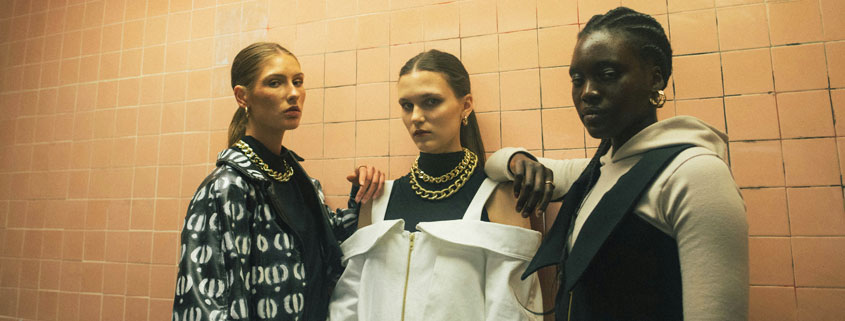
The most expensive garment in the world can collapse into ridicule if the shoulder seam lands a centimeter too far out, and a thrifted jacket can look privately commissioned when the sleeve breaks at exactly the right bone. Fashion sells fantasy, but fit is the part that forces the fantasy to negotiate with physics. It decides whether a body is being framed or fought, whether movement reads as ease or strain, whether elegance looks natural or like an effort that never quite settles. In a culture saturated with logos, fit remains the most intimate form of status, because it cannot be purchased in bulk. It has to be earned through attention, alteration, and sometimes humility.
Fit is also where ideology hides. It encodes what an era thinks a body should be, what kinds of work a body is expected to do, who is allowed to take up space, and who is asked to disappear inside their clothes. When trends cycle, silhouette returns like a rumor, but the deeper question remains stubbornly contemporary: do clothes accommodate the wearer, or does the wearer submit to the clothes?
The Garment as Architecture
Clothing is often spoken about as if it were skin, a second layer, soft and personal. In reality it behaves more like architecture. It has load-bearing points, tension lines, and stress zones. It is built to distribute weight and to guide fabric into controlled shapes. Tailoring is not decoration, it is engineering disguised as elegance.
A jacket hangs or fails based on a few decisive structures: shoulder slope, scye depth, chest circumference, balance between front and back, and the way the collar meets the neck. These elements form a scaffold. Fabric drapes across that scaffold like water across a riverbed. When the scaffold is wrong, the cloth tells on it immediately. The wearer may not know the technical cause, but they will feel it in the way the garment twists, rides up, or collapses around the neck.
This is why fit carries such a harsh clarity in photos. Cameras flatten depth, turning subtle distortions into visible problems. A wrinkled lapel becomes a story about cheapness or carelessness even when the cloth is fine, because the camera reads tension as failure. In an image economy, fit has become a kind of visual honesty test.
Why Fit Became a Moral Category
Fashion criticism often uses moral language without acknowledging it. People say “flattering” when they mean “conforming.” They say “clean” when they mean “disciplined.” They say “polished” when they mean “properly contained.” Fit sits at the center of this, because it can make the wearer seem in control, or it can reveal what society has trained us to interpret as disorder.
This moralizing has deep roots. In many Western traditions, tailored clothing became associated with restraint and competence, because it required resources and a stable life. A well-fitted suit implied time for fittings, money for cloth, and a role worth dressing for. Fit was a signal of being properly placed in the social world, not just aesthetically pleasing.
The residue remains. Today, the person in a perfectly hemmed trouser and a jacket that sits cleanly at the neck is often perceived as more credible before they speak. That perception can be unfair and lazy, yet it is a real social effect. Fit functions as a proxy for care, and care is read as character.
The Tyranny of Standard Sizes
Most people live inside the fiction of standard sizing, and the fiction is expensive. A size label suggests a stable measurement system, but sizing is a moving target shaped by brand identity, manufacturing tolerances, and marketing strategy. Even within a single brand, different product lines may follow different blocks, and those blocks change over years as the company chases trends and customer expectations.
The deeper issue is that standardized sizes are built around assumptions about proportion. A “size” is not merely a circumference, it implies a relationship between shoulder width and chest, between waist and hip, between rise and thigh. Human bodies are not uniform in these relationships. Someone can have narrow shoulders and a full chest, or wide shoulders and a slim torso, or muscular thighs and a small waist. Standard sizing treats these variations as inconveniences rather than realities.
This is why so many people describe shopping as demoralizing. The problem is not that their bodies are wrong. The problem is that the industrial system is built for averages and then sells those averages as norms. Fit becomes a private negotiation with a statistical model that was never meant to reflect you precisely.
Pattern Blocks and the Politics of the “Default Body”
Behind every garment is a pattern, and behind every pattern is a block, a template used to draft shapes that will be graded into multiple sizes. A brand’s block embodies its assumptions. It decides where the waist sits, how much ease is allowed through the hip, how high the armhole is cut, how the garment balances between the front and back of the body.
Blocks are rarely discussed outside industry circles, yet they are one of the strongest forces shaping what people can buy and how they feel wearing it. If the default block assumes a straighter hip, curvier bodies will fight the garment. If the default block assumes a broader shoulder, narrow frames will drown. If the block prioritizes a particular chest-to-waist ratio, many bodies will be forced into compromises.
This is not simply technical. It is cultural. The default body encoded in a block is often a reflection of whose bodies were historically centered in fashion design and whose were treated as deviations. When brands talk about inclusivity without changing their underlying blocks, they often extend size ranges while preserving the same proportional assumptions. The result is larger garments that fit no one well, a gesture that looks expansive but still asks bodies to contort into a template.
Ease, the Invisible Ingredient
One of the most misunderstood concepts in fit is ease, the extra space added beyond body measurements so the wearer can breathe, move, and live. Ease is not a mistake. It is the difference between clothing as display and clothing as companion.
Designers manipulate ease to create mood. Minimal ease produces crispness, control, tension. Generous ease produces softness, indifference to scrutiny, sometimes luxury, sometimes rebellion. The same measurement can read differently depending on where ease is distributed. Extra room in the chest can look strong and elegant, while extra room at the waist can look relaxed, while extra room at the sleeve can signal comfort or drama.
In contemporary fashion, ease has become an argument about values. Skinny fits promised clarity and discipline, a body outlined with precision. Oversized silhouettes promised comfort and nonchalance, a refusal to be constantly evaluated. Neither is neutral. Both create social signals about the wearer’s relationship to attention, sexuality, work, and belonging.
The Body in Motion, Not the Body in the Mirror
The biggest lie of fit is that it can be judged standing still. Many garments look perfect in a fitting room and become irritating in the real world. Mobility exposes everything. A skirt that seems elegant can restrict stride. A shirt that looks crisp can pull across the back when you reach forward. A waistband that feels secure can become cruel after a meal.
Historically, clothing was often designed in relation to activity. Workwear evolved with labor. Riding clothes evolved with horses. Formalwear evolved with the posture of ceremonies and the shape of chairs. Today, many garments are designed to photograph well, which shifts priorities. The body is treated like a surface for images rather than a moving organism.
Fit that respects motion looks different. It allows reach at the shoulder. It accommodates sitting without biting. It lets a person gesture without worrying about exposure. It assumes the wearer has a life, not just an aesthetic.
This is why tailoring at its best feels like relief. The garment stops demanding attention. It becomes silent. That silence is rare in modern clothing, which often feels like a constant negotiation, tugging and adjusting, reminding you that you are being staged.
The Tailor as Translator
A good tailor does not just “make it smaller.” They interpret the relationship between a body and a garment, then alter that relationship without breaking the garment’s intent. This requires more than measurements. It requires an eye for balance, proportion, and how cloth behaves under stress.
Hem length is the most obvious alteration, but it is the least interesting. The deeper work happens in the structure: taking in the waist while preserving the drape, shortening sleeves without destroying cuff placement, adjusting shoulders with respect to slope, reshaping a collar so it hugs the neck rather than floating. Even small adjustments can change how a person carries themselves, because fit influences posture. A jacket that sits correctly invites uprightness. A jacket that pulls at the back invites hunching.
Tailoring also reveals the limits of mass production. Many garments can be improved. Some cannot. A cheap jacket with poor balance will still behave poorly after alterations. A garment that is too big in the shoulders cannot truly be “made smaller” without reconstruction. Understanding what is alterable and what is not is a form of fashion literacy that saves money and disappointment.
The tailor, in this sense, is a translator between the industrial system and the individual. They restore individuality to a process built for scale.
Gender, Fit, and the Inheritance of Silhouette
Fit is where gender norms have historically been enforced with the greatest precision. Men’s tailoring often emphasizes shoulders, chest, and a clean line down the leg, framing the body as capable and stable. Women’s clothing has frequently emphasized waist, bust, and hip, framing the body as ornamental and legible. These are generalizations, yet the historical pattern is clear enough to shape today’s expectations.
When women adopt traditionally masculine tailoring, the effect is not just style, it is a claim about authority. The shoulder line becomes political. The choice of ease becomes a statement about whether the body must be continuously readable as sexual. When men adopt more fluid or traditionally feminine silhouettes, fit becomes a challenge to the idea that masculinity must be rigid and armored.
Modern fashion increasingly treats gender as a spectrum of presentation rather than a set of strict rules. Fit is one of the main tools for exploring that spectrum. A single garment can shift meaning based on how it sits on the body, whether it skims or constricts, whether it creates shape or ignores it.
This is why the conversation about gender-neutral clothing often stalls when it becomes purely about labels. The real question is about blocks, proportion, and ease. A garment can be marketed as unisex and still be built around a default body that excludes. Fit exposes that contradiction immediately.
The Social Life of Alterations
Alterations used to be normal. Clothes were more expensive relative to income, and garments were expected to be adjusted, repaired, and handed down. The rise of fast fashion shifted this relationship. Clothing became cheaper, more disposable, and more trend-driven. Tailoring became associated with luxury, as if only the wealthy deserved a garment that truly fits.
There is a quiet revival now, partly driven by sustainability awareness and partly by the frustration of inconsistent sizing. People are rediscovering the logic of buying fewer things and making them work harder. In that logic, tailoring is not indulgence. It is efficiency. It extracts value from cloth already bought and keeps garments in rotation longer.
Alterations also change the emotional relationship to clothing. A tailored garment becomes yours in a deeper sense. It carries evidence of your choices. It sits differently because you demanded that it respect your body rather than asking your body to respect it. That demand is a kind of self-regard.
Fit as Visual Language in an Algorithmic World
Social media accelerated a particular kind of silhouette dominance. Trends spread as images, and images reward certain proportions. A cropped jacket that elongates legs photographs well. A high-waisted trouser creates a leg line that reads dramatic in a full-body shot. A boxy tee can imply effortless cool when paired with the right styling and the right camera angle. These fits become popular not only because they feel good to wear, but because they perform well visually.
Algorithms amplify what performs. This can create an illusion that certain fits are objectively better, when they are simply optimized for the feedback loop of images. The danger is that people then judge their bodies against the image-optimized silhouettes rather than choosing fits that serve their actual lives.
At the same time, the image economy has also broadened the fit conversation. People now see more bodies wearing more styles, and they learn from that diversity. A person can find someone with similar proportions and discover what kinds of ease and cuts work well. The internet can produce shame, but it can also produce practical knowledge, especially when creators speak candidly about tailoring, sizing, and proportion rather than pretending everything is effortless.
Craft, Cloth, and the Difference Between Structure and Costume
Fit cannot be separated from fabric. A stiff wool behaves differently from a drapey viscose. Denim holds shape. Linen reveals everything. Knits forgive. Thin synthetics cling. Many fit frustrations are really fabric frustrations, moments when the material reveals that it was chosen for cost or speed rather than for behavior.
Structure depends on cloth that can support structure. A sharply tailored jacket in flimsy fabric will look like costume because it cannot hold the intended lines. Conversely, a relaxed silhouette in an overly stiff fabric can look awkward, because the cloth insists on a shape the design is trying to avoid.
Understanding fit at a deeper level means learning to read fabric, not in an expert way, but in a practical way. How does it recover after being stretched. How does it wrinkle. Does it breathe. Does it drape or does it stand away from the body. These questions determine whether a garment will feel like a tool or like a compromise.
This is also where quality hides. Construction is often invisible until you wear the garment repeatedly. Fit can hide poor construction for a moment, but movement reveals it. Seams strain. Buttons pull. Hems twist. A garment that fits well but is poorly made becomes a short-term seduction.
The Future of Fit, Between Customization and Surveillance
Technology offers two very different futures for fit. One is liberating. The other is intrusive.
On the liberating side are tools that make customization scalable. Body scanning can allow brands to produce garments closer to individual measurements. On-demand manufacturing can reduce inventory waste and make tailoring more accessible. Digital patterning can enable micro-adjustments in rise, inseam, shoulder width, sleeve length, and torso balance without rebuilding an entire supply chain from scratch.
On the intrusive side is the possibility that bodies become data assets. If fit becomes dependent on biometric capture, who holds that data, how is it used, and what else is inferred. A measurement profile can reveal changes over time. It can be linked to identity. It can become a source of vulnerability in a world where privacy is increasingly fragile.
The most humane future would treat body data like medical information, protected and minimal. It would give people better-fitting clothing without turning their bodies into permanently stored metrics for marketing.
Fit, at its best, is personal. It is a conversation between cloth and self. Technology can assist that conversation, but it can also try to monetize it in ways that make the wearer feel watched rather than respected.
The Unfashionable Truth
Trends will keep cycling. Waistlines will rise and fall. Sleeves will swell and then narrow. Silhouettes will alternate between control and abandon. The one constant is that fit decides whether any of it feels like you.
The most radical move in fashion is not always a new style. Sometimes it is the choice to stop performing for the mirror and start dressing for your real proportions, your real movement, your real days. That choice does not reject fashion. It makes fashion answer to the person wearing it.
A garment that fits well does something quietly subversive. It suggests that you are not trying to become someone else. You are letting the world see you without the distraction of struggle, as if comfort and precision could coexist, as if attention could be earned without suffering for it, as if the body were allowed to take up the space it already occupies.

