
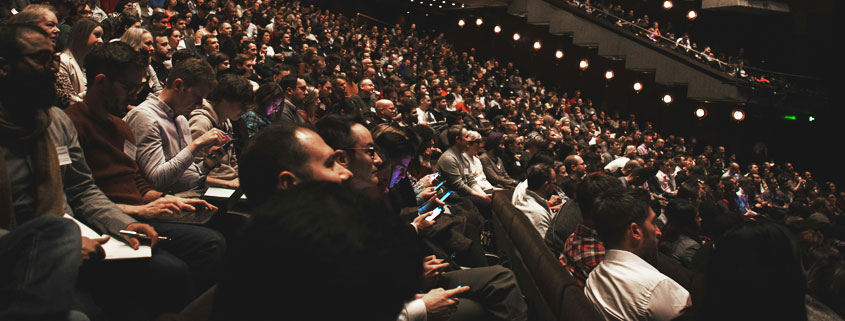
Most people do not notice when their life becomes performative, because performance does not arrive with stage lights. It arrives as a mild pressure to make experiences legible. A meal is not just eaten, it is evaluated for whether it would photograph well. A weekend is not just lived, it is scanned for highlights. A new habit is not just practiced, it is quietly measured against whether it makes a person look disciplined. Even solitude gets edited, because the mind has learned to imagine how it would sound if narrated.
The unsettling part is that no one has to demand this. A person can internalize an audience without ever being famous, without ever posting frequently, without ever receiving public praise. They only have to live long enough inside systems that treat attention as currency, and they begin to spend themselves in ways that feel normal. This is not vanity in the cartoon sense. It is a survival adaptation to an environment where visibility often feels like safety, and where invisibility can feel like disappearance.
Living without an audience is not about retreating into austerity or performing a new form of purity. It is about reclaiming interiority, the private experience of being oneself without translation. It is about remembering that meaning can exist without documentation, that pleasure can exist without proof, and that a day can be valuable even if it produces nothing worth sharing.
How the Audience Moves Inside the Mind
The first mistake is to treat the audience as external, a crowd of strangers online. The more consequential audience is the imagined one, the internal panel that watches your choices and assigns them a score.
This internal audience is built from real social feedback, compliments, ridicule, approval, dismissal. It is also built from cultural narratives about what counts as a good life. Productivity culture supplies one judge. Aesthetic culture supplies another. Wellness culture adds its own. Social media adds a constant stream of reference lives, curated and filtered, that become benchmarks even when you consciously reject them.
Over time, the mind becomes efficient. It starts pre-editing experience in real time. You choose the restaurant that will look right. You choose the vacation that will sound right. You choose the hobby that signals the kind of person you want to be seen as. None of this requires posting. Posting is only the visible tip. The deeper change is that the selection happens at the level of desire.
When desire becomes influenced by how it will read, you lose touch with the raw signals that make a life feel like yours.
Lifestyle as a Brand, Even for People With No Brand
The modern concept of lifestyle carries a quiet marketing premise: that a human being is a coherent package of preferences. If you like this kind of coffee, you probably like this kind of furniture. If you wear this kind of shoe, you probably want this kind of vacation. Entire industries depend on the idea that identity is a set of consumable cues that can be expressed through purchases, routines, and visual consistency.
This is why lifestyle content is often aesthetic before it is honest. It does not simply show what someone does, it curates a coherent world. The lighting is soft. The surfaces are clean. The habits are narratively satisfying. Even mess is stylized. The story is that you can build a life that looks like a magazine spread, and if you fail to do so, the failure is personal rather than structural.
The problem is not that aesthetics are bad. The problem is that coherence can become a trap. A coherent lifestyle asks you to keep making choices that reinforce the same image. It punishes contradictions, which are the most natural evidence of growth. It pushes people toward consistency instead of truth.
A life lived without an audience is allowed to be incoherent, because it is not being packaged.
The Cost of Constant Self-Explanation
The audience inside the mind demands interpretation. It asks, what does this mean about you. It asks, is this impressive. It asks, does this align with your story. It asks, will this be understood.
These questions seem harmless until they colonize ordinary moments. A walk becomes exercise, which becomes a metric, which becomes a narrative about discipline. Reading becomes self-improvement, which becomes a project, which becomes a performance of intellectual seriousness. Cooking becomes content. Rest becomes recovery, which becomes optimization. Friendship becomes networking. Even altruism becomes proof of character.
The cost is subtle. You lose the ability to do things simply because they feel good. You lose the ability to be bored without guilt. You lose the ability to change your mind without writing an internal press release. Your life becomes an ongoing pitch.
Beneath that pitch is fatigue, because the self is not built to narrate itself endlessly. It is built to live.
Privacy as a Psychological Need, Not a Preference
Privacy is often framed as secrecy, as if the only reason to keep something to yourself is because it would look bad if revealed. That framing is childish and cruel. Privacy is also where intimacy grows, where experimentation happens, where people try on versions of themselves that may not work, and where the nervous system can finally relax because it is not being watched.
A private life is not an empty one. It can be full, even more full, because it is not being siphoned into public meaning. In private, you can enjoy things that would not “fit your vibe.” You can make mistakes without immediate archival. You can love without proof. You can mourn without being asked to articulate it in a way that makes sense to other people.
Many modern anxieties are not simply stress. They are surveillance stress, the stress of feeling exposed even when no one is explicitly looking. That stress can exist without cameras. It can exist as a habit of mind.
A private life interrupts that habit.
The Seduction of Documentation
Documenting life is not inherently shallow. Humans have always recorded. Diaries exist. Photo albums exist. Letters exist. The desire to keep memories is ancient.
The modern seduction is not recording itself. It is the transformation of recording into a form of participation. The moment feels incomplete unless it is captured. The meal feels less real unless it is posted. The concert feels less meaningful unless it is filmed. The hike feels less valuable unless it becomes evidence.
This changes how attention works. Instead of being inside the moment, you split attention into experience and representation. You become both actor and cameraman, both person and editor. The mind’s reward systems begin to anticipate social feedback, which shifts the emotional center of gravity away from the event itself.
Over time, experiences can start to feel thin unless they come with external validation. That is a dangerous dependence because it turns the world into a stage that requires applause to feel real.
The Difference Between Sharing and Performing
People sometimes respond to the performance problem by swinging into silence, as if any sharing is corrupt. That is another trap. Sharing can be a form of connection, generosity, and mutual recognition. The problem is not visibility. The problem is compulsive legibility.
A useful distinction is whether sharing emerges from fullness or from neediness. When you share from fullness, the experience already landed inside you. You are offering it outward, not using the outward response to complete it. When you share from neediness, the experience feels unfinished until it is witnessed. The audience becomes a required ingredient.
Living without an audience does not demand never sharing. It demands that you stop treating the audience as the final authority on whether your life counts.
Invisibility and the Fear of Being Forgotten
For many people, the performance impulse is not about vanity. It is about existential anxiety. In a world where attention is monetized, invisibility can feel like social death. If you are not seen, will you be valued. If you are not visible, will you miss opportunities. If you are not present in the social stream, will you drift out of people’s minds.
These fears have some basis in reality. Visibility can create opportunity. Documentation can preserve relationships across distance. Networks can be nurtured through sharing. The problem is when the fear becomes constant and begins to shape daily behavior.
When the fear of being forgotten drives your choices, you stop choosing based on what matters and start choosing based on what will be noticed. The irony is that this often produces a life that looks busier and feels emptier.
The deepest relief of living without an audience is realizing that some forms of being seen are not worth the cost.
The Quiet Forms of Rebellion
The rebellion is not grand. It does not require deleting every app or moving to the woods. It begins with small refusals.
It is choosing to do a thing and not mention it. It is taking a photo and not posting it. It is dressing for comfort and not for signal. It is reading something that would not impress anyone. It is cooking a meal that is delicious and unattractive. It is taking a walk with no goal. It is having a conversation that produces no update. It is letting a day be ordinary.
Ordinariness has become strangely scarce, because modern culture treats ordinary days as wasted days. Yet ordinary days are where life actually happens. They are the days that make up a decade. They are the background that allows joy to feel bright.
If you cannot tolerate the ordinary without documenting it, you become dependent on peaks, and peak-chasing eventually hollows out the baseline.
Attention as a Home You Return To
A lifestyle, at its healthiest, is not a performance. It is a set of rhythms that make a person feel steady. The most important rhythm is attention.
Attention can be trained to live outward, scanning for what will impress, what will signal, what will be admired. It can also be trained to return inward, to notice what you actually feel, what you actually enjoy, what you actually need. That inward return is not narcissism. It is the prerequisite for authenticity.
When you live without an audience, you start to notice the difference between pleasure and performative pleasure. Performative pleasure is loud. It comes with a sense of accomplishment and a story. Real pleasure can be quiet, even slightly embarrassing, because it does not need to justify itself.
A person who can recognize that difference becomes less manipulable. Advertising becomes less persuasive. Social comparison becomes less toxic. Trends become less controlling. The self becomes harder to hijack.
Relationships That Do Not Require a Feed
One of the most overlooked consequences of audience living is what it does to relationships. When life is performed, relationships can become part of the performance. Friends become props in a narrative of belonging. Partners become evidence of being chosen. Even family moments can become content.
This does not necessarily make someone cruel. It makes them distracted. It makes them slightly outside the room, watching themselves interact. The other person can feel that. They may not articulate it, but they sense a thinness, a feeling that the interaction is being turned into something else.
A relationship deepens when people feel unobserved together, when there is permission to be messy, to be unpolished, to be boring, to be sincere without irony. That permission is difficult to maintain if every moment is potentially a shareable story.
Living without an audience restores the possibility of intimacy that is not curated.
The Pleasure of Unrecorded Time
There is a specific satisfaction that arrives when time passes without being captured. At first it can feel unsettling, as if you are losing something. Then it becomes liberating. The moment belongs to you because it cannot be replayed for strangers. It lives in memory the way memories are supposed to, imperfect, softened, personal.
Unrecorded time also makes you less hostage to future interpretation. When there is no record, there is no obligation to justify. The self becomes more fluid. You can change without leaving a trail that demands explanation.
This is not an argument against history. It is an argument against turning every day into an archive.
The Life You Cannot Monetize
The modern world pressures people to monetize themselves, not necessarily with money, but with social capital, with credibility, with visibility. Everything becomes potential. A hobby can become a side hustle. A skill can become a brand. A routine can become content. Even spiritual practice can become aesthetic.
A life without an audience contains rooms you refuse to rent out. It contains activities that are useless in the best sense, because their value is intrinsic. Intrinsic value is fragile in a world that constantly asks for outcomes. The lifestyle shift is not about rejecting ambition. It is about refusing to make ambition the only legitimate reason to do anything. The most stable people often have at least one thing they do that produces nothing, proves nothing, and signals nothing, except that they are alive.

