
A photograph used to be a kind of proof, a frozen moment that could lie by omission yet still depended on something that happened. Now a single image can be treated like raw material, poured into a model and returned as a counterfeit that feels personal, humiliating, and strangely impersonal at the same time. The person in the picture did nothing, said nothing, agreed to nothing. The violation arrives anyway, manufactured on demand, repeated at scale, and circulated with the bored speed of a meme.
This is the new center of gravity in the deepfake crisis: not the cinematic hoax, not the politician’s forged speech, but synthetic intimacy, the kind that targets ordinary people and weaponizes recognizability. The controversy around xAI’s Grok, embedded in X, has pushed that reality into daylight again, with regulators and lawmakers being forced to speak in the blunt language of harm rather than the vague language of innovation.
The Grok Episode Is Not an Outlier, It Is a Test of the Era
The details vary by country, platform, and tool, yet the pattern is becoming familiar. A generative system makes it easier to produce non-consensual intimate imagery. The content spreads faster than reporting systems can absorb. The company promises enforcement. Users discover workarounds. Officials demand answers. The cycle repeats, with each repetition widening the gap between what the public expects a platform to prevent and what platforms can credibly guarantee.
In the Grok case, the UK communications regulator Ofcom contacted X and xAI amid concerns that the tool was being used to generate sexualized imagery, including content involving minors, and the UK government demanded explanations about what safeguards were in place and why they failed. The incident also drew attention beyond Britain, as international political scrutiny and outrage treated the material as plainly illegal rather than merely “harmful.”
Calling it a “misuse” is technically true and morally inadequate. The more important question is why misuse keeps appearing as an emergent feature, predictable enough to budget for, yet still treated as surprising.
“Safety” Has Been Treated as a Filter, While Abuse Behaves Like a Business Model
Platforms often respond to non-consensual synthetic imagery with a checklist mentality: ban certain prompts, block certain outputs, suspend accounts, remove offending posts. Those steps matter. They also resemble patching a dam while the water pressure rises.
What makes synthetic nudification uniquely corrosive is the asymmetry of incentives. For a perpetrator, the cost of an attempt is nearly zero. For the target, the cost is social, psychological, and sometimes professional, and it can persist indefinitely because content replicates. For the platform, the cost is moderation at scale, which becomes more expensive as the abuse becomes more automated. The tool does not have to “want” harm. It only has to be available inside a distribution system that rewards novelty, shock, and attention.
In practice, the user’s prompt becomes a lever that moves the platform’s liability, reputation, and operational burden. The question then becomes whether the platform treats that lever as an edge case or as a primary design constraint.
The Grok dispute has forced a public reckoning with a point many insiders already understand: safety is not an overlay. It is part of product architecture, and the architecture is stress-tested first by people who are bored, angry, or predatory.
The Regulatory Shift Is Toward Duties, Not Apologies
The political language around deepfakes is changing. For years, lawmakers talked about synthetic media as if it were primarily a misinformation problem, a threat to elections and public trust. That remains true, yet the emotional heat in current debates often comes from personal violation, especially when content targets women and children.
In Britain, Ofcom’s posture reflects a broader move away from voluntary promises and toward compliance obligations, especially under online safety regimes that demand proactive risk management rather than reactive cleanup. The Grok story has also intersected with debates about whether certain forms of “nudification” should be explicitly criminalized, and how quickly new legislation should take effect relative to the speed of abuse.
In the United States, the legal direction has also tilted toward obligation, not simply condemnation. The TAKE IT DOWN Act, signed in 2025, criminalizes certain non-consensual intimate imagery, including digital forgeries, and requires covered platforms to implement notice-and-removal processes. This is a different stance than the earlier era of “platforms should do better.” It is “platforms must build a mechanism, and they must respond on a timetable.”
Notice-and-removal has limits, especially when content proliferates across many accounts and mirrors. Still, the shift is meaningful because it reframes the issue as a governance problem with enforcement hooks, not a morality play.
The Hard Part Is Not Detecting Fakes, It Is Defining Provenance
Much of the debate about deepfakes gets stuck in detection, as if the central challenge is building a better lie detector. Detection is important. It is also only half the problem, because the more strategically relevant question is provenance: where did this come from, who created it, under what conditions, and how can that chain be verified.
This is why transparency measures, marking, and content labeling have become a policy fixation, especially in Europe. The European Commission’s work on a draft Code of Practice for transparency of AI-generated content is one example of an attempt to formalize expectations around marking and disclosure. The goal is not merely to tag content after it spreads, but to shift norms so that synthetic media carries an identifiable signature, whether through visible labels, metadata, or technical markers.
The uncomfortable reality is that provenance systems must operate in hostile environments. Bad actors will strip metadata. They will re-encode videos. They will use screenshots and reuploads. They will route content through multiple tools, mixing sources until responsibility becomes fog.
Yet provenance still matters because it changes enforcement posture. A platform that can credibly trace synthetic output back to a generating system and an initiating account has leverage. A platform that cannot trace is forced into a whack-a-mole economy where moderation becomes permanent triage.
The New Liability Question Is About Product Placement, Not Only Content
A key detail in the Grok controversy is embedding. When a generative model is integrated directly into a social network, it is not just a creation tool. It becomes an accelerant inside an existing distribution machine.
That integration changes the harm profile. A stand-alone generator can be abused, yet distribution requires additional steps. Embedded generation collapses those steps. The same account that prompts can post. The same interface that produces can amplify. The distance between creation and virality shrinks to seconds.
This is why regulators are increasingly interested in whether platforms are simply hosting user content or actively shaping and enabling it. The traditional distinction between publisher and platform has always been porous. AI-integrated features make it even more porous, because the platform is no longer a passive channel. It becomes part of the content’s origin story.
If the public begins to see embedded generation as a form of product placement for abuse, then the platform’s defenses cannot be limited to moderation policy. They have to include friction, rate limits, stronger default safeguards, and perhaps design choices that accept less growth in exchange for less harm.
The Deepfake Panic Is Not Only About Truth, It Is About Identity
Misinformation debates often focus on what is true. Synthetic intimacy scandals force a different focus: who is real.
A non-consensual intimate deepfake attacks identity in a way that ordinary defamation does not. It borrows a face, which is socially legible, and pairs it with a scenario that is emotionally charged. The result is a social object that travels with a certain cruelty: it is easy to share, easy to joke about, and difficult for the target to refute without amplifying it.
There is also a more subtle injury. The target loses control over how their body is represented, even when the representation is fake. That loss of control is a form of reputational dispossession. The harm is not only what others believe. It is what the target is forced to carry, the feeling that their likeness can be reinterpreted by strangers at will.
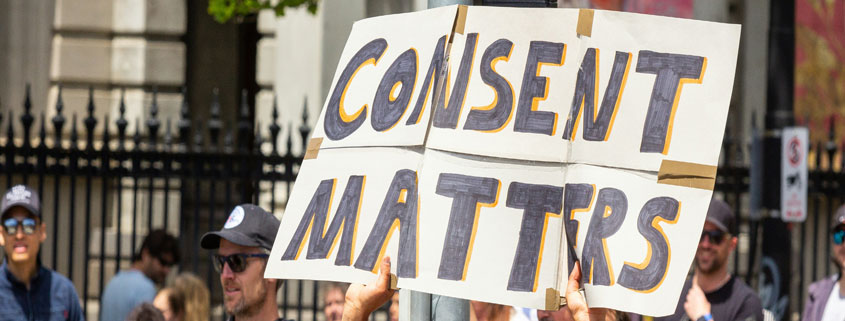
This is why the Grok episode has provoked outrage that does not feel like typical tech backlash. It hits a primal nerve. It is not merely about a product flaw. It is about consent being turned into an optional parameter.
Why Platform Promises Keep Failing
It is tempting to treat each scandal as a unique failure of safeguards, a single lapse to be fixed. The more realistic interpretation is that generative systems are now operating in environments that reward boundary pushing.
When a platform says it will suspend users who generate abusive content, it assumes a stable user identity. In reality, users can create new accounts. When it says it will remove illegal imagery, it assumes the imagery can be reliably detected and surfaced. In reality, detection is probabilistic, and reporting is incomplete. When it says it will prevent certain prompts, it assumes prompts are the main gateway. In reality, people iterate, obfuscate, and jailbreak.
This does not mean safeguards are futile. It means the problem must be treated like adversarial security, not like community guidelines. Security is not solved by declaring a rule. It is solved by anticipating the incentive to break it and designing systems that degrade gracefully under attack.
The Next Phase Will Be About Verification, Not Only Removal
Removal is necessary, yet removal will never be enough on its own because it is downstream. A mature response will likely revolve around verification and controlled pathways.
Verification here does not mean identity verification for every user, which raises privacy and speech concerns. It means verifying content origins when it matters most, in contexts where harm is most severe. It means building a stronger chain of custody for images and videos, so that malicious manipulations become easier to quarantine and less profitable to spread.
It also means hardening the tools themselves. A generative model that can accept real images and output altered intimate imagery is not just a chat assistant with a bug. It is a system with an obvious abuse case, and regulators are increasingly unwilling to accept “we did not anticipate this” as an answer.
The policy conversation is moving toward a blunt expectation: if you ship a capability that can predictably be used for violation, you must demonstrate that you constrained it with seriousness equal to the harm.
A Culture That Learns to Doubt Everything Is Not a Culture That Becomes Wise
There is a darker risk beneath the push for labels and provenance. A society flooded with plausible fakes can drift into a cynical epistemology, where nothing is trusted, and therefore anything can be claimed. That cynicism does not protect truth. It erodes it, because it makes consensus impossible.
In that landscape, the intimate deepfake is not only a personal violation. It is a cultural pollutant. It teaches people that images are disposable, that bodies are malleable content, that humiliation is entertainment, that denial is pointless. It trains spectatorship.
This is why the deepfake problem cannot be solved solely by tech improvements. It is a governance challenge, and it is also a cultural challenge about what people are willing to share, laugh at, and excuse.
The Grok scandal is being treated as a scandal about one tool. Its more lasting significance may be that it accelerates a wider recognition: the age of synthetic intimacy is here, and the old playbook of platform apologies and incremental tweaks is too small for what is happening now.


The essay makes a crucial distinction between detection and provenance. Even perfect detection would still leave victims trapped in an endless cleanup cycle. Provenance, by contrast, is about restoring accountability, not just reacting to damage. Without it, platforms are condemned to permanent triage instead of prevention.
The point about provenance being more important than detection is really well said. It’s not just “is it fake,” it’s “where did it come from, who made it, and how is it traveling.” Without that chain of custody, enforcement turns into permanent whack-a-mole and the target carries the cost forever.
I appreciate how this focuses on duties instead of apologies. Moderation promises always sound good after the fact, but the harm happens fast and replicates faster. If the incentives stay asymmetric, the “cleanup” approach will always lose, no matter how many statements get issued.