
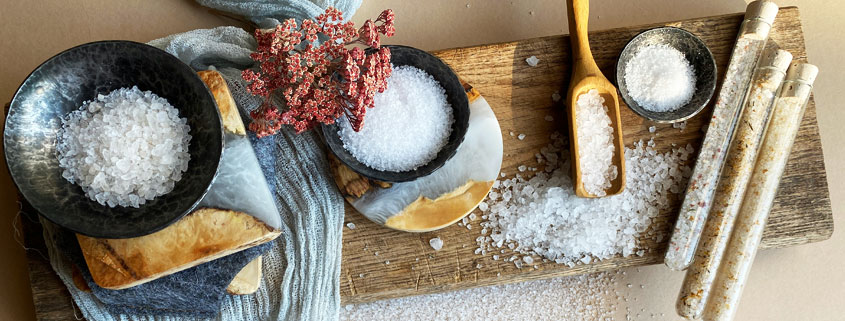
Salt is usually treated like a switch. Add it, stir, taste, add a little more. The myth is that seasoning is a moment, a quick correction at the end. In real cooking, salt is closer to time travel. It does not simply make food taste saltier. It changes what food becomes, depending on when it arrives, how long it stays, and whether it has room to move.
This is why two cooks can use the same amount of salt and produce radically different results. One plate tastes alive, integrated, almost effortless. The other tastes blunt, as if the salt sits on top like a late apology. The difference is not talent so much as scheduling. Salt has a timeline, and the timeline is part of the recipe even when nobody writes it down.
The First Thing Salt Does Is Not Flavor
Salt begins as chemistry before it becomes taste.
On the surface of meat, vegetables, and dough, salt starts pulling water. This is not metaphor. It is osmosis and diffusion, water moving out, ions moving in, proteins shifting, cell walls changing pressure. The mouth eventually experiences these changes as juiciness, tenderness, crispness, and depth. Yet those experiences are downstream effects, the visible outcome of invisible movement.
A late sprinkle adds salinity in a narrow band, mostly at the surface. An early salting alters structure, encouraging moisture to redistribute, allowing dissolved salt to travel deeper, and changing the way proteins hold onto water. That structural work is where the best seasoning lives.
This is why salt can make food taste more like itself rather than simply tasting salty. It is helping the ingredient reorganize.
Early Salting Is a Form of Gentle Aging
When salt goes on early, it creates time for integration.
A steak salted an hour before cooking does not taste like a steak that was salted thirty seconds before. The early-salted steak often browns better because the surface dries more evenly. It can taste more beefy because the seasoning is not only on the exterior. It can feel juicier because the proteins have had time to change how they bind water. The flavor seems to come from within the meat rather than sitting on it.
The same principle applies to vegetables. Salt on sliced eggplant before cooking can reduce harshness and encourage a softer interior without turning it into mush. Salt on cucumbers draws out water that would otherwise dilute dressings, turning a salad from watery to crisp and focused. Salt on mushrooms before they hit the pan can influence how quickly they release moisture, which changes browning behavior and texture.
Early salting is not about making everything taste the same. It is about giving ingredients time to become more coherent versions of themselves.
Late Salting Is About Contrast and Spark
If early salting is integration, late salting is punctuation.
A finishing pinch can create an electric contrast, a tiny burst that wakes up fat and brightens aroma. The key is that late salting works best when the food is already seasoned adequately. Then the finishing salt is not a rescue, it is a texture and rhythm choice. It provides brief crunch, a flash of salinity that amplifies sweetness in a tomato, lifts bitterness in greens, and makes a sauce feel more dimensional.
This is where salt becomes aesthetic. Flake salts dissolve differently than fine grains. Some cling to the tongue, some vanish immediately. The sensation changes how you perceive the dish even when the total sodium is unchanged.
Late salting fails when it is used as the only salting. Then it becomes harsh and distracting, a layer you can identify too easily. Good finishing salt should feel like light, present but not separate.
Salt Water Is Not Just for Pasta
People talk about salting pasta water as if it were a rule handed down by tradition, and it is, yet the deeper concept is brining by cooking medium.
When food cooks in salted water, salt does not merely season the water. It seasons the food internally because water is a vehicle for diffusion. That internal seasoning changes how starch and proteins read on the palate. Pasta cooked in properly salted water does not require as much aggressive seasoning later. The noodles taste like noodles, not like bland carriers.
The same logic applies to potatoes, beans, and grains. Potatoes boiled in salted water can taste richer without added fat, because the tuber itself becomes seasoned. Beans cooked in salted water can be more flavorful throughout, and when done thoughtfully, salting does not necessarily toughen the skins the way many people fear. Grains absorb seasoned liquid and become satisfying on their own, reducing the need for heavy sauces to make them feel complete.
Salting the medium is one of the most effective ways to avoid the common problem of dishes that taste seasoned only on the surface.
Dry Brining Is an Underrated Domestic Superpower
Brining is often associated with large containers and holiday turkeys. Dry brining is simpler, more adaptable, and often more elegant.
With dry brining, salt goes directly on the protein and time does the rest. The surface moisture dissolves the salt into a concentrated film, then that film gets drawn back in, carrying seasoning deeper. The surface eventually dries, which encourages better browning and crispness.
This method can change chicken skin dramatically. Properly dry-brined chicken can roast with skin that feels structured, not rubbery. It can change pork chops from dry to juicy. It can turn a thick piece of fish into something more resilient and less prone to weeping.
Dry brining is also a quiet form of confidence. It teaches the cook to season early and trust time. It replaces the anxious last-minute scramble with a deliberate setup that pays off later.
Salt and Protein Are in a Long Relationship
Salt affects protein behavior in ways that matter to tenderness.
In ground meat, salt can extract myosin, helping proteins bind together into a cohesive structure. This is why sausage has a springy, unified bite when mixed properly, and why certain meatballs can be tender yet hold shape. Salt is not only seasoning here, it is architecture.
In whole cuts, salt can change how proteins retain moisture. It can reduce the sense of dryness, not by adding water, but by altering the protein network so it holds onto liquid more effectively during cooking. This is why early salting can produce meat that tastes more succulent even if it loses similar moisture by weight.
Salt is also part of tenderness in a different way. It can soften certain tough elements over time, especially when paired with other factors like acid, enzymes, or slow heat. It is not a miracle tenderizer by itself, yet it is a crucial participant in many tenderizing processes.
Understanding this relationship changes how you cook. You stop treating salt as a final touch and start treating it as part of the ingredient’s transformation.
Vegetables Respond to Salt Like They Have Opinions
Vegetables are not passive. Salt interacts with their cell structure, and the result can be crispness, collapse, sweetness, or bitterness, depending on timing and technique.
Salting raw tomatoes can draw out juice and concentrate flavor, which is why a simple tomato salad becomes more vivid after it sits. Salting leafy greens can either ruin them or improve them, depending on the goal. If you salt a delicate salad too early, it wilts and feels sad. If you salt sturdy greens, then massage them and let them rest, they can become tender without cooking and lose the aggressive raw edge.
Salt also changes how vegetables take on fat. A salted cucumber releases water, which allows oil-based dressings to cling rather than slide. Salted eggplant releases moisture, which reduces oil absorption during frying, turning the final result lighter and less greasy. Salted zucchini can be drained and cooked into something that browns instead of steaming.
Vegetables teach the most important lesson about salt. Timing is not optional. It is the difference between crisp and soggy, between clean flavor and diluted flavor.
Baking Is Where Salt Proves It Is Not Optional
In baking, salt is often treated as a small ingredient because the quantities are small. The impact is not small.
Salt strengthens gluten networks, influencing dough elasticity, structure, and fermentation speed. In yeasted doughs, salt slows yeast activity slightly, which can be beneficial, creating more controlled rise and better flavor development. Too little salt can make dough feel slack and bread taste oddly sweet and flat. Too much can inhibit fermentation and create harshness.
In sweet baking, salt is part of balance. It makes chocolate taste darker. It makes caramel taste more complex. It prevents sweetness from feeling one-dimensional. It can also change texture subtly, affecting how proteins coagulate and how starches behave.
Salt in baking is one of the clearest examples of salt as design rather than correction. You cannot add it later without changing the identity of the product. It belongs to the system from the beginning.
The Salt That Dissolves and the Salt That Stays
Not all salts behave the same way in cooking, and the difference is not marketing, it is physical behavior.
Fine salt dissolves quickly and distributes evenly. It is ideal when you want integration. Coarse salt dissolves more slowly, which can be useful in long cooking where gradual dissolution is part of the effect. Flake salt can sit on the surface and deliver bursts of salinity alongside delicate crunch.
This matters because mouthfeel is part of flavor. A sauce seasoned with fine salt tastes integrated. A steak finished with flakes can taste alive at the surface. A roasted vegetable tossed with the wrong salt at the wrong moment can taste uneven.
Salt choice is not about being fancy. It is about matching dissolution speed and texture to the moment in the dish where you want salt to speak.
Salt in Sauces Is a Question of Volume and Concentration
Sauces are where salt can feel treacherous, because sauces change as they reduce.
A sauce can taste under-seasoned early, then become over-salted after reduction concentrates everything. The cook who salts aggressively at the beginning may end with a sauce that tastes tight and harsh. The cook who salts too cautiously may end with something flat and disappointing.
The smart move is often staged salting, adding some early to build foundation, then adjusting later when volume is closer to the final state. This is not indecision. It is respect for concentration.
This is also where salt interacts with acid and sweetness. A sauce with tomato, wine, vinegar, or citrus can feel sharper as it reduces. Salt can soften that sharpness by balancing it, yet it can also intensify it if the sauce becomes too concentrated. Sugar can round it, but sugar can also make the sauce feel cloying if salt is absent.
Sauces reveal the full truth about salt. It is part of balance, and balance is dynamic.
The Hidden Salt in Ingredients and the Problem of Surprise
Modern cooking often fails because salt is hiding.
Cured meats, cheeses, soy sauce, miso, anchovies, olives, capers, pickles, and broths carry salinity that can be essential, yet it can also ambush the dish if the cook forgets to account for it. Packaged ingredients vary widely. The same brand can change. Two cheeses with the same name can have different salt levels. A store-bought stock can be a gentle background or a salt bomb.
This is why good cooks taste components, not only the final dish. They also learn to think in layers of salt contribution rather than a single salt event. They treat salty ingredients like seasoning tools, not just flavors. They adjust accordingly.
Salt surprises are one of the fastest ways a dish loses elegance. The eater stops tasting complexity and starts tasting damage control.
Salt and Culture Are Entangled
Salt is not only technique. It carries history.
Preservation, trade, and labor are written into salt. Entire cuisines were shaped by what could be salted, cured, fermented, or preserved. Many traditional foods developed their identities through salting because it was how communities survived winter, scarcity, or distance.
Even today, salt carries cultural signals. Some traditions use salt boldly, leaning into cured flavors, brines, and preserved ingredients. Others emphasize subtlety and rely on aromatics, acidity, and fresh ingredients to carry flavor while keeping salt restrained. Neither approach is inherently superior. They represent different relationships with environment, preservation, and taste expectations.
Understanding this cultural layer makes you more careful as a cook. You stop assuming salt should always behave the same way. You start noticing how different cuisines place salt in different roles, sometimes as a backbone, sometimes as an accent, sometimes as an invisible support.
The Future of Cooking Might Be Salt Literacy
As more people cook at home and as restaurants compete on consistency, salt timing may become one of the most important forms of culinary literacy. It is a skill that does not require expensive ingredients. It does not require special equipment. It requires attention to time, texture, and the behavior of ingredients.
A cook who understands salt does not need to drown food in sauces to make it satisfying. They can make vegetables taste complete. They can make simple grains taste like meals. They can make meat taste seasoned without tasting salty. They can build dishes that feel intentional because the flavor is not sitting on top, it is woven through.
Salt is the most common ingredient in the world, and it is still one of the least understood, precisely because it is common. It disappears into habit. Yet when you begin treating salt as a timeline, cooking becomes less like improvisation and more like composition, not rigid, not fussy, but deliberate in a way the mouth recognizes immediately.

