
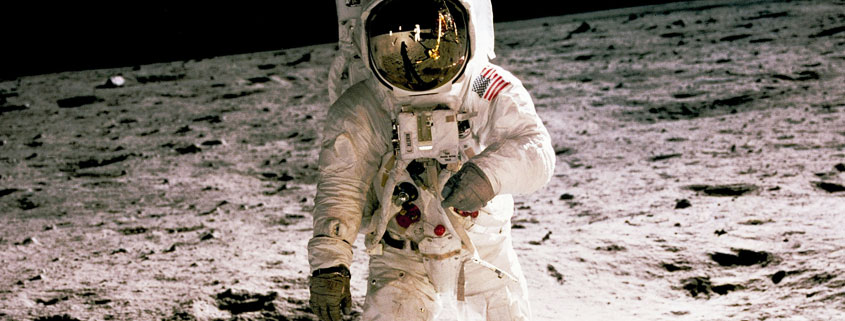
Long before maps were drawn or borders imagined, humans were already moving toward the horizon. Not because survival demanded it in every moment, but because something internal refused stillness. Exploration is not merely an activity, it is a condition of being human. The impulse to step beyond the known has shaped landscapes, ideas, cultures, and entire civilizations, often at great risk, frequently without clear reward, and almost always before the outcome could be understood. Discovery has never been accidental. It is the inevitable consequence of curiosity that refuses to remain contained.
Curiosity as a Defining Human Trait
Unlike instinct driven migration seen in other species, human exploration is rarely limited to necessity alone. Hunger and danger may initiate movement, but curiosity sustains it. Humans ask questions that exceed immediate utility. What lies beyond the ridge. What happens if this path is followed. What exists beneath the surface or beyond the sky. These questions create momentum where none is required, and they generate action long before answers exist.
This curiosity is not abstract. It manifests physically, emotionally, and intellectually. It pushes individuals into unfamiliar environments, ideas, and experiences that disrupt comfort. The human brain is uniquely structured to imagine futures that do not yet exist, and exploration becomes the bridge between imagination and reality. Discovery begins the moment curiosity outweighs fear.
Exploration as a Driver of Knowledge
Every major expansion of human knowledge traces back to exploration in some form. Geography expanded because people walked farther than expected. Science advanced because thinkers questioned what was assumed. Medicine evolved because boundaries of understanding were challenged through experimentation. Even language grows through cultural exploration, absorbing and adapting as people encounter one another. What matters is not only what is found, but how exploration reshapes perception. Each discovery reframes the known world. When early explorers realized continents were larger than imagined, humanity’s sense of scale changed. When microscopic life was revealed, the understanding of existence shifted inward. Exploration repeatedly forces recalibration of what is possible, reminding societies that certainty is provisional.
Risk as an Inseparable Companion
Exploration has never been safe. It demands exposure to uncertainty, failure, and loss. Many discoveries are paid for through error, hardship, or sacrifice. This is not incidental. Risk is central to exploration because the unknown cannot be navigated without vulnerability. To explore is to accept that preparation is incomplete and that outcomes cannot be guaranteed. What distinguishes human exploration is not recklessness, but willingness. Humans assess risk, debate it, then proceed anyway. This calculated defiance against limitation drives innovation forward. Without accepting uncertainty, discovery stagnates. The willingness to fail becomes as important as the desire to succeed.
Inner Exploration and Psychological Discovery
Exploration does not only occur in physical spaces. Humans explore internally through reflection, creativity, and emotional risk. Psychological discovery arises when individuals confront their own assumptions, fears, and identities. Art, philosophy, and personal growth all rely on this inward journey, where the terrain is no less complex than any unexplored land. This internal exploration often mirrors external discovery. Both require confronting discomfort and ambiguity. Both challenge established narratives. Both can redefine meaning. When individuals explore their inner lives honestly, they often uncover truths that ripple outward, influencing culture, relationships, and collective understanding.
Cultural Expansion Through Encounter
When humans explore beyond familiar boundaries, they encounter difference. These encounters can lead to conflict, but they also create exchange. New foods, ideas, technologies, and belief systems emerge from contact between cultures. Exploration accelerates cultural evolution by forcing adaptation. Discovery in this sense is relational. It does not only reveal new places or ideas, but new perspectives. Exposure to alternative ways of living challenges the assumption that one worldview is complete. Cultural exploration expands empathy, complexity, and creativity, even when it introduces tension.
Innovation as Structured Exploration
Modern innovation is exploration refined by method. Scientific research, technological development, and artistic experimentation are all structured forms of venturing into the unknown. Hypotheses replace maps. Experiments substitute for journeys. Failure remains present, but it becomes instructive rather than terminal. What remains constant is the underlying impulse. Humans still seek what does not yet exist. They test boundaries of materials, systems, and thought. Discovery emerges not from certainty, but from disciplined curiosity that persists despite repeated limitation.
Exploration in the Modern Age
In a world where maps appear complete and data feels infinite, it is tempting to believe exploration has ended. This assumption misunderstands the nature of discovery. Exploration does not disappear when physical frontiers close. It shifts domains. Space, oceans, consciousness, artificial intelligence, and social structures remain profoundly unexplored. Modern exploration often lacks the romance of earlier eras, but its stakes are no less significant. Understanding climate systems, navigating ethical technology, and redefining human identity in a digital world require the same courage that once sent explorers across uncharted seas. Discovery continues because questions continue.
The Cost of Suppressing Exploration
When societies discourage exploration, stagnation follows. Fear of change, rigid ideology, or excessive control suppress curiosity and limit progress. History shows that cultures which punish questioning or restrict movement eventually lose adaptability. Discovery cannot be commanded, but it can be suffocated. Exploration thrives in environments that tolerate uncertainty and reward inquiry. When individuals feel safe to question, test, and imagine, discovery accelerates. When curiosity is treated as disruption rather than potential, progress slows.
Why Discovery Is Never Final
Every discovery opens new questions. This is not failure, but function. Exploration does not seek final answers, it seeks expansion. Each revealed truth exposes deeper layers of complexity. Humans continue exploring because completion is neither possible nor desirable. Meaning emerges through the pursuit itself. The desire to explore is not a phase of human development. It is a permanent feature of consciousness. As long as humans exist, there will be horizons that provoke movement, ideas that demand testing, and mysteries that resist resolution. Discovery does not happen because humans are lost. It happens because they refuse to remain still in a world that is always larger than understanding.

