
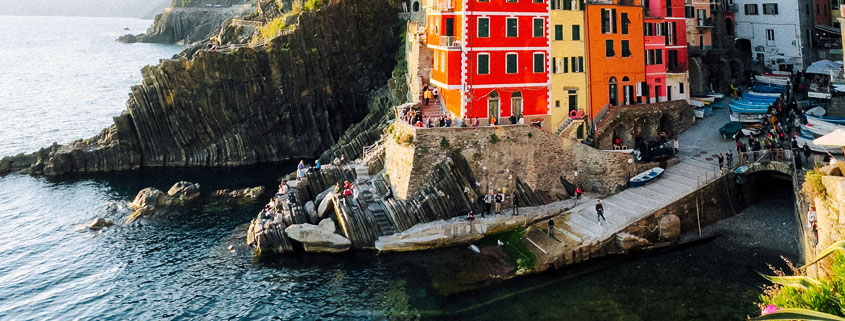
Italy does not announce itself loudly. It reveals itself slowly, through layers of history embedded in stone, through rituals carried forward without explanation, through a relationship with beauty that feels instinctive rather than curated. Traveling through Italy is less about arrival and more about immersion, the gradual realization that daily life here has been shaped by centuries of art, conflict, devotion, and reinvention. The country does not separate the extraordinary from the ordinary. They coexist, often within the same street, the same meal, the same afternoon.
What distinguishes Italy as a destination is not simply the abundance of landmarks, but the way meaning accumulates over time. A piazza is never just a public square. It is a gathering place shaped by generations of footsteps, political speeches, celebrations, and quiet evenings. Travel in Italy invites attentiveness. It rewards those who observe rather than rush, who listen rather than consume. The beauty is not performative. It is lived.
A Landscape Shaped by Human Imagination
Italy’s geography is inseparable from its cultural identity. Mountains, coastlines, plains, and volcanic soil have dictated not only where people settled, but how they built, farmed, and expressed themselves. Cities rise organically from their surroundings, their architecture responding to climate, materials, and historical necessity. Unlike destinations designed for spectacle, Italian cities feel inevitable, as if they could not exist anywhere else.
This connection between land and human imagination continues to shape travel experiences. Vineyards cling to hillsides not for aesthetic effect, but because that is where the land allows grapes to thrive. Coastal towns curve along the sea because that is how generations learned to coexist with water rather than dominate it. Traveling through Italy becomes an education in adaptation, showing how beauty emerges when human ambition negotiates with natural constraint.
Art That Refuses to Stay in Museums
In Italy, art does not remain confined to curated spaces. It spills into churches, streets, fountains, and civic buildings, blurring the line between cultural heritage and everyday environment. A traveler may encounter a Renaissance masterpiece not as a destination, but as a backdrop to daily worship or routine errands. This accessibility alters how art is perceived. It becomes part of lived experience rather than a distant object of reverence.
This saturation of artistic expression shapes the traveler’s sense of time. Progress does not erase the past, it layers upon it. Modern life unfolds beside frescoes painted hundreds of years ago, creating a dialogue rather than a division. For visitors, this coexistence challenges the assumption that history belongs behind glass. In Italy, it remains active, influencing how people move, gather, and imagine themselves.
Cuisine as Cultural Memory
Italian food is often discussed in terms of pleasure, but its deeper significance lies in memory and continuity. Recipes are not simply passed down, they are defended, debated, and adapted with care. Ingredients reflect regional histories shaped by trade routes, climate, and necessity. A meal in Italy is rarely just sustenance. It is an expression of identity tied to place and lineage.
Traveling through the country reveals how deeply cuisine is woven into social life. Meals unfold slowly, structured around conversation and shared presence rather than efficiency. This rhythm offers travelers a lesson in attention. Eating becomes an act of participation rather than consumption. The simplicity often praised in Italian food is not minimalism for its own sake, but respect for ingredients and the knowledge accumulated through repetition.
Cities That Reward Wandering
Italian cities are designed for movement at a human pace. Narrow streets, irregular layouts, and layered neighborhoods encourage exploration without destination. Wandering becomes a form of engagement, allowing travelers to encounter moments unplanned and unscripted. This urban design resists the logic of modern efficiency, privileging discovery over optimization.
Florence, Rome, Venice, Naples, and countless smaller cities each offer distinct rhythms, yet share an openness to being experienced without agenda. The absence of rigid order invites curiosity. Getting lost often leads to understanding rather than frustration. This quality transforms travel into a dialogue between the visitor and the environment, where attention becomes the primary currency.
Fashion as Cultural Expression
Italy’s relationship with fashion extends beyond luxury brands or seasonal trends. Clothing here reflects an enduring awareness of proportion, craftsmanship, and self presentation. Style is not performative, it is integrated into daily life. This sensibility shapes how Italians occupy space, interact with one another, and move through the world.
For travelers, this presence of design consciousness influences perception. Elegance is not reserved for special occasions. It appears in the cut of a jacket, the choice of shoes, the way colors interact within a cityscape. Fashion becomes another language through which Italy communicates its values, emphasizing care, intention, and continuity.
Spirituality Without Spectacle
Religion in Italy is visible yet understated, woven into architecture, ritual, and public life without demanding constant attention. Churches function as both sacred spaces and communal landmarks. Bells mark time, processions move through streets, and symbols persist without explanation. For travelers, this quiet integration offers insight into a form of spirituality that coexists with secular life rather than opposing it.
This presence contributes to Italy’s sense of timelessness. Traditions continue not because they are preserved for tourists, but because they remain meaningful to those who practice them. Observing these rituals provides a window into values shaped by patience, repetition, and reverence, qualities that stand in contrast to the pace of contemporary travel culture.
The Emotional Texture of Place
What lingers after traveling through Italy is often difficult to articulate. It is not a single sight or experience, but an emotional texture created by countless small moments. A conversation overheard in a café, light shifting across stone at dusk, the weight of history felt without being explained. Italy does not ask to be summarized. It invites return, reflection, and reinterpretation.
This emotional residue is what elevates Italy beyond destination status. It becomes a reference point, a place against which other experiences are measured. Travelers leave with a heightened sensitivity to beauty, detail, and presence. The journey reshapes not only how one remembers Italy, but how one perceives the world afterward.
Italy remains compelling because it refuses simplification. It resists being reduced to highlights or checklists. Its elegance is not ornamental, its culture not frozen, its beauty not effortless. It is the result of centuries of attention, care, and negotiation between past and present. Traveling through Italy becomes an encounter with that process, one that continues long after the journey itself ends.

