
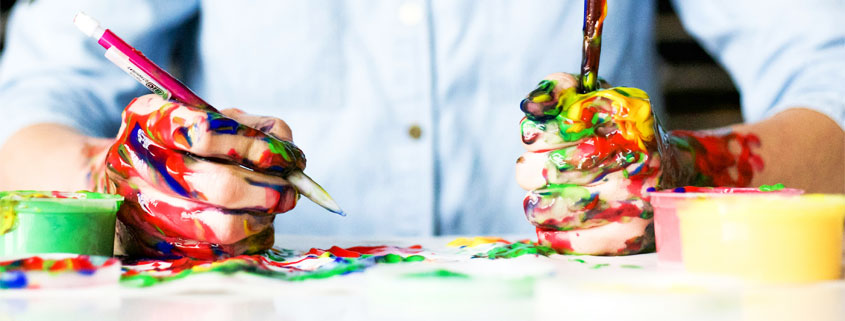
Creativity does not announce itself with fireworks. It enters quietly, often disguised as curiosity, restlessness, or dissatisfaction with the obvious. It shows up when routine feels thin and when answers arrive too quickly to feel true. To live creatively is not to produce art endlessly or to chase originality for its own sake, but to cultivate a way of moving through the world that remains alert, responsive, and alive. Creativity, when embraced as a way of life, becomes a posture toward existence rather than a skill reserved for special moments.
Creativity Beyond Talent and Output
The most persistent misunderstanding of creativity is that it belongs only to those who make visible things. Paintings, novels, inventions, and performances become the public evidence, while the deeper creative process remains invisible. In truth, creativity begins long before output. It lives in how questions are formed, how problems are framed, and how experiences are interpreted.
Living creatively means resisting the urge to reduce life to efficiency alone. It involves allowing space for ambiguity, complexity, and exploration. A creative life is not measured by constant productivity, but by the quality of attention brought to everyday decisions, conversations, and observations. Creativity thrives where curiosity is allowed to linger rather than being rushed toward conclusion.
Curiosity as a Daily Discipline
Curiosity is the engine of a creative life. It keeps perception flexible and prevents thought from calcifying into habit. When curiosity is active, even familiar environments regain texture. Ordinary moments become sources of insight rather than background noise. This discipline requires effort because certainty is comfortable. Assumptions save time. Curiosity slows things down. It asks why something exists in its current form and whether alternatives might reveal more depth or meaning. Creative individuals are not immune to boredom, but they are less willing to accept it as inevitable. Curiosity also requires humility. It admits that understanding is incomplete and that learning never finishes. In this sense, creativity is inseparable from openness.
Creativity and Identity
When creativity becomes a way of life, it reshapes identity. Instead of defining oneself by fixed roles, creative living allows identity to remain porous. A person becomes less attached to labels and more invested in growth. Change no longer feels like failure, but like evidence of engagement. This flexibility strengthens resilience. Life inevitably disrupts plans, careers, and expectations. A creative mindset interprets disruption as material rather than catastrophe. It asks what can be made from what remains. Identity rooted in creativity adapts without dissolving. Core values persist, but expression evolves. This balance between continuity and transformation gives creative lives their distinctive coherence.
Attention as the Creative Resource
In an age of constant stimulation, attention has become the most fragile creative resource. Creativity depends less on raw intelligence and more on sustained focus. Ideas require time to surface, combine, and mature. Living creatively demands protecting attention from fragmentation. This does not mean retreating from the world, but engaging it selectively. Choosing when to disconnect becomes as important as choosing when to engage. Silence, solitude, and reflection are not luxuries, but necessary conditions for insight. Attention also shapes perception. What is noticed becomes material. What is ignored disappears. Creative individuals train themselves to notice patterns, contradictions, and subtleties that others pass by.
The Role of Constraint
Paradoxically, creativity flourishes within limits. Unlimited freedom often leads to paralysis. Constraints provide structure that sharpens imagination. Time limits, resource limits, and contextual limits force choices that reveal priorities. A creative life does not seek to eliminate constraints, but to work intelligently within them. This approach reframes obstacles as parameters rather than barriers. Constraints become invitations to invent rather than excuses to stop. This perspective transforms frustration into fuel. The question shifts from what is missing to what can be done with what exists.
Creativity in Ordinary Decisions
Creativity does not require dramatic gestures. It reveals itself in how meals are prepared, how work is approached, how relationships are navigated. Small decisions accumulate into a distinctive way of living. A creative approach to daily life values experimentation over routine. It allows for variation, reflection, and adjustment. Habits are examined rather than inherited blindly. Traditions are respected without becoming rigid. This mindset turns living into an ongoing dialogue rather than a script to be followed. Life becomes something participated in rather than endured.
Risk, Failure, and Courage
Creativity carries risk because it involves deviation. Trying something new exposes vulnerability. Not every attempt succeeds. Failure becomes visible. A creative life accepts this risk as inseparable from growth. Failure is reframed as information rather than indictment. Each misstep refines understanding and clarifies direction. Courage in creative living is quiet but persistent. It is the willingness to continue exploring despite uncertainty, criticism, or doubt. This courage does not eliminate fear, but moves forward alongside it.
Creativity and Meaning
Meaning emerges when actions feel aligned with inner values. Creativity deepens this alignment by allowing expression to evolve naturally. When life is lived creatively, meaning is not searched for abstractly, but generated through engagement. Creative living resists passive consumption. It prefers participation. Experiences are interpreted, reshaped, and integrated rather than merely accumulated. This active relationship with life fosters depth. Meaning built this way feels earned rather than assigned. It adapts as circumstances change because it is rooted in process rather than outcome.
Social Dimensions of Creative Living
Creativity is often imagined as solitary, but it is deeply relational. Ideas develop through conversation, collaboration, and exchange. A creative life remains attentive to others, learning from differences rather than retreating into isolation. Listening becomes a creative act. So does empathy. Understanding perspectives outside one’s own expands the range of possible responses. Creative communities emerge where curiosity is shared and judgment is restrained. Living creatively in social contexts requires generosity. Credit is shared. Influence flows both ways. Competition gives way to contribution.
Time and the Long View
Creativity matures over time. It resists urgency and rewards patience. A creative life recognizes that insight unfolds gradually. Seeds planted early may not surface for years. This long view counters the pressure for constant visibility or immediate results. It values consistency over spectacle. Progress may appear uneven, but depth accumulates beneath the surface. Time becomes an ally rather than an adversary. Creative individuals work with rhythm rather than forcing speed.
Living With Unfinishedness
Perhaps the most defining feature of a creative life is comfort with the unfinished. Not everything must resolve neatly. Questions can remain open. Paths can remain provisional. This openness preserves vitality. It keeps life from closing prematurely around fixed conclusions. The unfinished invites return, revision, and renewal. To embrace creativity as a way of life is to accept that living itself is a work in progress. There is no final version, only continual refinement shaped by attention, curiosity, courage, and care.

