
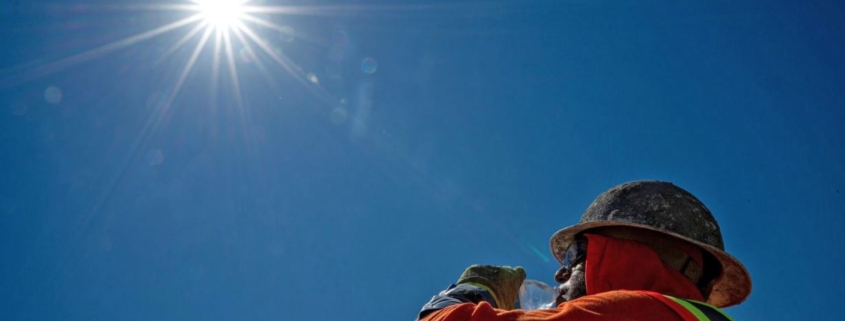
The most dangerous thing about extreme warmth is how ordinary it feels at first. You do not collapse when the air turns heavy. You adapt, then you adjust again, then you tell yourself you are fine because you are still functioning. Meanwhile your circulation is being reassigned, your kidneys are being asked to conserve water while you leak it through skin, your heart is doing extra work to cool you, and your brain is quietly spending attention on temperature regulation instead of thought.
High temperatures are often described as a “silent killer” because the casualties do not look cinematic. People die in bedrooms, at bus stops, on job sites, in apartments that never cool overnight. The global toll is substantial. The point is not that warmth is suddenly new. The point is that the body’s safety margin is narrower than most modern routines assume, and the frequency of punishing conditions is rising.
If you want to understand why a hot week can trigger a spike in emergency calls, worsen chronic disease, disturb sleep, increase irritability, and erase productivity, stop thinking of it as an environmental inconvenience. Start thinking of it as a physiological stressor with a long list of downstream consequences, many of them invisible until they are not.
Thermoregulation is a trade, not a free benefit
Human beings survive high temperatures through a bargain with physics. Your body must shed internal heat to the environment. The two main tools are blood flow to the skin and sweat evaporation. Both tools cost you.
When blood is redirected toward the surface to dump heat, less is available for other work. The heart compensates by pumping harder and faster. For a healthy young person, that can be manageable. For an older adult or someone with cardiovascular disease, that extra demand can be precarious.
Sweating looks simple, but it is a controlled depletion of water and electrolytes. Evaporation cools you only if sweat can actually evaporate. When humidity is high, sweat stays on the skin, and cooling efficiency collapses. That is why hot, damp nights can feel oppressive in a way that dry desert heat does not. It is not only discomfort. It is an engineering problem in which the body’s main cooling system loses traction.
Humidity changes the rules, and wet-bulb is the language of limits
Air temperature is a headline number. It is not the real exposure. The more useful concept is wet-bulb temperature, which combines heat and humidity into a measure tied to evaporation, the mechanism your body relies on. For years, a wet-bulb value around 35°C was treated as a theoretical upper survivability threshold under certain assumptions. More recent physiological modeling and experimental work has pushed the conversation toward lower practical limits and a clearer distinction between survivability and livability, especially when age, sunlight, and activity are considered.
This matters because public instinct is still shaped by dry-bulb thinking, the thermometer number that floats across weather apps. People may not change behavior at 95°F because they have handled worse, without realizing that the combination of humidity, poor nighttime cooling, and physical effort can create a much more hazardous internal situation than a higher temperature in a drier climate.
Wet-bulb language also clarifies why fans can be both helpful and insufficient. Air movement improves evaporation when the surrounding air can accept more moisture. When humidity is already near saturation, a fan may feel like relief while doing less than you think. Risk is not always intuitive, which is why heat injury is so often preceded by the conviction that everything is fine.
The heart does not experience a heatwave as a season, it experiences it as workload
During hot spells, your cardiovascular system becomes part of the cooling apparatus. Vasodilation increases blood flow at the skin. Heart rate rises. Blood pressure regulation can shift, and in people taking certain medications, the margin can shrink further.
The danger is compounded by the way heat accumulates across days. A single hot afternoon is not the whole exposure. Repeated days with limited nighttime relief prevent recovery. This helps explain a paradox many people notice. The first day of a hot stretch feels tolerable. The third day feels flattening. The fifth day feels like emotional abrasion. What changes is not character. What changes is physiological reserve.
Kidneys are often where heat damage hides first
Heat illness is usually framed through heat exhaustion and heat stroke, the dramatic endpoints. A quieter story involves renal stress.
Dehydration reduces blood volume and concentrates waste products. The kidneys compensate by conserving water, which can be effective until it is not. Repeated dehydration, especially in people doing strenuous work in high temperatures, can push the kidneys into acute injury. Even for someone not in heavy labor, a hot week can push hydration habits into deficit without obvious thirst, particularly among older adults whose thirst cues can be blunted.
The practical implication is that thirst is not a flawless alarm. Hydration habits that work in mild weather can fail quietly in a heatwave.
Heat changes the brain’s operating budget
The brain is both a heat generator and a heat-sensitive organ. When internal temperature rises, the body prioritizes cooling, and the brain allocates resources accordingly.
Cognitive effects in heat are not limited to feeling sluggish. Attention becomes harder to sustain. Reaction time can slow. Irritability rises. Sleep becomes fragmented, especially when nighttime temperatures stay high and indoor spaces fail to cool. That degraded sleep then feeds back into thermoregulation, appetite, and mood the next day.
There is also a deeper mechanism. Your brain is coordinating behavior, memory, emotion, and decision-making while also running thermoregulatory control systems. Under thermal strain, the cost of doing ordinary cognitive work rises. People interpret that as laziness or lack of focus. It is often the nervous system reallocating effort toward basic stability.
This is why extreme warmth can have social consequences. Small conflicts escalate. Patience shortens. Driving becomes more error-prone. The health impact is not only biological. It is behavioral, and behavior is part of public safety.
Medication interactions make extreme warmth a medical issue, not a lifestyle issue
Heat risk is not distributed evenly because physiology is not distributed evenly. Chronic illness changes tolerance. So do many common medications.
Diuretics increase fluid loss. Some blood pressure medications can influence vascular tone and the body’s response to dehydration. Certain psychiatric medications can impair heat dissipation or affect thirst and sweating. Alcohol can compound dehydration and impair judgment. These are not rare edge cases, they are common realities for older adults and many people with chronic disease.
This is why extreme warmth should be treated with the seriousness we reserve for other environmental hazards. It is not personal weakness to struggle in high temperatures. It is biology meeting conditions it cannot negotiate with indefinitely.
The indoor heat problem is a housing problem, not a discipline problem
A large portion of heat-related harm occurs indoors. People imagine risk as outdoor exposure, the blazing sun, the midday run. Yet a hot apartment that never cools can be more dangerous than an outdoor hour in shade, because it removes recovery time.
Nighttime relief is essential. When indoor spaces remain warm overnight, the body cannot lower core temperature, and cumulative strain increases. In many cities, the burden is concentrated among people with inadequate cooling, poor insulation, high-rise heat retention, and limited ability to relocate during peak conditions.
This is the part of heat health that forces a moral reckoning. Adaptation is not evenly available. Air conditioning is protective, but it is also expensive to run, absent in many units, and unreliable during grid stress. Cooling centers help, but access depends on mobility, safety, proximity, and trust.
The most honest heat health advice has to acknowledge this: sometimes the best practice is not a choice you can make. It is an infrastructure you either have or you do not.
Why the body can acclimatize, and why acclimatization is not immunity
Humans can acclimatize to heat over days and weeks. Sweating can become more efficient. Plasma volume can expand. Cardiovascular strain at a given workload can decrease. This is real adaptation.
It is also limited adaptation. Acclimatization helps within a range, and it can be lost when exposure stops. It does not make extreme conditions safe, especially when humidity is high, nighttime relief is absent, or the person is older or medically vulnerable. It also does not protect against sudden spikes in exposure, which is why the first hot spell of the season is often so dangerous.
The seductive lie of acclimatization is that it encourages people to treat discomfort as training and to ignore warning signals. A person may push through early symptoms because they believe their body will get used to it, when the reality is that early symptoms are often the body asking for immediate behavior change.
The symptoms that matter are not always dramatic
Heat illness is often portrayed as collapse. In reality, the path can be incremental.
Early signs can include headache, nausea, dizziness, unusual fatigue, muscle cramps, and confusion. Heat stroke is a medical emergency. The problem is that confusion can itself prevent good decisions, and social norms can discourage people from admitting they feel unwell.
In workplaces, pride is a risk factor. On vacations, alcohol is a risk factor. In daily life, the desire to keep plans is a risk factor. Heat does not negotiate with social expectations.
Cooling is a physiological intervention, not a comfort preference
Cooling strategies work because they change the physics of heat exchange.
Shade reduces radiant load. Evaporation works when air can accept moisture. Cool water on skin can help by conduction and by supporting evaporation. Immersion in cool water is a powerful cooling method in severe overheating contexts. Indoors, reducing humidity can make sweating more effective. Cross-ventilation can help when outdoor air is cooler than indoor air, and it can hurt when it is not.
The concept to hold onto is not avoid the heat. It is reduce thermal load and preserve recovery windows.
The future of heat health will be decided in city planning as much as in clinics
It is tempting to treat heat as an individual health management issue. That framing will fail.
Urban design influences temperature through shade, materials, and green cover. Heat islands are not inevitable. They are created by asphalt, dark roofs, scarce trees, and built environments that trap warmth overnight. Greening strategies, reflective surfaces, and cooling infrastructure can reduce exposure at scale.
Workplace policy matters too. Rest breaks, access to water, shade, and acclimatization protocols are not luxuries, they are safety systems. Healthcare systems will also have to adapt, because heat amplifies existing disease burden and drives demand in ways that stress emergency services.
The most unsettling part is that heat is not a single hazard, it is an amplifier. It intensifies cardiovascular risk, kidney stress, medication vulnerability, sleep disruption, mental strain, and social instability. It makes inequalities sharper because the capacity to escape it is uneven.
A heatwave is often described as a forecast. For many people, it is a diagnostic.

