
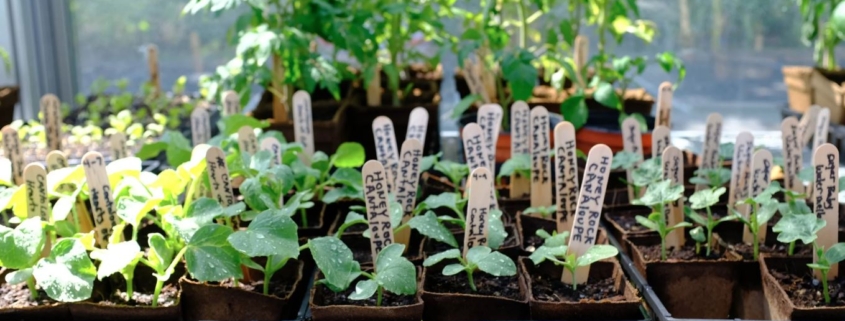
A packet of beans looks like the smallest thing you can own, yet it carries an entire legal philosophy. In one hand it is inheritance, passed down with a story about a grandmother’s fence line and a stubborn plant that never failed. In another it is a product, optimized for uniformity, shrink wrapped into an aisle category, and designed to end its usefulness after a single season. The modern garden is where those two ideas collide quietly, over and over, in raised beds, balcony planters, and community plots that sit beside parking lots like accidents that refused to disappear.
Gardeners used to treat planting stock as naturally shareable because it behaved that way. You saved what grew well, you traded with neighbors, you learned which varieties tolerated your humidity or your late frosts, and you slowly built a local repertoire that belonged to no one and to everyone. Today the same acts can feel like stepping into a policy debate you did not ask to join. The question is not only what grows, but who is allowed to carry it forward, under what terms, and with what risks.
Seed libraries have become the most unexpected front line in this shift. They look gentle from the outside. A drawer of labeled envelopes. A check out card. A volunteer who explains that you return seed at the end of the season if you can. Yet the library model reframes the garden as a commons, which means it reopens arguments that consumer culture prefers to keep closed. If knowledge can be borrowed, why not genetics. If a community can share books without permission from authors, why not share varieties without permission from companies. If a neighborhood can build a public tool shed, why not build a public pantry of plant futures.
That is why these projects generate both affection and anxiety. They feel like repair, yet they also expose how much the system has been engineered to prevent repair.
When a tomato becomes intellectual property
Most gardeners sense that certain varieties behave differently, even when two packets have nearly identical photos. One plant throws fruit early, another waits and then floods the vine all at once. One tastes like sunlight, another tastes like a grocery store apology. That difference can be cultural memory, but it can also be ownership.
Plant breeding has always involved selection and intention. What changed is the degree to which selection became a protected asset. Over time, the garden shifted from a place where you could save seed as a default habit to a place where many people assume they should not, even when no one has explicitly told them so. The habit was replaced by a pattern of repurchasing, and repurchasing is easier to monetize than stewardship.
The core mechanism is simple. If a variety is created under conditions that restrict its reproduction, the buyer becomes a user rather than a custodian. Hybrids often do this biologically because their offspring can behave unpredictably. Legal protections can do it explicitly by limiting propagation. Either way, the result is the same in the garden. The genetics are made temporary.
This temporariness changes the emotional relationship people have with growing. When every season starts with a new purchase, the garden becomes closer to décor. It can still be beautiful, but it loses the slow continuity that used to make gardening feel like belonging to a place. You are not building a lineage, you are buying an experience.
Seed libraries interrupt that rhythm. They do not only offer free packets. They offer an alternative timeline, one where your growing decisions can ripple outward and forward.
The rise of the neighborhood gene bank
A seed library, at its best, is not a charity box. It is a neighborhood genetics program that happens to be friendly. The most important thing it stores is not the envelope. It is the local learning embedded in that envelope.
When gardeners save and share locally, the plants are being quietly tested against local reality. Heat waves that arrive early. Rain that comes in bursts instead of weeks. New pests that show up as if they got a map. Weird winters. Even small shifts in season length can reshape which varieties thrive, and commercial catalogs can lag behind those changes because they have to serve broad regions, not one specific block.
A community-based collection can adapt faster because it is not optimizing for shipping or shelf appeal. It is optimizing for survival where you actually live. Over years, a library can develop strains that are not famous, not photogenic, not marketable, but deeply competent in a particular microclimate. That competence becomes a kind of resilience that no one can mass produce on demand.
This is where the garden stops being a hobby and starts behaving like infrastructure. It is no longer only about taste or beauty. It becomes a distributed system for preserving options.
Exchange is not the same as copying
Dupe culture exists in fashion because the surface can be replicated. In gardens, the surface is the least interesting part. You can trade a variety without copying it in the cynical sense, because the act of exchange changes it. Living material responds to care, weather, soil life, pollination, and even timing. Every season introduces variation, and variation is not theft. It is biology.
This is one reason corporate control over genetics can feel unnatural to gardeners. The garden teaches that stability is earned, not declared. A variety is never a static object. It is a relationship between a line and the conditions that shape it. When that relationship is locked down, gardeners do not experience it as protection of creativity. They experience it as protection from community.
Seed libraries often try to walk a careful line here. They want to respect the legitimate work of breeders while also refusing the idea that every living line should become a proprietary tunnel. The best projects emphasize open pollinated varieties, older cultivars, and locally adapted lines that are safe to share and likely to reproduce true. That choice is not just practical. It is philosophical.
It says the garden is not a closed store, it is a living conversation.
The invisible skill of saving seed well
Sharing genetics sounds simple until you try to do it with integrity. Saving properly is not just collecting what falls into your palm. It is a craft with its own quiet demands.
Different crops require different kinds of attention. Some plants self pollinate easily and remain relatively stable. Others cross readily with neighbors and can change quickly. Some need isolation distances that are difficult in dense neighborhoods. Some require patience to let seed mature long after the vegetable is at peak eating quality. Certain plants ask you to tolerate a messier garden for longer, because their seed phase is not tidy.
Then there is the question of selection. If you save from the earliest producer every year, you might push the line toward earlier maturity at the expense of flavor. If you save from the biggest fruit, you might drift toward fewer but larger yields. If you save only from the healthiest plant, you might preserve disease resistance but narrow diversity. Seed saving is gardening with consequences.
The presence of a library changes how people approach these choices. It adds a second audience. You are not only growing for yourself, you are growing for neighbors you may never meet. That can raise standards and deepen attention. It can also create anxiety, because nobody wants to be the person who introduces a weak line or a pest problem into a shared pool.
The most durable seed libraries treat this anxiety as part of their educational role. They normalize imperfection, they teach basic best practices, and they build cultures of honesty rather than cultures of purity. A commons collapses if it becomes a place where people feel judged for trying.
Biosecurity and the fear of the envelope
Every shared system eventually runs into the language of risk. In gardening, risk arrives in the form of pathogens, invasive species, and regulatory boundaries that exist for reasons most people do not think about until something goes wrong.
A single packet can carry trouble. Not because gardeners are reckless, but because biology does not respect good intentions. Fungal spores, bacterial diseases, and microscopic hitchhikers can travel in ways that are hard to detect without lab testing. Some problems are regional, some global, and some are simply unpredictable. As plant diseases and pests spread more easily through trade and changing climate, people become understandably cautious about anything that moves living material between communities.
This is where seed libraries face a difficult public perception problem. They are small and communal, so they can look informal, which can trigger suspicion from authorities and cautious residents alike. Yet large commercial supply chains also move immense quantities of seed and starts, and those chains can create their own spread dynamics. The difference is that corporations have established compliance channels and the social power to be treated as legitimate.
For seed libraries, legitimacy has to be built in public. Clear sourcing, careful crop selection, transparent handling practices, and education around what should not be shared are not bureaucratic extras. They are what keeps a commons from becoming a liability.
There is a deeper tension here. The more risk is emphasized, the more people are pushed back toward centralized purchasing, because centralized purchasing feels safer. That feeling can be partially true. It can also be culturally convenient for systems that prefer consumers to be dependent.
A new kind of local power
In many places, the most radical thing about a seed library is not the seed. It is the social graph.
When people trade varieties, they also trade information, and information is what actually changes outcomes in gardens. Which cucumber survives mildew in a humid summer. Which pepper tolerates a balcony that bakes all afternoon. Which leafy greens bolt too quickly. Which flowers reliably feed pollinators in late season when everything else is tired.
That knowledge builds reputations. Certain gardeners become reliable sources, not because they are influencers, but because their plants keep proving them right. A community that shares seed becomes a community that shares trust, and trust is a resource more scarce than compost.
This local power has an economic dimension, too. A neighborhood that can propagate its own plants reduces dependence on retail cycles. It also reduces vulnerability to price spikes, supply issues, and the subtle manipulation of trend-based selling. When a variety is popular online, it can sell out quickly. When a community can reproduce it, popularity becomes less of a bottleneck.
The library turns the garden from an individual project into a kind of cooperative economy. Not an economy of profit, but an economy of continuity.
The hidden politics of what gets preserved
Every seed collection makes choices. Those choices are sometimes framed as taste, but they are often history.
Many of the varieties that become culturally dominant are the ones that fit commercial needs. Uniformity. Shelf life. Shipping resilience. Color that photographs well. Yield that behaves predictably. Flavor can matter, yet flavor is hard to protect through long supply chains, and it is difficult to quantify in ways that satisfy large distribution.
Community collections can preserve different priorities. Flavor that only works when eaten minutes after picking. Colors that bruise easily but delight at the table. Plants that produce smaller harvests more consistently, which fits home kitchens better than abundance that arrives all at once. Varieties that are culturally meaningful, tied to particular cuisines and migration stories.
This preservation can be deeply personal. A seed library can become a map of a neighborhood’s identities, not through declarations, but through what people choose to keep alive. Beans from one region. Squash from another. Herbs associated with specific family dishes. Flowers that remind someone of a place they left.
The politics become sharper when you consider who has historically been excluded from agricultural decision-making. Seed sovereignty movements have long argued that communities should control their own food genetics, especially communities whose crops have been appropriated, commercialized, or reduced to branded novelty. A local seed library can participate in that sovereignty in a modest way, provided it treats cultural lines with respect and avoids the casual extraction that turns heritage into aesthetic.
Digital platforms changed seed sharing without asking permission
A generation ago, seed exchange was slow. You met people. You sent envelopes. You waited. The pace protected you from obsession, because obsession needs constant novelty.
Now discovery happens online. A gardener sees a rare variety, wants it immediately, and can often find someone willing to mail it. This speed creates a new layer of opportunity and a new layer of danger. It expands access while also making it easier for dubious sellers to circulate mislabeled, low viability, or contaminated stock. It also encourages impulse acquisition, which can turn gardens into experimental clutter.
Seed libraries exist inside this platform era, and they are shaped by it even when they stay offline. People bring in varieties they saw on screens. They ask for specific names. They want the library to function like a catalog. The library, in turn, has to decide whether it will chase trends or cultivate a slower identity rooted in local needs.
The most thoughtful projects treat the internet as a tool, not a compass. They borrow the reach of digital culture while resisting its pressure toward constant turnover.
Climate adaptation does not happen in conferences
Gardening is one of the few places where climate change is felt as a daily negotiation rather than an abstract number. A season that behaves wrong forces you to adjust immediately. You plant later. You shade earlier. You pick varieties you never needed before. You watch pests expand their territory.
Seed libraries can become climate adaptation institutions without ever using the phrase. They can preserve lines that tolerate heat, drought, or erratic rain. They can encourage diversity rather than dependence on a narrow range of commercially promoted options. They can keep alive varieties that might not perform in a controlled test field but thrive in backyard chaos.
Diversity matters because climate volatility is not a single problem, it is a cluster. It is heat plus humidity plus storms plus stress plus new insects. A single “best” variety can fail spectacularly when conditions shift. A range of lines creates redundancy, and redundancy is what keeps systems from snapping.
What makes this especially important is that adaptation needs to happen at the margins, not just in industrial fields. Most people grow in imperfect spaces, with partial sun, inconsistent watering, and limited time. If a variety can thrive there, it has a kind of resilience that is valuable in a future where many systems will be strained.
The commons is a relationship, not a shelf
A seed library can be built with furniture and volunteers, yet it will fail if it is treated as a vending machine for free packets. The commons works only when people feel responsible for one another’s outcomes.
That responsibility is not only about returning seed. It is about returning information. If a variety struggled, that matters. If it excelled, that matters. If it crossed with something unexpected, that matters. If it attracted a particular pest or resisted one, that matters. Stories become data when they are shared honestly and consistently.
This is why the most compelling seed libraries often feel like cultural institutions rather than service programs. They host conversations, not transactions. They invite gardeners to see themselves as part of a living archive. They make room for beginners and still honor skill. They accept that failure is part of learning, which is also part of adaptation.
In a world that trains people to treat everything as private property, a functioning commons feels almost suspicious. Yet gardens have always operated through invisible interdependence. Pollinators do not carry passports. Weather does not respect fences. Seeds do not care who bought them. The garden’s truth is that life wants to move, and communities either guide that movement with care or surrender it to whoever can monetize it best.

