
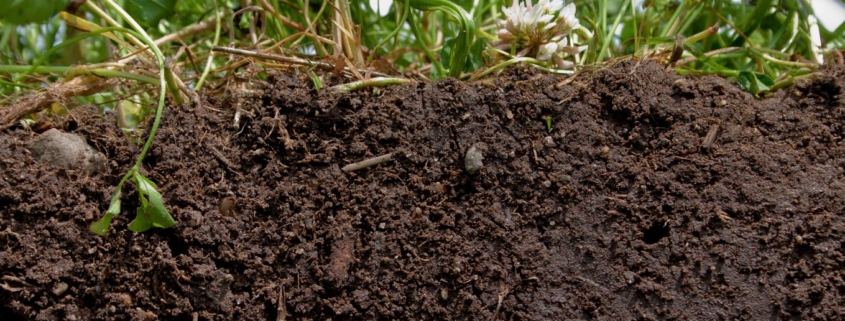
A garden fails long before a plant collapses. The failure begins underground, in a world most people treat as inert, a brown medium meant to hold roots upright. That misunderstanding is one of the most expensive mistakes a gardener can make. Soil is not a passive substance. It is a negotiated ecosystem, a living economy made of organisms, minerals, water, air, and time. Every decision you make either builds that economy or strips it for short term gains. A garden can look fine for a season while its soil is being quietly depleted, and then one year the plants start needing constant rescue, constant feeding, constant protection. The gardener blames weather, pests, or bad luck, when the true issue is that the soil has been bankrupted.
Healthy soil is not merely fertile. It is resilient. It holds moisture without drowning roots. It drains without turning to dust. It stores nutrients but releases them at the pace plants can use. It buffers mistakes. It supports life that suppresses disease. It creates a stable environment where plants can invest energy in growth rather than in emergency survival. When you learn to treat soil as living infrastructure, gardening stops being a cycle of constant intervention and becomes a process of building a system that can sustain itself.
The Underground Architecture That Determines Everything Above It
Plants are not separate from their soil. They are extensions of it. Their roots are not just drinking straws for water. Roots are sensors, negotiators, and chemical communicators. They exude sugars and organic compounds that recruit microbial allies. They detect compaction and move around it when possible. They respond to oxygen levels, moisture gradients, and nutrient availability. The plant you see above ground is only the visible portion of a much larger interaction below.
Soil structure is the stage on which this interaction happens. In healthy soil, particles are aggregated into crumbs and pores, creating channels for air and water movement. Those pores allow roots to breathe and fungi to thread through space. Compacted soil collapses those pores. Water runs off the surface or sits and suffocates roots. The plant looks stressed, and the gardener responds with fertilizer, which may boost growth briefly, but cannot fix the underlying physical problem. This is why gardeners who focus only on feeding plants often become trapped. They keep increasing inputs to compensate for soil that has lost its physical and biological capacity to support life.
The Myth of “Feeding the Plant” and the Reality of Feeding the System
Fertilizer culture encourages a simple story. Plants need nutrients, so give them nutrients. This story is incomplete. In natural systems, plants rarely receive nutrients directly. Nutrients move through a chain of organisms and chemical exchanges, and the soil itself functions as a bank, storing, transforming, and releasing resources.
When you pour soluble nutrients into degraded soil, you may get rapid leaf growth, but you also create dependency. The plant learns to rely on easy nutrients and invests less in root exploration. Microbial communities shift because the plant is not feeding them as much through root exudates. Over time, the soil becomes less biologically diverse. Diseases become more likely. The gardener then needs stronger treatments to manage problems that did not exist when the soil ecosystem was intact.
A more durable approach is to feed the soil so it can feed the plant. This changes everything. Compost, leaf mold, mulches, and gentle organic inputs build microbial activity and improve structure. Nutrients become available through decomposition and exchange. Plant health becomes less dramatic but more consistent. The garden becomes less dependent on constant correction.
Why Soil Biology Is Not a Romantic Concept but a Practical One
Soil biology is sometimes described in a mystical way, as if microbes are magical helpers. In reality, the biology is practical. Bacteria, fungi, protozoa, nematodes, arthropods, and earthworms perform work that plants cannot do alone. They decompose complex organic matter into forms plants can use. They cycle nitrogen, phosphorus, and micronutrients. They produce compounds that bind soil particles into stable aggregates. They compete with pathogens. They form partnerships with roots.
One of the most important partnerships is mycorrhizal fungi. These fungi connect to plant roots and extend far beyond them, functioning like an expanded root system. They help plants access water and nutrients in exchange for sugars. This relationship improves drought resilience and can reduce nutrient needs. Yet it is easily disrupted by practices such as excessive tilling, overuse of certain chemicals, or leaving soil bare and exposed.
When gardeners treat soil as a sterile container, they destroy these relationships and then wonder why plants struggle. The difference between a thriving garden and a fragile one often comes down to whether the soil’s living community is being supported or repeatedly disrupted.
The Physical Reality of Soil, Texture, Structure, and the Air Water Balance
A garden can have rich biology and still fail if physical conditions are wrong. Texture refers to the proportion of sand, silt, and clay, which determines baseline behavior. Sandy soils drain quickly and lose nutrients easily. Clay soils hold nutrients well but can become waterlogged and compacted. Silt can be fertile but prone to crusting. Most gardens are mixtures, but knowing your dominant texture helps you understand your challenges.
Structure is more important than texture because structure can be improved. Good structure means stable aggregates and pore space. You can build structure by adding organic matter, reducing compaction, and keeping soil covered. You can destroy structure by working soil when it is too wet, repeatedly tilling, or allowing heavy traffic over beds.
The air water balance matters because roots need oxygen. People often treat drought and waterlogging as opposite problems, but they share a root cause when structure is poor. A soil that cannot hold water forces plants into drought stress quickly. A soil that cannot drain suffocates roots. In both cases, plants become vulnerable to pests and disease because they are already compromised.
The Hidden Damage of Bare Soil
Bare soil is not neutral. It is an exposed wound. Sun bakes the surface, breaking down organic matter and killing microbes. Rain impacts the soil like tiny hammers, sealing pores and causing runoff. Wind removes fine particles and dries the surface. Nutrients leach. Weed seeds exploit open space. Meanwhile, the soil biology loses its shelter and food source.
Covering soil is one of the most powerful decisions a gardener can make. Mulch moderates’ temperature, retains moisture, and protects structure. Living cover, such as groundcovers or cover crops, adds roots and exudates that feed soil life. Even a thin layer of shredded leaves can transform the microclimate at the soil surface. Gardeners often treat mulching as cosmetic. It is structural. It is the difference between a soil that must be constantly managed and a soil that stabilizes itself.
Compost as a Tool, Not a Religion
Compost is often described as garden gold, and it can be, but only when used intelligently. Compost is not a single substance. Its quality depends on inputs, decomposition process, and maturity. Finished compost should smell earthy, not sour or ammonia sharp. Immature compost can tie up nitrogen and stress plants. Poorly made compost can introduce weed seeds or pathogens.
The goal of compost is not merely to add nutrients. Its most important contribution is biology and structure. Compost introduces diverse microorganisms, improves water holding, and supports aggregation. It also provides slow-release nutrition. Yet compost is not always enough. In some soils, compost improves fertility but does not solve compaction. In others, compost needs to be paired with mineral amendments to address specific deficiencies. A mature gardener treats compost as one tool among many. It is a foundation, not a cure all.
The Quiet Power of Organic Matter and Why More Is Not Always Better
Organic matter is essential, but it is also contextual. Too little organic matter leads to poor structure, low microbial life, and weak nutrient cycling. Too much can create problems, especially in very wet conditions or in soils that already hold water. Excessive organic inputs can also lead to nutrient imbalances, particularly with phosphorus.
The smartest approach is not to chase high organic matter numbers blindly, but to build organic matter steadily while observing how the soil behaves. Does water infiltrate easily. Does the soil smell alive. Do earthworms appear. Does the surface crust. Do plants need constant feeding. These are practical indicators. Organic matter is also not only compost. It can be leaf mold, mulched plant residue, straw, wood chips in certain contexts, and living roots. The diversity of organic inputs often matters more than the sheer quantity because different materials feed different organisms.
Tilling, The Habit That Feels Productive and Often Is Not
Tilling is satisfying because it produces immediate change. It makes soil look fluffy and clean. It removes weeds temporarily. It feels like progress. The problem is that repeated tilling disrupts soil structure, breaks fungal networks, and accelerates the loss of organic matter by exposing it to oxygen and rapid decomposition.
Tilling is not always wrong. It can be useful when establishing a new bed, incorporating amendments, or breaking severe compaction in certain cases. The issue is treating it as routine. When tilling becomes habitual, the soil becomes dependent on disturbance to feel workable. Without tilling, it hardens because structure is not being built naturally. The gardener then tills again, deepening the cycle.
Many gardeners who shift to reduced disturbance systems notice an initial adjustment period. The soil can feel stubborn at first because it has been trained to collapse. Over time, as organic matter and biology rebuild structure, the soil becomes easier to work, not harder.
The Chemistry Layer, pH, Nutrient Availability, and Misleading Symptoms
Soil chemistry is often misunderstood as a simple pH number. pH matters, but its importance comes from what it controls. Nutrient availability shifts with pH. In very acidic soil, certain nutrients become less available and some metals become more soluble. In very alkaline soil, iron and other micronutrients can become inaccessible even when present.
Gardeners often respond to plant symptoms without understanding these dynamics. Yellow leaves might lead to adding nitrogen, when the real issue is iron chlorosis caused by pH. Weak growth might lead to adding fertilizer, when the soil is actually compacted and roots cannot access oxygen. Over time, these misdiagnoses accumulate into a soil that is increasingly chemically skewed. Testing can help, but tests are only useful when interpreted in context. A soil test gives numbers, but the garden gives behavior. The best gardeners learn to connect the two, using tests to confirm patterns rather than to replace observation.
Watering as Soil Management, Not Plant Maintenance
Most people think watering is for plants. In reality, watering is for soil. The soil’s ability to absorb, retain, and release water determines how plants experience moisture. The same amount of irrigation can be helpful in one soil and destructive in another.
Overwatering in poorly structured soil drives oxygen out of the root zone and invites root diseases. Underwatering in sandy soil leads to rapid stress because water moves through too quickly. Smart watering responds to soil behavior. It prioritizes deep, infrequent watering that encourages roots to explore, rather than shallow daily watering that keeps roots near the surface. Mulch changes watering needs dramatically because it reduces evaporation and stabilizes temperature. Improving structure increases infiltration and reduces runoff. These are soil decisions that make watering easier and more effective.
The Role of Plant Diversity in Soil Health
A garden dominated by a single crop or a narrow set of plants often develops soil problems faster. Diversity in plant roots supports diversity in soil organisms. Different root architectures explore different depths. Different plants exude different compounds, feeding different microbial communities. Some plants attract beneficial insects. Some fix nitrogen. Some break compacted layers with strong taproots.
This is why rotational planting, and mixed beds can improve soil health. It is also why cover crops are so effective in larger gardens. Even in small spaces, planting diversity can reduce disease pressure and build resilience. Plants and soil are co-creators. The plants you choose influence the soil you end up with.
Soil as a Climate Buffer, The Garden’s Quiet Defense System
Healthy soil acts as a buffer against climate volatility. It holds more water, reducing drought stress. It drains better, reducing flood damage. It moderates temperature swings, protecting roots from extremes. It supports stronger plants that can resist pests and disease.
As weather becomes less predictable, this buffering capacity becomes a form of security. Gardeners who build soil are not only improving yield. They are building resilience. They are creating a system that can absorb shocks.
This is one reason soil health is increasingly discussed beyond gardening. It connects to water management, carbon cycling, and ecosystem stability. In a garden, those global concepts become immediate. The soil you build is the micro version of what landscapes need.
The Ethics of Soil, What Your Garden Teaches About Extraction
Gardening can become a lesson in ethics because soil makes consequences visible. When you take without returning, the system weakens. When you destroy structure for short term convenience, you pay later. When you rely on constant chemical correction, you create dependency. The garden becomes an honest mirror of how systems behave.
Building soil requires patience and humility. You cannot force it quickly without tradeoffs. It is a slow accumulation of structure, biology, and balance. That slowness can feel frustrating, especially when marketing promises instant transformation, but the soil does not respond to branding. It responds to reality.
A gardener who learns to respect soil stops treating the garden as a set of plants and starts treating it as an ecosystem. That shift is not sentimental. It is practical. It is what makes the difference between a garden that needs constant saving and a garden that becomes increasingly capable over time.
The Garden You Inherit From Yourself
Every season leaves a residue. Roots decay and become channels. Leaves fall and become food. Microbes multiply or collapse. Structure forms or breaks. What you plant this year matters, but what you build beneath it matters more because it determines what will be possible next year.
Soil is the garden you inherit from yourself. It records your habits with astonishing honesty. If you treat it like a living economy, it becomes richer. If you treat it like dirt, it will eventually behave like dirt, compacted, depleted, and unresponsive.
Most gardens do not fail because the gardener lacks enthusiasm. They fail because the gardener has been taught to look in the wrong place. The moment you start looking down, you realize the true work of gardening has always been happening out of sight, quietly shaping everything you will ever grow.

