
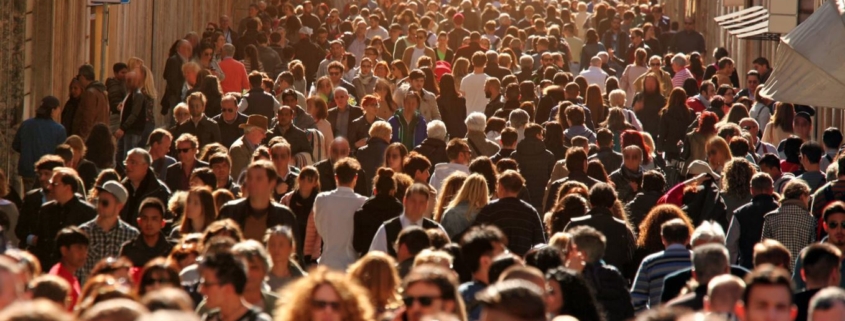
The trouble begins long before the suitcase opens. It starts with the moment a place stops belonging to itself and begins performing for the camera. Streets once shaped by daily life become corridors of expectation. Cafes recalibrate menus for foreign tastes. Rent rises. Locals leave. Visitors keep coming, convinced they are late to something authentic that already slipped away.
This is not the story of bad travelers. It is the story of volume, amplification, and a global travel culture that learned how to desire the same places at the same time. The damage is rarely intentional, but it is cumulative. When millions follow the same visual cues, beauty collapses under its own popularity.
Travel did not always behave this way. For most of the twentieth century, movement was constrained by cost, time, and limited information. Places revealed themselves slowly. Discovery felt personal because it was rare. What changed was not curiosity, but scale. The internet taught people what to want before they arrived, and cheap transportation taught them how to get there all at once.
The result is a world where landmarks are no longer visited, they are consumed.
When Tourism Stops Being a Guest
Overtourism is often described as an inconvenience, crowded streets, long lines, inflated prices. That framing misses the deeper fracture. Tourism becomes destructive when it overrides local life rather than integrating with it. The shift is subtle. A grocery store replaces staples with souvenirs. A school closes because families can no longer afford housing. A neighborhood becomes a backdrop rather than a community.
Cities feel this most acutely, but rural destinations experience it too. Small towns promoted as hidden gems are rarely hidden for long. Once exposure hits a certain threshold, infrastructure strains under pressure it was never designed to handle. Roads erode. Waste systems fail. Water supplies thin. Locals are asked to adapt endlessly to visitors who stay briefly and leave consequences behind.
The irony is that tourism sells intimacy while producing distance. Visitors want to feel close to a place, yet their numbers push residents further away. What remains is a simulation of culture, staged but photogenic, familiar but hollow.
The Algorithm as Travel Agent
Modern travel is no longer planned primarily through guidebooks or word of mouth. It is shaped by feeds, rankings, and viral loops. An image spreads, then a location follows. The algorithm rewards what performs visually, not what sustains life. A narrow street with perfect light becomes a destination regardless of whether it can support thousands of daily visitors.
This creates a strange flattening of desire. People from different continents arrive seeking the same angles, the same moments, the same proof that they were there. Travel becomes less about presence and more about documentation. The experience is validated externally, through likes, views, and shares, rather than internally through memory and understanding.
Places adapt defensively. Some install timed entry systems. Others impose tourist taxes. A few attempt outright bans. These measures slow the bleeding but rarely address the cause. The real driver is cultural, not logistical. As long as attention dictates value, destinations will be pressured to monetize visibility even when it erodes their foundations.
The Emergence of Travel Resistance
Against this backdrop, a quieter movement has begun to form. It does not announce itself loudly, and it does not trend easily. It consists of travelers choosing obscurity over spectacle, duration over accumulation, and participation over consumption. This is not a rejection of travel, but a redefinition of its purpose.
These travelers stay longer and move less. They learn routines rather than chase highlights. They accept boredom as part of the experience, understanding that boredom is often the gateway to real familiarity. Instead of asking what they can extract from a place, they ask how to exist within it without disruption.
The resistance is also geographic. Lesser known regions are chosen not because they are undiscovered, but because they are still living for themselves. The appeal lies in continuity. Shops serve locals first. Festivals happen on their own terms. The visitor is present, but not central.
This form of travel does not scale easily, and that is precisely the point.
Infrastructure, Not Intention, Determines Impact
One of the most persistent myths in travel is that respectful behavior alone can neutralize harm. Courtesy matters, but systems matter more. A thousand polite visitors can still overwhelm a fragile ecosystem. A respectful guest still consumes water, produces waste, and occupies space.
Sustainable travel therefore cannot rely solely on individual ethics. It requires structural limits. Capacity must be defined and enforced. Housing must be protected from speculative conversion. Transportation must be evaluated for long term viability rather than short term revenue.
Some destinations are experimenting with these ideas seriously. They cap daily arrivals. They redirect tourism income into community services. They measure success by resident satisfaction rather than visitor numbers. These efforts rarely go viral because restraint does not photograph well. Yet they represent the most credible future for travel that does not cannibalize itself.
The Emotional Shift Travelers Are Experiencing
There is also a psychological change underway. Many travelers report a growing sense of exhaustion with checklist tourism. The pressure to maximize every trip leaves little room for reflection. Constant movement produces shallow engagement. The photos look impressive, but the memories blur.
In contrast, slower travel often produces fewer images and stronger recall. Details stand out because there is time to notice them. Conversations linger. The traveler is not racing against departure, but settling into rhythm. This kind of presence cannot be optimized. It resists comparison, which makes it less visible online but more durable internally.
The shift suggests that dissatisfaction with overtourism is not only ethical, but emotional. People sense that something essential is missing when travel becomes too efficient. The messiness of real life, with its unpredictability and friction, is where meaning tends to form.
What Travel Might Become Next
The future of travel will not be decided by slogans or trends. It will be shaped by constraints, climate pressure, housing politics, and generational values. Movement will likely become more selective as costs rise and impacts become harder to ignore. That selectivity could deepen inequality, or it could encourage more intentional journeys. The outcome is not fixed.
What is clear is that the fantasy of unlimited access is fading. Places are finite. Cultures are not renewable resources. Travel that ignores this reality will continue to hollow out the very things it claims to celebrate.
The quiet rebellion does not promise purity or perfection. It offers something more modest and more difficult, attention without ownership, presence without performance, and the willingness to leave a place largely as it was found, even if that means taking less home to show for it.
In a world trained to collect destinations, choosing to truly inhabit one, even briefly, becomes an act of restraint. That restraint may be the last luxury travel has left.

