
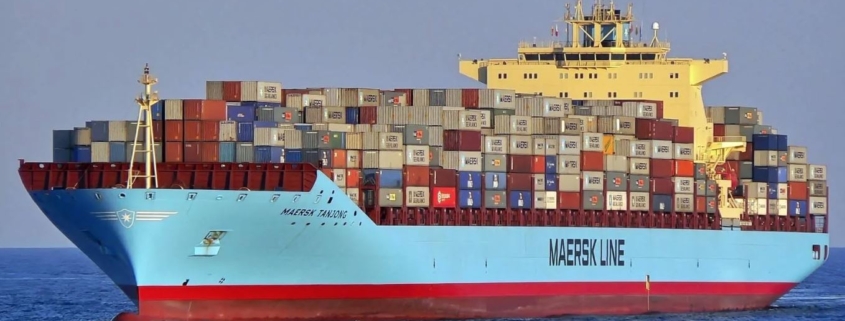
A modern supply chain looks calm right up until it stops behaving like a map. Not a dramatic collapse, not a cinematic shortage, just a series of small refusals, ships taking the long way around, water levels turning into policy, insurance clauses becoming an invisible customs office. The world still moves, but it moves with a new kind of hesitation, as if every container is asking permission from forces that do not issue receipts.
This is the quiet news inside the headline news. We have spent years talking about resilience as though it were a corporate virtue, a poster on a warehouse wall. Then came the era when resilience stopped being optional and started behaving like a tax on motion, collected in time, fuel, emissions, and attention. When chokepoints tighten, businesses do not simply reroute ships. They reroute decisions.
In early 2024, insecurity around the Red Sea pushed many carriers to divert away from the Suez route, while reduced Panama Canal capacity linked to low water levels added a separate strain to global scheduling. The effect was not just congestion, it was a lesson in how quickly global logistics can be rewritten when two shortcuts fail in parallel.
The comforting story about globalization was always that the planet had been made smaller. The more accurate story is that the planet had been made narrower, with trade flowing through a limited set of corridors that were efficient because they were fragile. When those corridors become unpredictable, distance returns as a real variable. It shows up in sailing schedules, in warehouse leases, in retail promotions that suddenly feel reckless, in factory managers discovering that their most important supplier is not a company but a strait.
When the World Chooses the Longer Route
Detours sound like a temporary inconvenience, the way a road closure sounds temporary. In shipping, detours behave differently. They reprice everything downstream because they change the basic math of circulation. A longer voyage ties up vessels for more days. That reduces effective capacity even if the number of ships stays the same. Capacity tightens, freight rates jump, and reliability deteriorates in ways that do not show up neatly in a single metric.
The important point is not that costs rise. It is that predictability, the true product logistics sells, becomes harder to purchase at any price. A firm can accept expensive freight. What is harder to manage is when arrival dates lose their meaning, when a plan turns into a range, and when that range keeps widening.
Companies respond to unpredictability with hedges. They add inventory, they diversify suppliers, they sign longer contracts, they reserve alternative modes. Each hedge has a cost. Those costs accumulate into something that looks like inflation but behaves like risk management. Consumers experience it as higher prices. Executives experience it as the end of cheap certainty.
Detours also reorder whose time matters. When a container takes weeks longer, cash conversion cycles stretch. That punishes firms with thin margins and limited credit. A global reroute is not evenly distributed pain. It is a financial filter that favors scale, liquidity, and bargaining power.
Water as a Business Variable
The Panama Canal story is frequently told as a climate story, which it is. It is also a governance story, an engineering story, and a pricing story. The canal does not merely move ships. It moves calendars for entire industries that rely on predictable East West timing. When low water limits transits, it becomes a bottleneck where money and priority are negotiated in public.
When restrictions reduce the number of daily transits, the constraint ripples outward into queues, fees, and schedule uncertainty. Carriers adapt by reshuffling routes, shifting cargo to different ports, changing vessel deployment, and rethinking how much they can promise a customer about timing. The canal becomes less like an artery and more like a scarce appointment, and scarcity changes behavior long before a crisis becomes visible to the public.
A canal drought turns rainfall into a commercial input. It makes the weather feel like a line item. That is a psychological shift as much as an operational one. For decades, firms could treat waterways as stable infrastructure, like a highway that never runs out of pavement. Now the pavement can shrink.
This is where the detour age differs from older supply shocks. A factory fire can be rebuilt. A labor dispute can be resolved. Weather driven constraints return seasonally and can persist. They are not a singular event. They are an ongoing condition that requires perpetual adaptation.
The Insurance Clause That Runs the Ship
When headlines talk about conflict near shipping lanes, they often focus on attacks, naval patrols, or geopolitical signals. The day to day power, however, is frequently exercised by insurers and underwriters. Risk is converted into premiums, exclusions, and rules about what a carrier is allowed to do without voiding coverage.
During periods of heightened insecurity around key routes, war risk insurance costs can spike and terms can tighten, adding friction even for voyages that never face direct danger. This becomes another reason ships choose longer routes, even when the shorter route remains physically possible. The route decision is no longer solely about fuel and time. It is about legal exposure, reputation, and the ability to demonstrate that every precaution was taken.
That legal exposure has a cultural effect inside companies. People who once made decisions based on optimization begin to make decisions based on defensibility. If a ship is delayed, a buyer can explain it. If a ship is attacked, a buyer needs a memo. Risk pushes organizations toward conservative choices, and conservative choices can become self reinforcing. Enough firms detour, and the detour becomes the new normal, which cements higher costs and longer lead times.
The Carbon Shadow of Longer Miles
There is a cruel irony in rerouting as a response to insecurity or drought. The longer route often burns more fuel, which increases emissions, which intensifies the climate pressures that make waterways less reliable. The logistics system begins to resemble a feedback loop where the solution feeds the cause.
This creates a strategic dilemma. Firms are told to cut emissions while being forced into longer voyages by instability and climate constraints. The tension will not be resolved by corporate pledges. It will be resolved, if at all, by new investments in cleaner fuels, more efficient ships, smarter scheduling, and a redesign of how trade routes are chosen and supported. Until then, sustainability targets collide with security realities, and the collision happens on the water.
There is another layer to the carbon problem that businesses rarely say out loud. Detours do not only add emissions at sea. They push companies into defensive behaviors that can increase emissions on land, too. A late shipment may trigger air freight for “urgent” replacements. A missed delivery window may cause expedited trucking. A factory trying to avoid downtime may split orders into smaller lots that travel less efficiently. The detour age changes the entire rhythm of movement, and a disturbed rhythm almost always consumes more energy.
Why This Feels Like a Return to Inventory
For years, many industries operated as if inventory were a moral failure, a sign that a company lacked agility. The cult of leanness trained leaders to see stock as waste. Then the world became less cooperative, and stock began to look like oxygen.
A detour age rewards slack. It rewards the ability to absorb delay without breaking. That does not mean every company will hoard. Inventory is expensive, and excess stock can be fatal in fast changing categories. What changes is the logic. Inventory becomes selective, strategic, and tied to risk rather than optimism. You do not stock everything. You stock what cannot be replaced quickly.
This shift is visible in contracts as well. Some companies move from spot buying to longer agreements because they are not purchasing transport only. They are purchasing a promise of attention during chaos. Others diversify ports, splitting volume across gateways so that no single canal or strait can freeze their operations. Diversification is not free, but it can be cheaper than panic.
The most interesting shift is cognitive. Inventory used to be a number, something financial teams wanted to reduce. In the detour age, inventory becomes a form of time. It is stored time, time bought in advance, time that can be spent when ships are late and schedules wobble. That turns supply planning into something closer to portfolio management, where a company allocates time the way an investor allocates capital.
The Geography of Trust
When routes become uncertain, the question businesses start asking is not merely where the cheapest supplier is. It becomes where time can be relied on. That question rewires relationships. It increases the value of regional production in some sectors. It raises interest in nearshoring and friendshoring, not as political slogans, but as attempts to buy a simpler risk profile.
There is also a subtler shift. Companies begin to value partners who communicate clearly during disruption, who can provide visibility into shipments, who can offer alternatives without drama. The supply chain becomes a human system again. Reliability becomes personal.
This is one reason the detour age may have lasting consequences even if specific crises ease. Once firms redesign networks, sign different contracts, change warehouse footprints, and reconfigure production, they do not revert quickly. The memory of disruption hardens into policy. Boards do not forget the quarter when ocean freight stopped behaving like a utility and started behaving like a gamble.
What the Detour Age Teaches About Power
Chokepoints reveal who has leverage. Canal authorities gain pricing power when slots are scarce. Insurers gain leverage when risk rises. Large shippers gain leverage because they can negotiate capacity, absorb delays, and pay premiums. Small firms, especially those without deep financing, experience the same disruption as an existential threat.
This is why the detour age is not only a logistics story. It is an inequality story. It changes competitive dynamics. It can push consolidation because scale becomes a survival advantage. It can also create opportunities for nimble operators who can pivot quickly, source locally, or serve as intermediaries between large systems that have become too rigid.
It also teaches a harsher lesson about modern efficiency. Efficiency assumes cooperation from the world. It assumes that weather will behave within the range designers predicted, that politics will remain containable, that violence will stay away from trade corridors, that water will show up where the diagrams say it will. The detour age is what happens when those assumptions stop being safe.
The news cycle will continue to chase dramatic moments, attacks, drought announcements, sudden rate spikes. The more consequential story is the slow institutional change, the way companies rewire their assumptions about distance, risk, and time. A detour is not just a longer route. It is a reminder that global trade is built on a handful of permissions that can be revoked without warning.

