
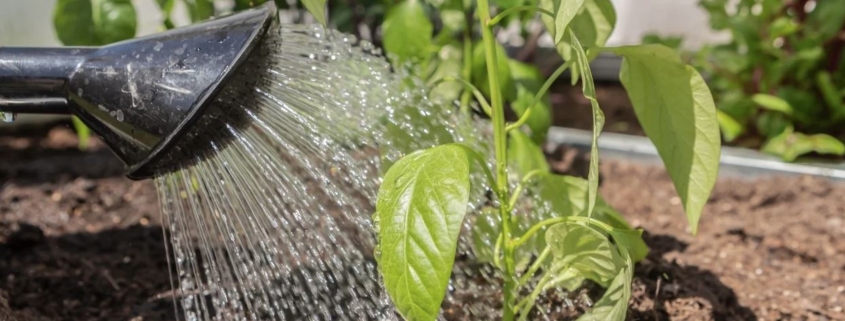
The next great garden upgrade will not look like a new raised bed or a rare plant. It will look like nothing at all. It will be the moment your soil stops behaving like a sponge you squeeze and starts behaving like a reservoir you can trust. Most gardeners talk about watering as if it were a schedule problem, mornings versus evenings, drip lines versus sprinklers, minutes per zone. The deeper problem is storage. A garden is not stressed because it lacks water for an hour. It is stressed because it cannot hold water across days, and because it cannot deliver that water to roots without suffocating them.
Water is the garden’s most misunderstood currency. It arrives in bursts. It leaves in heat. It moves through soil according to structure, organic matter, and gravity. It is stolen by wind and sun. It is lost through runoff when the surface cannot absorb it. It is wasted through evaporation when the ground is bare. A garden that survives increasingly erratic weather is not necessarily a garden that is watered more. It is a garden that is engineered, quietly and patiently, to keep water in the root zone longer.
This is not a drought article. It is a garden architecture article. It is about building a soil profile that can catch rain, store it, and release it slowly, so your plants grow with steadier confidence, and you stop living in a constant cycle of panic and rescue.
The difference between wet soil and hydrated soil
A gardener can water deeply and still fail to hydrate plants. Wet soil is a surface condition. Hydrated soil is a profile condition, a distribution of moisture through the root zone that remains available across time.
Some soils become wet quickly and dry quickly. Sandy ground can drink like a sieve, pulling water downward faster than roots can follow. Other soils become wet slowly and then stay wet in ways that suffocate roots. Heavy clay can hold water tightly, making it both abundant and inaccessible, then it can crack and repel water when it dries.
Hydration depends on pore structure. Large pores move water and air quickly. Small pores hold water longer. A functional soil has a range of pore sizes, a layered architecture created by aggregates, roots, microbes, and organic matter. When soil lacks this architecture, watering becomes a blunt instrument. You either flood the plant or starve it, often in the same week.
The goal is not to keep soil damp all the time. The goal is to create a moisture curve that plants can ride without violent swings.
Soil is a plumbing system built by biology
Gardeners often treat soil as static, a substance you buy or amend. In reality, soil is a living construction project. Biology builds the plumbing.
Roots push through the profile, leaving channels behind. Earthworms pull organic matter downward and create tunnels that improve infiltration. Fungal networks weave particles into stable aggregates that resist erosion and hold moisture. Bacteria and other microbes produce sticky compounds that bind particles into crumbs, increasing structure. The soil becomes more porous, more absorbent, more resilient.
When gardeners disturb soil aggressively, these biological construction projects collapse. Repeated tilling breaks channels, shreds fungal networks, and leaves the soil more vulnerable to compaction. Heavy foot traffic compresses pores. Bare soil under heavy rain seals at the surface, creating runoff.
A good water strategy begins by treating soil biology as the crew building your garden’s underground infrastructure.
Infiltration is the first battle, and most gardens lose it
The most decisive moment in garden water management is not the week you forget to water. It is the moment rainfall hits your ground, and your soil either accepts it or rejects it.
Soils that repel water often appear dry and crusted. Water beads and runs off, even if the soil beneath is thirsty. This can happen in sandy soils that become hydrophobic after drying, and it can happen in compacted soils where surface pores have collapsed.
When infiltration fails, watering becomes expensive and exhausting. You can irrigate for an hour and still watch water move sideways rather than downward. Plants remain stressed because the root zone never receives a deep drink.
Improving infiltration is not a trick. It is a gradual rebuilding of surface structure. Mulch softens impact from rain and irrigation. Organic matter improves aggregation. Living roots hold pores open. Reduced disturbance preserves channels. Over time, water begins to enter rather than escape.
The garden that accepts rain is the garden that survives.
Mulch is not decoration, it is a microclimate engine
Many gardeners treat mulch as a finishing touch. It is one of the most powerful water tools available, and it works by changing the climate at the soil surface.
A bare soil surface heats rapidly. Heat drives evaporation. Wind strips moisture from the top layer. Rain hits directly, breaking aggregates and sealing pores. Weed seeds germinate easily. The soil becomes a harsh interface.
A mulched surface behaves differently. It shades the soil, lowering temperature swings. It buffers wind at ground level. It reduces evaporation by creating a boundary layer. It absorbs rain impact and slows water movement, so infiltration improves. It also becomes food for soil organisms, which further improve structure.
The quality of mulch matters. Fine material can mat and block air. Coarse material can allow airflow while still shading. Different mulches change fungal and bacterial activity differently. The goal is not a specific product. The goal is a protective layer that mimics the forest floor.
Mulch is the garden learning to wear clothing.
Watering schedules fail because plants do not drink by schedule
Irrigation advice often resembles time management advice. Water twice a week. Water in the morning. Water deeply. These are useful generalizations. They become harmful when treated as rules.
Plants drink in response to sunlight, temperature, humidity, wind, and growth stage. A hot, windy day can pull water through a plant at a pace that surprises even experienced gardeners. A cool week can reduce demand dramatically. A newly transplanted seedling has limited root reach and needs a different pattern than a mature plant with deep roots. A fruiting tomato has different needs than a leafy herb.
A rigid schedule can lead to chronic overwatering in cool spells and chronic stress in heat. The garden becomes unstable, and disease pressure rises because roots sit in wet soil when they would rather breathe.
A more intelligent approach is to water based on soil condition, not on calendar repetition. The garden is telling you what it needs. You just need a way to listen.
Deep roots are a water strategy you grow, not a trait you buy
Some gardens become dependent on frequent watering because plants never develop deep roots. This is not always the plant’s fault. It is often the result of how water is applied.
When you water lightly and often, you keep moisture near the surface. Roots follow the moisture. The plant becomes shallow rooted, which makes it more vulnerable to heat and dryness. When the surface dries quickly, the plant panics, and the gardener responds with more light watering, reinforcing the cycle.
Deep watering, applied less frequently, encourages roots to chase moisture downward. Over time, plants develop a more resilient root system. They can access deeper moisture and withstand hot spells better. This does not mean you ignore plants. It means you train them gradually, especially once they are established.
Root depth is not a moral virtue. It is a structural adaptation created by conditions.
The container garden paradox, perfect drainage can still mean chronic thirst
Container gardening is often described as simpler because you control the soil. In reality, containers create a unique water problem. They drain fast, heat up quickly, and have limited volume. Many gardeners compensate by watering frequently, which can wash nutrients out and create cycles of feast and famine.
The paradox is that potting mixes are designed for drainage to prevent root rot, but that same drainage can produce rapid drying, especially in heat. A container can go from hydrated to stressed in a single afternoon.
The solution is not to make the mix heavy and waterlogged. The solution is to increase water holding capacity without collapsing aeration. That means using organic components that retain moisture while maintaining structure, using mulches even on pots, reducing wind exposure, choosing pot materials that insulate, and grouping containers to create microclimates that reduce evaporation.
A container is a small ecosystem, and small ecosystems swing fast. Managing those swings is the art.
Rain harvesting is not about heroism, it is about reducing dependence
Rain barrels, cisterns, and catchment systems are often framed as sustainability statements. They are also practical infrastructure in a climate where rainfall is increasingly unpredictable.
Harvesting rain does not solve every water problem. It can, however, reduce dependence on municipal supply during dry spells and allow gardeners to use stored water strategically when plants need it most. It also encourages a different mindset. You begin to see rainfall not as weather but as a resource event. You begin to think in storage and timing rather than in constant supply.
Even simple catchment can make a difference when paired with soil improvements. Captured rain used to deeply water a mulched bed can last far longer than the same volume sprayed onto bare ground.
The key is integration. Water harvesting matters most when the soil is built to hold what you apply.
Gray water, the ethical edge of reuse
Some gardeners explore gray water systems, reusing water from sinks, showers, or laundry for landscape irrigation. This can be effective and can reduce demand, but it introduces complexity. Soaps, salts, and cleaning chemicals can accumulate and harm soil biology and plants. Some gray water is appropriate for ornamentals but risky for food crops, especially when water contacts edible parts or when pathogens could be present.
A thoughtful gray water approach is conservative. It prioritizes plant health and soil function over squeezing every drop. It involves choosing products that are less harmful, understanding local rules, and applying water in a way that reduces contact with edible tissue.
Reusing water can be a powerful practice. It can also create hidden damage if done carelessly. In gardens, sustainability that kills soil is not sustainability, it is a deferred collapse.
The hidden role of shade in water management
Water is not only an irrigation issue. It is a light and heat issue. A garden with zero shade is a garden that spends water rapidly. A garden with thoughtful shade can reduce water demand dramatically.
Shade can come from trees, trellises, living hedges, shade cloth, or the intentional arrangement of taller crops that protect shorter ones. The goal is not darkness. It is moderation. In hot climates, afternoon shade can be a lifeline. In cooler climates, shade must be used more carefully to avoid slowing growth or increasing disease risk.
Shade also changes soil temperature, which changes microbial activity and root behavior. Cooler soil retains moisture longer and reduces stress, but if soil becomes too cool, nutrient cycling can slow. Water management is a balance between retention and vitality.
A gardener who learns to design with shade is a gardener who starts watering less without feeling like they are neglecting plants.
When to stop watering is as important as when to start
Overwatering is not only wasteful. It is one of the fastest ways to weaken plants. Roots need oxygen. Soil that stays saturated loses air spaces. Microbial communities shift. Diseases thrive. Plants become dependent and fragile.
Knowing when to stop is a skill built through observation. Leaves drooping in heat may recover at dusk without additional water. Watering in that moment can create unnecessary saturation. Soil that feels damp below the surface may not need irrigation, even if the top looks dry. Different plants show stress differently, and some species are dramatic without being truly thirsty.
A garden with good soil structure and mulch often looks drier at the surface while remaining hydrated below. Gardeners used to bare soil sometimes misread this and overwater.
A stable garden often looks less dramatic. It does not shout for attention. It holds itself together quietly.
The garden that holds water holds time
When you build a garden that stores water, you are not only solving a summer problem. You are creating breathing room. You can miss a day. You can travel. You can survive a heat wave without panic. You can make fewer emergency decisions and more thoughtful ones.
This is the shift from reactive gardening to structural gardening. Reactive gardening is the cycle of crises, wilting, rescue, and recovery. Structural gardening is the slow building of systems that reduce crises.
It begins with soil architecture, with mulch, with infiltration, with roots, with shade, with the refusal to treat water as something you pour on problems. It becomes a different relationship with the garden, one where you are not always chasing the weather.
A garden that holds water holds time, and time is what every gardener is truly trying to grow.

