There was a time when listening to music meant committing to it. Not to a song, but to a sequence, a duration, a deliberate ordering of sound that assumed patience and rewarded attention. The album was not merely a container for tracks. It was a proposition. It asked the listener to stay, to follow an arc, to experience contrast, tension, release, and sometimes confusion before arriving at clarity. Today, that mode of listening has not vanished entirely, but it has been quietly displaced by a system that treats music as a stream of interchangeable moments rather than a sustained encounter.
The shift did not happen because people stopped caring about music. It happened because the conditions of listening changed so thoroughly that the album began to feel misaligned with daily life. What was once a dominant cultural unit now operates as a niche behavior, practiced intentionally rather than assumed by default.
When Sequence Was Meaning, Not Metadata
Albums were once structured with intent that went far beyond convenience. The order of tracks mattered. Openers established tone and ambition. Midpoints tested endurance or shifted perspective. Closers lingered, unresolved or triumphant, designed to echo long after the final note. These decisions were not ornamental. They shaped how the music was understood.
Listening from beginning to end allowed themes to accumulate. Motifs returned altered. Lyrics gained weight through repetition and variation. Musical risks were contextualized by what came before and after. A challenging track could be justified by its placement, its role in the larger structure. This sequencing created a relationship between listener and artist that unfolded over time. It required trust. The listener accepted moments of uncertainty with the understanding that coherence would emerge through continuation.
The Physical Constraints That Shaped Attention
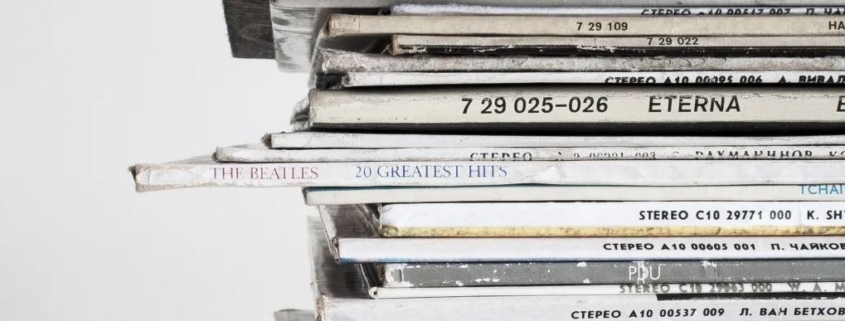
Physical media enforced attentiveness in ways that are easy to overlook in retrospect. Vinyl required flipping. Cassette tapes made skipping inconvenient. Compact discs encouraged linear progression through numbered tracks. These constraints were not neutral. They trained listeners to sit with music rather than skim it.
The act of selecting an album involved intention. One chose a record, placed it on a turntable or into a player, and committed to the experience. This ritual created psychological framing. The music was not background. It was the event. As these constraints disappeared, so did the behavioral scaffolding that supported long form listening. Convenience increased, but attentional expectations shifted with it.
The Rise of the Isolated Track
Digital distribution did not initially dismantle the album. Early downloads preserved track listings and album art. The deeper transformation came later, driven by platforms optimized for discovery, engagement metrics, and continuous playback.
In this environment, songs became units of circulation detached from their original context. Playlists replaced albums as the primary mode of curation. Algorithms prioritized familiarity, tempo consistency, and immediate appeal. Tracks were surfaced based on mood, activity, or popularity rather than narrative placement. This recontextualization altered how music functioned. Songs were no longer chapters in a book. They became interchangeable entries in an endless catalog, valuable primarily for their ability to retain attention in isolation.
How Streaming Reshaped Creative Incentives
The economics of streaming subtly reshaped artistic decisions. When compensation is tied to individual plays rather than sustained listening, the incentive shifts toward immediacy. Opening seconds matter more than long term development. Hooks arrive earlier. Tracks shorten. Transitions are minimized.
Albums still exist, but many function as collections rather than cohesive statements. They are assembled to maximize surface area, to increase the number of streamable units, rather than to sustain a singular vision. This does not reflect a decline in artistic ambition so much as a rational response to the conditions of distribution. Artists who continue to prioritize album coherence do so knowingly, often accepting reduced visibility in exchange for integrity. The album becomes a statement of values rather than a default format.
Listener Behavior in an Age of Abundance
Unlimited access has transformed listening habits. When everything is available instantly, nothing demands patience. Skipping becomes reflexive. Attention flits between tracks at the first hint of discomfort or unfamiliarity.
This behavior is not a failure of discipline. It is a learned response to abundance. The brain optimizes for novelty when supply is infinite. Deep engagement requires friction, and friction has been systematically removed. As a result, listeners often engage with music in fragments. Favorite songs are revisited. Entire albums remain unexplored. Even highly regarded records are consumed selectively, their deeper cuts ignored.
What Is Lost When Albums Lose Authority
The decline of album centered listening carries cultural consequences that extend beyond nostalgia. Albums provided a framework for artistic risk. They allowed musicians to experiment within a protected space, knowing that less accessible material could coexist with more immediate tracks.
When listening shifts toward isolated consumption, risk becomes penalized. Unfamiliar sounds are skipped. Slow builds are abandoned. Complexity competes poorly with instant gratification. This environment favors homogeneity. Musical diversity narrows not because artists lack imagination, but because audiences are less likely to encounter challenging material long enough for it to resonate.
Memory, Context, and Emotional Depth
Albums create memory differently than singles. Listening to a full record ties emotional experiences to sequences rather than moments. A particular track becomes inseparable from the songs surrounding it, from the time spent listening, from the emotional state sustained across the duration.
Fragmented listening disrupts this process. Songs float free of context. Emotional responses become sharper but shorter lived. Music is felt intensely, then replaced. This does not make contemporary listening inferior, but it does change its psychological texture. Depth gives way to frequency. Impact replaces immersion.
The Persistence of the Album as Intentional Practice
Despite these shifts, albums have not disappeared. They have become intentional. Listeners who seek them out do so deliberately, often carving out time and space to engage fully. This practice resembles reading long form literature in an age of headlines. It is not the dominant mode, but it carries distinct rewards. Albums listened to in full offer a sense of orientation that fragmented listening cannot replicate. They provide narrative satisfaction rather than momentary stimulation. For some listeners, this mode becomes a refuge. For others, it is rediscovered later in life, after years of musical grazing leave a sense of incompleteness.
Artists Who Still Think in Arcs
Certain musicians continue to approach albums as unified works, designing them to be experienced sequentially. These records often resist algorithmic optimization. They may begin slowly. They may demand attention. They may not yield their meaning immediately.
When such albums connect, they do so deeply. They foster devoted audiences rather than casual listeners. Their impact unfolds over repeated listens, revealing layers rather than delivering instant payoff. This approach positions the album not as a product, but as a dialogue, one that assumes intelligence, patience, and curiosity on the part of the listener.
Technology Is Not the Villain
It is tempting to frame this shift as a story of loss caused by technology. That framing oversimplifies the issue. Technology responds to demand as much as it shapes it. The popularity of playlists reflects genuine preferences for flexibility and personalization.
The challenge lies in recognizing that convenience and depth often exist in tension. Systems optimized for speed and choice tend to erode experiences that require duration and commitment. The album suffers not because technology opposes it, but because it asks something that modern systems are not designed to encourage.
Listening as a Lifestyle Choice
How one listens to music is increasingly a reflection of lifestyle rather than availability. Background listening suits multitasking environments. Focused listening requires boundaries that many lives no longer naturally provide.
Choosing to listen to an album in full now resembles choosing to cook a meal from scratch rather than ordering delivery. It is not inherently superior, but it engages different faculties. It asks for presence. This choice carries implications for how music is valued. Albums reward those willing to slow down. They resist passive consumption.
The Future Is Not a Return
The album is unlikely to reclaim its former dominance. Cultural habits rarely reverse entirely. What is more plausible is a continued bifurcation. Music will exist simultaneously as ambient utility and as intentional art.
In this landscape, albums may become fewer but more deliberate. Their audiences may be smaller but more engaged. Their cultural role may shift from mass communication to deep connection. The question is not whether albums will survive, but what kind of listening culture will surround them, and whether listeners will continue to make space for experiences that unfold over time rather than announce themselves immediately.
Music has always adapted to its conditions. The album, once a technological constraint, became an artistic canvas. Its current marginalization does not negate its value. It challenges listeners to decide how they want music to live in their lives, as background noise, as emotional punctuation, or as a sustained conversation that asks for more than a swipe.

