
A strawberry can taste like almost nothing and still smell like summer, and the reverse can also be true. You can eat something technically sweet, technically salty, technically correct, and feel oddly untouched, as if the food never fully arrived. Then, in another moment, a bowl of plain rice can feel profound because it carries the ghost of toasted grain and steam and whatever the kitchen has been doing all day. The difference is not talent or price. It is the invisible part of eating, the stream of volatile molecules that rise from food, ride your breath, and bloom behind your eyes.
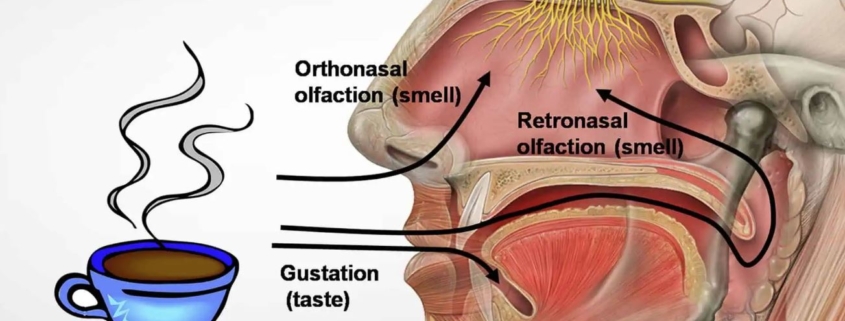
People talk about flavor as if it sits on the tongue, but the tongue is a modest instrument. It registers a handful of basic signals, useful but blunt. What you call flavor, the thing you can describe in sentences, the thing that feels like memory and place and specificity, is mostly smell. More precisely, it is retronasal smell, aroma perceived not through the nostrils from the outside world, but from inside your mouth as you chew, swallow, and exhale. The meal is not only what you ingest. It is what evaporates.
Once you notice this, you start seeing food differently. Cooking stops being only a matter of seasoning and heat. It becomes the art of designing a headspace, shaping what rises, when it rises, and how long it stays present.
Retronasal Smell Is the Hidden Engine of Flavor
When you inhale through your nose, you are using orthonasal smell, the direct route. When you chew, volatile compounds travel from the back of the mouth up into the nasal cavity through the throat, and the brain interprets them as aroma. That internal route is retronasal smell, and it is why pinching your nose makes an apple taste like a wet crunch instead of an apple.
This matters because retronasal aroma is not just a bonus layer. It is the layer that gives food its identity. Vanilla, coffee, citrus zest, toasted bread, grilled meat, fresh herbs, browned butter, ripe mango, all of these are largely aromatic experiences. Your tongue supplies the skeleton, sweetness, saltiness, acidity, bitterness, umami. The air supplies the face.
Retronasal smell also behaves differently from orthonasal smell. The experience changes with chewing, saliva, heat, fat, and the timing of swallowing. A dish can smell intoxicating when you lean over it, then taste flat in the mouth if the aroma does not release at the right moment. Another dish can smell modest, then open dramatically once it warms on the tongue and the mouth begins to move it around.
A cook who understands this stops asking only, does it taste right, and starts asking, does it travel right.
Volatility Is a Recipe Ingredient That Never Gets Measured
Aroma compounds are volatile, which means they evaporate. That evaporation is not random. It is governed by temperature, surface area, fat content, alcohol, and time. The same ingredient can behave like a different ingredient depending on how you treat its volatility.
A hot broth can carry aroma quickly and fill a room, yet it can also burn off delicate top notes. A chilled dish can preserve fragile aromatics, yet it may suppress their release until the food warms in the mouth. A dish with fat can trap aroma compounds, then release them slowly as the fat melts and coats the tongue. A dish with alcohol can lift certain aromatics into the air more aggressively, changing the entire fragrance profile of a sauce or dessert.
This is why a squeeze of lemon at the end does not simply add acidity. It adds a burst of volatility. It releases citrus oils, brightens the headspace, and sends a fresh signal into the retronasal channel. A dish can be properly salted and still feel sleepy until that volatile lift arrives.
Volatility is also why timing matters. Many meals taste best in a narrow window not because the ingredients suddenly change, but because the aromatic landscape does. The moment between sizzling and resting, the moment between dressing and wilting, the moment between grinding and brewing, these are aromatic windows. Miss them, and the dish becomes quieter.
Temperature Is an Aroma Dial, Not Only a Comfort Preference
Heat does more than make food warm. It accelerates evaporation, changes viscosity, and shifts which aromatics dominate. Many of the most memorable foods are memorable because their temperature places them at the right point on the aroma dial.
Consider the difference between cold butter and warm butter. Cold butter is mostly texture, and its aroma feels faint. Warm butter becomes a perfume, not only because it melts, but because it releases fat-soluble aromatic compounds into the air. The same is true for cheese, chocolate, and many meats. When they are warmed, they do not simply become softer. They become more legible.
Conversely, heat can flatten delicate aromas. Fresh herbs can taste greener and more specific when added at the end, because their volatile compounds remain intact. Add them early, and you may get a generic vegetal note instead of the distinctive signature you wanted. Some spices perform the opposite way, needing heat and fat to bloom, transforming from dusty to vivid as their compounds dissolve and rise.
Temperature also shapes retronasal timing. If a dish arrives steaming hot, the first impression may be dominated by aroma in the air above the plate. If the same dish is served warm rather than hot, the eater may experience a more intimate bloom in the mouth instead of an overwhelming cloud in the room. This is why some high-end kitchens serve certain dishes at precise temperatures. They are not being precious. They are managing where the aroma lives.
Fat Is an Aroma Reservoir That Changes the Story Mid-Bite
Fat gets discussed as richness, but fat is also storage. Many aroma compounds dissolve in fat more easily than in water. When you build a sauce with butter or olive oil, you are not only changing mouthfeel. You are creating a reservoir that holds aromatic material and releases it gradually.
This is why a dish can taste deeper as you chew. The initial taste may be bright and immediate, driven by water-soluble compounds and salt. Then the fat begins to coat the mouth, and suddenly new aromatic layers appear. Garlic becomes rounder. Pepper becomes more floral. Toasted spices become more persistent. The dish feels like it has length, a finish, the way wine does, because aroma continues to rise after swallowing.
Fat also controls how strongly aroma hits. A very lean broth can smell intense at first, then vanish quickly because there is little reservoir to extend it. A fatty broth can smell slightly muted at first, then linger and build. Neither is inherently superior. Each creates a different narrative.
When cooks talk about balance, they often mean balancing taste signals. A deeper kind of balance is balancing aroma release over time, and fat is one of the main tools.
Surface Area Is the Reason Sliced Food Tastes Different
Aroma depends on evaporation. Evaporation depends on exposed surface. That is why slicing, grinding, shredding, and crushing change flavor even when you do not add anything.
A whole spice has aroma locked inside. Grind it, and you expose a vast new surface area, which is why freshly ground pepper smells alive. The same principle explains why chopped herbs are louder than whole leaves, why minced garlic is more aggressive than sliced garlic, why grated citrus zest can dominate a dish faster than a strip of peel.
It also explains why some foods lose their magic quickly once cut. An apple slice browns, but even before browning becomes visible, volatile compounds begin to drift away. A tomato, chopped and salted, releases juice and aroma, and the headspace changes. A steak, cut into slices, becomes aromatic in a new way because juices and fats are exposed, yet it also cools faster, altering volatility again.
Chefs design for this. A dish might include a final grating at the table not for drama, but because the act of grating creates an aromatic peak that would be impossible to preserve in advance. That peak does not last. That is the point.
The Plate, the Bowl, and the Glass Are Aroma Instruments
A plate does not only hold food. It shapes the headspace above it, the pocket of scented air that the eater encounters. Wide bowls allow aroma to disperse quickly, creating an immediate, expansive impression that fades faster. Narrow bowls concentrate aroma, making the first inhalation more intense and keeping the fragrance present longer.
This is why some soups feel more fragrant in certain vessels. It is why espresso behaves differently in a small cup than in a large one. It is why whiskey glasses are shaped to concentrate aroma near the nose. These are not aesthetic quirks. They are engineering choices, even when made unconsciously.
Even the act of stirring changes the headspace. Stirring breaks the surface, releasing trapped aroma. That is why a bowl of ramen smells different after you disturb it, why a cocktail becomes more aromatic as you move it, why a curry seems to wake up when it is ladled.
Food service shapes aroma as much as the recipe does. A perfectly seasoned dish served in a vessel that disperses aroma too quickly can feel strangely muted. A modest dish served in a vessel that concentrates aroma can feel luxurious. The brain interprets aroma intensity as value.
Salt Can Make Food Smell More Like Itself
Salt is usually framed as the enhancer of taste, but salt also changes aroma perception. Some of that is indirect, because salt makes flavors clearer, which makes the brain pay attention. Some of it is physical, because salt can influence how water behaves on the surface of food, drawing moisture, altering volatility, and affecting how aromatic compounds escape.
Salt can also create contrast. When sweetness and salt coexist, the brain perceives aromas differently. A salted caramel is not only sweet and salty. Its aroma feels more complex because salt changes how the palate reads toasted sugar notes. In savory cooking, salt can make a tomato smell more tomato-like by clarifying the overall signal, reducing the sense of flatness.
This is why undersalted food often feels dull in an aromatic way, not only in a taste way. The dish does not announce itself. It stays blurry. Add salt, and aroma becomes sharper, as if the dish has found its focus.
Acid Does Not Only Brighten, It Opens the Nose
Acid is often described as brightness, yet brightness is frequently aromatic brightness. Acid can make a dish feel more fragrant because it changes salivation, clears fatty coating from the mouth, and lifts certain volatile compounds. Citrus juice, vinegar, fermented acids, these do not only modify pH. They modify the air.
Acid also changes the rhythm of a meal. Rich foods coat the mouth and can mute retronasal flow over time. Acid resets that coating, and suddenly aroma becomes readable again. This is why pickles accompany fatty foods in so many cuisines. It is not only tradition or digestion. It is sensory strategy. The pickle reopens the nose.
A dish that feels heavy can sometimes be transformed by an acidic element that does not materially change the recipe, yet changes the aromatic narrative. A spoonful of yogurt, a splash of vinegar, a squeeze of citrus, these can act like turning up the treble on a stereo, letting the dish speak in clearer consonants.
Smoke Is an Aroma That Behaves Like Memory
Smoke is not one flavor. It is a family of aromatic compounds that cling, linger, and attach themselves to fat and protein. Smoke can dominate a dish because it is persistent, and persistence is persuasive. The nose treats lingering aroma as significance.
The reason smoke feels like memory is partly biological. The olfactory system is tied intimately to memory formation, and smoke signals fire, survival, home, danger, warmth. Even when the brain knows it is a smoked paprika, the body recognizes something older.
Cooks use smoke as a top note or a base note. A light smoke can add intrigue without taking over. Heavy smoke can become the main character. The difference is not simply quantity. It is where smoke attaches. Smoke clings to fat. It sinks into porous surfaces. It accumulates in crevices. That is why smoked meats can taste more smoky at the edges, why smoked cheeses can feel smoky in the first bite then mellow as the fat melts, why smoke in cocktails behaves differently depending on whether it is trapped under a glass and released at the moment of serving.
Smoke teaches a key lesson about aroma design. The strongest aromas are not always the best. The best aromas are the ones that arrive with timing and restraint, leaving space for other notes to be heard.
Fermentation Builds Aromatic Depth That Cannot Be Imitated Quickly
Fermentation is often discussed in terms of tang and preservation, but its most transformative effect is aromatic complexity. Fermented foods contain a spectrum of compounds that make aroma feel layered and alive. They have depth because microbes produce new molecules over time, and time is a kind of ingredient that cannot be faked convincingly.
A long-fermented bread smells different from a quick loaf not only because it tastes different, but because fermentation creates aromatic compounds that interact with baking aromas. A properly fermented soy sauce or fish sauce carries not only salt and umami but a volatile signature that feels expansive. Yogurt has a clean tang, yet also a quiet aroma of dairy transformed. Kimchi is not merely spicy and sour. It is aromatic in a way that moves, because the fermentation continues to evolve.
Fermentation also teaches a harsher truth. Some foods smell better when they are slightly imperfect, when they carry a hint of wildness, because the nose enjoys complexity. Not every eater wants that, but when it works, it creates a sense that the food has a life beyond the kitchen.
Aromatic depth is one of the reasons fermented foods spread culturally. They feel like more than ingredients. They feel like cultures in both senses, microbial and human.
Spices Are Often Used Wrong Because People Chase Taste Instead of Aroma
Many home cooks treat spices as flavor powders, sprinkled in at random points. In reality, spices are collections of volatile compounds with different behaviors. Some require fat and heat to release their best notes. Others need gentle handling to avoid turning bitter or flat. Some are most powerful at the end because their top notes are fragile. Some are most powerful at the beginning because their aroma becomes integrated into a dish’s base.
Toasting spices is a volatility tactic. Heat wakes the compounds, and fat can capture them. Blooming spices in oil is a way of extracting aroma and dispersing it evenly through a dish. Adding spices late can preserve delicate notes, allowing the headspace to carry more fragrance.
This is why the same spice can feel like two different ingredients depending on method. Raw cumin can smell dusty. Bloomed cumin can smell warm and nutty. Paprika can smell sweet and mild when treated gently, or harsh and acrid when scorched. Cinnamon can be a whisper in a stew or a loud perfume in a dessert depending on when and how it is used.
Spices are not only about heat levels or exoticism. They are about how you choreograph aroma.
Texture Controls Aroma Release More Than People Assume
Aroma release depends on how food breaks down in the mouth. Crunchy foods fracture and release bursts of aroma quickly because surfaces are exposed rapidly. Soft foods release aroma more slowly because they do not fracture in the same way. Chewy foods can sustain aroma because they stay in the mouth longer, continually releasing volatile compounds as they warm and mix with saliva.
This is one reason why two dishes with identical seasoning can feel different. A crisp crust releases aroma in a sudden wave. A smooth purée releases aroma as a continuous stream. A noodle dish releases aroma with each bite and exhale, creating a rhythmic experience. A soup releases aroma in a more uniform way, influenced by steam.
If you want a dish to feel more aromatic without changing ingredients, you can sometimes change texture. Add a crunchy element that carries the same flavors, and aroma becomes episodic and exciting. Add a creamy element that coats the mouth, and aroma becomes lingering. Add something chewy, and aroma becomes persistent.
The mouth does not separate texture and smell. It treats them as a single event.
Pairing Food and Drink Is Often About Aligning Aromatic Speed
People talk about pairings as matches of flavor, yet pairings frequently succeed or fail because of aromatic timing. A wine that releases its aroma quickly can clash with a dish that releases aroma slowly, making the dish feel muted. A beverage that is cold and aromatic-suppressed can flatten a dish that relies on delicate top notes. A carbonated drink can lift aroma by scrubbing the palate, making a fatty dish feel less heavy and more fragrant.
Carbonation is particularly powerful. Bubbles carry aroma upward. They also change mouthfeel and clear the palate. That is why sparkling drinks can make fried foods feel more alive. The pairing works not only because of acidity, but because the aromatic system is reset with each sip.
Even water can change aroma perception. A sip of water can clear residual fat, changing the next bite’s retronasal pathway. A warm drink can amplify aroma in ways a cold drink cannot. A bitter drink can change attention, making the eater more aware of certain notes and less aware of others.
Pairing is not only about harmony. It is about managing the speed at which aroma arrives.
Aroma Is Also Social, It Shapes Desire Before the First Bite
Smell is the only part of eating that can reach someone who is not eating. The person across the table can experience your food before you taste it. That social leakage is powerful. It can create desire, envy, anticipation, and memory.
This is why certain foods become viral in real life, not through images but through air. Fresh bread in a hallway. Barbecue drifting across a street. Coffee roasting near a café. Garlic frying in a pan. These are aromas that recruit people. They turn passersby into participants.
Restaurants exploit this, sometimes intentionally, sometimes by accident. Open kitchens let aroma travel. Certain dishes are finished tableside to create a scented moment. Some bakeries vent aroma near entrances. It can be manipulative, but it can also be honest, because aroma is genuinely part of pleasure.
At home, aroma is one of the easiest ways to make a meal feel generous. Even simple food can feel abundant when it perfumes the room. The eater feels welcomed before tasting. That welcome is not sentimental. It is neurological. The brain anticipates reward.
The Dark Side of Aroma: Why Some Foods Taste Flat in Modern Life
Aromas can be sabotaged by the environment. Dry indoor air can dull smell. Allergies can reduce sensitivity. Smoking can blunt perception. Cold viruses can temporarily erase retronasal smell, turning food into texture and basic taste. Even stress can change attention, making subtle aromas harder to notice.
Modern life also introduces competing smells. Detergents, scented candles, air fresheners, perfumes, cleaning chemicals, these can crowd the olfactory space. Food can lose against louder signals. A delicate meal eaten in a heavily scented environment can feel less flavorful because the nose is already occupied.
This is one reason why some people chase stronger flavors. They are trying to break through noise. The answer is not always more chili, more sugar, more salt. Sometimes the answer is protecting the aroma channel, creating a quieter olfactory environment, serving food at temperatures that release aroma properly, and using finishing techniques that create fresh headspace.
Flavor has an ecosystem. When the ecosystem changes, food changes.
Cooking Becomes More Precise When You Think Like a Perfumer
Perfumers think in notes. They think in top notes that arrive first, mid notes that give character, base notes that linger. Cooking has the same structure, even when people do not name it.
A dish can open with citrus zest, herbs, and steam, then settle into roasted flavors and fat, then end with lingering spice and browned depth. The cook can design this on purpose. Add certain aromatics at the end for top notes. Build depth early with browning, long cooking, fermentation, or toasted spices for base notes. Use fat to carry mid notes. Use acid to reopen top notes mid-meal. Use texture to control release.
This way of thinking makes ordinary food more compelling. It also makes fancy food more coherent. Many high-end dishes feel impressive not because they have rare ingredients, but because their aromatic narrative is well composed. The diner experiences movement, not just intensity.
Once you start cooking like this, you stop asking only whether a dish is tasty. You ask whether it has an opening, a body, and a finish.
The Simplest Way to Make Food More Interesting Is to Give It a Second Aromatic Event
Most dishes have one aromatic moment, the moment they are served. Then aroma decays. The headspace thins. The meal becomes quieter.
A second aromatic event can be small and transformative. A herb added at the end. A grated citrus peel. A drizzle of infused oil. A spice warmed briefly and scattered. A finishing salt that carries aroma, like smoked salt or citrus salt. A hot fat poured over aromatics to bloom them at the table. These techniques are not gimmicks. They are ways of creating a new aromatic peak mid-meal.
This matters for satisfaction. Humans enjoy a narrative. A single peak is pleasing, but a second peak creates the sense that the meal is alive, that it is still unfolding.
That second event does not need to be dramatic. It needs to be timely. It needs to create fresh air.
The Most Honest Question in Food Is Not “How Does It Taste,” It Is “What Does It Release”
Taste is what remains when aroma has already done its work. Release is the real story, the part you cannot fully control once the plate leaves the kitchen.
A dish that releases aroma well can be simple and unforgettable. A dish that fails to release aroma can be complex and strangely invisible. If you care about virality in the older sense, the kind that spreads person to person, not only screen to screen, you pay attention to release because release is what other people can experience before they even ask.
The meal happens in the air you swallow, and also in the air that escapes before you swallow, the air that fills the room, the air that becomes memory. Long after the last bite, what you will remember is often not a taste on the tongue, but a scent that returned later in a different place, suddenly, with the force of a door opening to a room you did not know you kept inside you.

