
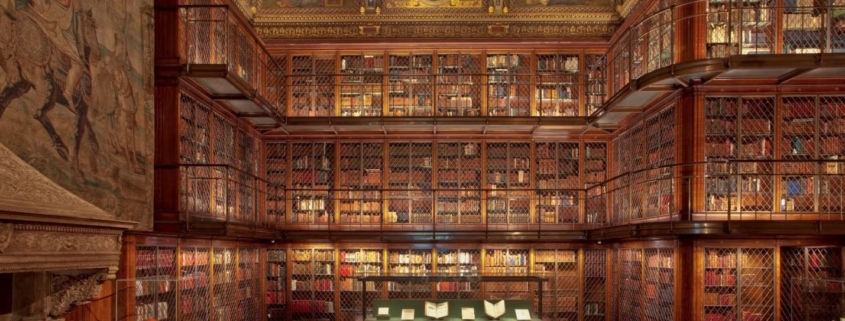
The most influential creative tool is rarely a brush, a camera, a laptop, or a microphone. It is the invisible shelf inside a person’s mind where the chosen, stolen, loved, and studied things accumulate, not as trophies, but as working materials. This shelf does not look impressive from the outside. It is uneven. It contains contradictions. It holds a poem next to a product label, a film scene next to a street sign, a melody next to a conversation misheard in a café. Yet when people talk about originality, what they are often describing, without realizing it, is the shape of this private library and the ethics by which it was built.
Creativity is commonly discussed as if it begins at the moment of making. In reality, it begins earlier, sometimes years earlier, when attention starts to choose what it will keep. Two people can live in the same city, scroll the same platforms, hear the same cultural noise, and still carry entirely different internal archives. One will accumulate spectacle, the other will accumulate structure. One will collect novelty, the other will collect questions. One will gather references as decoration, the other will gather references as instruction. Over time, those differences become destiny.
A creative life is shaped less by talent than by what becomes familiar through repeated contact. Not what is trendy, not what is popular, not what is assigned, but what is returned to voluntarily. The private library is the record of those returns. It is also the engine of future work, because the mind composes from what it trusts, and it trusts what it knows intimately.
The Archive Begins as Hunger Before It Becomes Taste
Nobody starts with refined taste. People start with hunger, and hunger is messy. Early creative phases are often fueled by appetite for intensity. The beginner wants work that feels alive, loud, emotionally decisive. They want the shock of recognition, the thrill of being moved. This is normal. It is also why early influences can be so sticky. The first works that rearrange a person’s interior world do not merely entertain them, they imprint.
Later, hunger becomes discernment. The creator begins to notice what was actually happening inside the work that moved them. They begin to separate surface from mechanism. A song that once felt like pure magic starts to reveal its architecture. A painting becomes legible as a sequence of decisions. A film scene becomes a chain of constraints handled with grace. This shift is not the loss of wonder, it is the deepening of wonder into comprehension.
Taste is not simply preference. Taste is the ability to detect intention, to sense the difference between sincerity and imitation, to recognize when a choice is necessary rather than ornamental. Taste is also a kind of memory. It remembers what has worked, not in general, but in a particular emotional register. It remembers what has felt honest. It remembers where attention landed and why.
The private library matures when the creator stops collecting influences that flatter their identity and begins collecting influences that challenge their habits. This is where many people stall. They build an archive that mirrors their existing personality, then wonder why their work repeats itself. A library that only confirms a self will produce work that performs that self. A library that includes friction produces evolution.
Why Originality Is Not the Absence of Influence
The fantasy of the completely original artist is seductive and false. Every creative act is made inside a context of other acts. Language itself is inherited. Genre is inherited. Technique is inherited. Even rebellion is inherited, because rebellion requires a norm to push against. The question is not whether a person is influenced, it is whether they can metabolize influence into something that feels internally generated.
The difference between imitation and transformation often comes down to intimacy. Shallow exposure produces copying. Deep study produces reconfiguration. When someone loves a style but does not understand its underlying logic, they reproduce the style’s visible traits, the color palette, the gesture, the cadence, the tropes. When someone studies with patience, they start to see what problem the style was solving. They see the pressure the creator was under. They see the tradeoffs. They begin to understand the work as an answer to a specific set of constraints.
Once influence is understood as problem-solving rather than aesthetics, it becomes portable. A creator can carry a technique from a novel into a sculpture, or carry a compositional approach from jazz into typography, because they are not borrowing the look, they are borrowing the reasoning. This is why the most original artists often have diverse private libraries. Their archives are not organized by category. They are organized by resonance, by structure, by emotional function.
Originality is frequently the byproduct of combining influences that were never meant to meet. That combination is not random. It is guided by a person’s particular questions. When the private library is built around genuine questions, the resulting work tends to feel alive, because it is responding to something real rather than trying to appear new.
The Quiet Discipline of Curating What You Let In
In an era of limitless content, curation is no longer a luxury. It is a survival skill. The private library is not only what you choose to collect, it is also what you refuse. This refusal is not moralistic. It is strategic. Attention is finite, and the things that occupy it shape what becomes possible later.
Many creators consume far more than they can digest. They become fluent in reference without becoming fluent in making. Their library becomes a warehouse of undifferentiated impressions. They can name what is happening in culture, but they cannot name what is happening in their own work. They are saturated, and saturation can feel like knowledge while actually being a form of distraction.
A well-built private library has negative space. It includes periods of fasting, not because consumption is bad, but because assimilation requires quiet. When a creator watches, reads, listens, and studies without interruption, they are adding material. When they step back and let that material settle, they are building the internal connections that later become insight.
This is also why some creators protect their mornings, their commutes, their evenings, their weekends. Not for productivity as a buzzword, but because those are the hours when the mind quietly sorts. The archive is organized through repetition and rest. Without rest, the archive becomes noise.
Curating inputs is also an ethical stance. If a creator knows they are vulnerable to imitation, they can choose to study in a way that prevents accidental copying. They can take notes focused on principles rather than visuals. They can delay exposure to new releases while they are building a piece. They can seek influences outside their own medium. These choices are not paranoia. They are the practical habits of people who understand how suggestion works.
The Difference Between Collectors and Builders
Some people build private libraries like collectors. They gather items because they want to possess them, display them, cite them. Their archive becomes a personal museum. Museums can be inspiring, but they can also be static. A museum is designed to preserve, not to evolve.
Other people build private libraries like builders. They collect with the intention of using. They are less interested in having “good taste” as a social signal and more interested in having useful taste as a working resource. They do not keep references because they are prestigious, they keep references because they solve problems. Their archive contains scaffolding. It contains methods. It contains ways out of corners.
Builders have a distinctive relationship with admiration. They admire, then they interrogate. They ask what makes something hold together. They ask what the creator refused to do. They ask what the work is not doing, and why that absence matters. They look for decisions hidden behind the final surface.
This is why builders tend to produce work that feels intentional. They are not inventing from emptiness. They are composing from a set of internalized solutions, and their originality comes from the way they recombine those solutions under their own pressures.
Collectors can become trapped in taste without output. Builders turn taste into motion.
The Dangerous Comfort of the Greatest Hits Archive
Every creator, if they live long enough, acquires a set of safe influences. These are the works they return to when they feel insecure. They know these works will console them. They know these works will remind them why art matters. They also know these works will not surprise them, because familiarity is the point.
This is beautiful and risky. A private library can become a comfort zone disguised as devotion. If a creator’s archive is dominated by the same mood, the same era, the same sensibility, their work may begin to repeat that sensibility even when their life has changed. They may keep making the same kind of piece because the archive keeps feeding them the same emotional vocabulary.
One way to notice this is to look for a mismatch between current experience and current influence. If a creator is living in a new reality but still studying only the works that resonated with an earlier self, they may feel stuck. Their library is speaking to an old version of them. Their present questions are not being nourished.
The remedy is not to abandon beloved influences. It is to add new ones that complicate the old ones. An archive should expand in multiple directions, toward tenderness if it is dominated by severity, toward humor if it is dominated by seriousness, toward stillness if it is dominated by spectacle, toward clarity if it is dominated by mystery. Not because balance is inherently good, but because creative range requires more than one emotional instrument.
A living library contains counterpoints.
Studying Without Becoming a Ventriloquist
A common fear among serious creators is that studying too much will cause their voice to disappear. They worry that they will become a ventriloquist for the artists they admire. This fear is understandable. It is also often based on a mistaken idea of what voice is.
Voice is not a set of stylistic quirks. It is a pattern of attention. It is the recurring way a person notices and cares. Two writers can use similar sentences and still be fundamentally different because their attention lands on different moral details. Two photographers can share compositional habits and still feel distinct because they are drawn to different forms of human vulnerability. Voice is what keeps returning in a person’s perception, even when they try to change it.
Study does not eliminate voice. Study can bury it temporarily if the creator is relying on borrowed surface traits. Yet the deeper the study becomes, the more it tends to clarify what the creator actually values. They begin to see which influences energize them and which merely impress them. They begin to feel the difference between admiration and alignment.
One practical way to avoid ventriloquism is to study processes rather than products. Instead of collecting finished works as icons, collect drafts, sketches, rehearsals, annotations, interviews where creators describe their failures. When a creator studies how work evolves, they are less likely to copy the final look and more likely to internalize the decision-making that led there.
Another way is to study outside one’s primary medium. A novelist learning from architecture is less likely to reproduce sentences and more likely to learn about structure, tension, proportion, and the choreography of movement through space. A painter learning from choreography is more likely to learn about gesture and rhythm than about color. Cross-medium study makes influence less literal and more conceptual, which is where originality tends to grow.
The Archive as a Moral Record
Creative libraries are often treated as aesthetic collections, but they are also moral records. They reveal what a person finds permissible, what a person finds admirable, what a person finds worth repeating. If a creator’s influences are full of cruelty treated as sophistication, their work may gradually normalize that posture. If their influences are full of cynicism rewarded as intelligence, their work may begin to fear sincerity. If their influences are full of exploitation disguised as daring, their work may inherit that logic.
This is not a call for purity. Many great works contain moral ambiguity. Many contain brutality. Many contain flawed perspectives. The point is that what a creator studies repeatedly becomes a set of default assumptions. If those assumptions are never examined, the creator’s work may reproduce them unconsciously.
A mature private library includes critique alongside admiration. It includes the capacity to say, this is brilliant and also compromised. This posture protects a creator from inheriting someone else’s blind spots as if they were virtues. It also protects the audience, because creative work shapes perception in subtle ways.
When a creator builds a library with moral intelligence, they can draw from difficult works without becoming absorbed by their worst impulses. They can study power without worshiping power. They can study transgression without turning harm into style. They can study persuasion without turning manipulation into craft.
This is one of the quiet responsibilities of creative adulthood: choosing influences with eyes open.
The Archive and the Myth of Constant Output
Modern creative culture often demands constant production. Post regularly. Release continuously. Be visible. Stay relevant. This demand can flatten a private library, because building a library takes time, and time spent studying can feel unproductive in public.
Yet many of the most enduring works are made by people who protected seasons of intake and seasons of silence. They took long walks. They reread books. They listened to the same record until it became a map. They returned to the same film until it revealed its deeper engineering. They allowed their archive to become deep instead of merely wide.
Depth creates leverage. A creator with a deep library can make more interesting work with fewer references because each reference contains layered understanding. They have internalized multiple levels of meaning. They can draw from one influence in ways that feel fresh because they are not borrowing the obvious part.
This is why speed can be a trap. Rapid output often encourages shallow input, because shallow input is faster to consume. Shallow input is also easier to imitate. The creator becomes a node in a fast-moving network of references, and the work begins to resemble the network more than the individual.
A deliberate private library is a form of resistance. It is the choice to be shaped by what is worthy of repeated attention, not by what is trending this week.
How Personal Libraries Create Future Movements
Art movements are often explained through public history, galleries, scenes, institutions, economics. Those forces matter. Yet movements also emerge from clusters of private libraries. When many creators, separately, begin studying similar problems, they start producing work that converges, even if they do not coordinate. A shared archive can create shared questions, and shared questions can create shared aesthetics.
This can happen locally in a city, where artists influence each other through proximity. It can also happen globally now, because people can access the same references instantly. The risk is that global access can create sameness. The opportunity is that global access can create unexpected cross-pollination, if creators build libraries that are idiosyncratic rather than algorithmically curated.
Algorithms tend to feed people variations of what they already like. That convenience can make private libraries narrower. It can also make them more homogeneous across populations. A creator who wants a distinctive archive often has to search manually, to wander, to follow obscure threads, to ask for recommendations from people with different sensibilities, to read old criticism, to explore archives outside the main platforms.
The future is shaped by these quiet acts of searching. A creator’s private library is not just a personal resource. It is a cultural vote. It is the decision of what deserves to continue living in attention.
The Loneliness That Comes Before the Personal Canon
Every serious creator eventually reaches a point where the public canon stops feeding them. The classic recommendations feel too familiar. The celebrated references feel too agreed upon. They begin to suspect that what they need is not more greatness, but more specificity.
This is the beginning of a personal canon, a set of influences that might not impress anyone else, but that matters profoundly to the creator’s questions. These influences might be minor works, obscure works, regional works, flawed works, or works that were never intended as “art” at all. They might be family stories, folk songs, old magazines, instruction manuals, dance videos, letters, sermons, games, commercials, documentary footage, architecture, or the language of certain professions.
A personal canon can feel lonely because it is not validated by the mainstream. The creator cannot easily name-drop it. They cannot rely on cultural consensus to explain why it matters. They must trust their own resonance. That trust is a form of creative independence.
It is also where originality often becomes inevitable. When a creator builds a private library that is truly their own, their work begins to reflect that library, and reflection creates distinctiveness. The work is no longer a performance of what is admired socially. It becomes an articulation of what the creator has actually lived with.
The Creative Life as Long-Term Memory Work
To create over decades is to practice memory deliberately. Not nostalgia, but working memory, the kind that holds techniques, stories, rhythms, and emotional truths in a usable form. The private library is the tool of that memory. It records what the creator found worth keeping, and it keeps it available for recombination later.
This is why the most profound creative advice is often not about productivity or inspiration. It is about attention and loyalty. What do you return to. What do you study until you can see through it. What do you refuse to let go of. What do you allow to change you slowly.
A person can build a creative career on talent and ambition alone for a while. Eventually the work demands a deeper engine. That engine is the archive, and the archive is built through ordinary days, through rereading, through relistening, through returning, through choosing depth over novelty when the culture is screaming for novelty.
The private library does not guarantee greatness. It guarantees something more precious for a working life, a steady supply of meaningful problems to solve, and a way to keep growing without turning into an echo. It becomes a companion, a teacher, and a set of constraints that shape the creator into someone capable of making work that feels inevitable, not because it was easy, but because it was earned through years of paying attention to what deserved to stay.

