
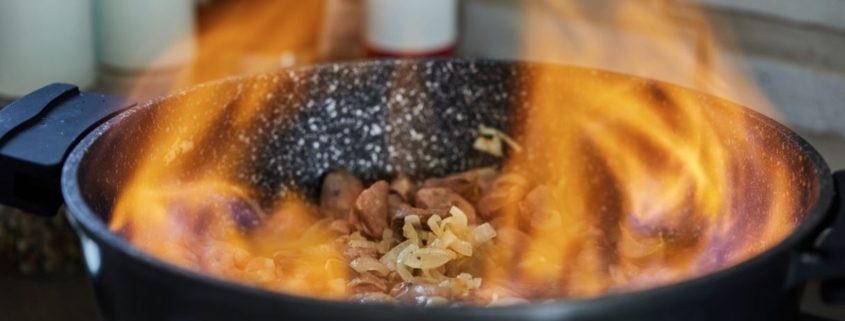
Most cooking failures do not taste like bad ideas. They taste like impatience. A sauce breaks and the cook blames the recipe. A steak turns gray and the cook blames the cut. Vegetables go limp and the cook blames freshness. Bread is pale and the cook blames yeast. What actually went wrong is usually less romantic and more fundamental. The heat was wrong, or the heat was right but applied at the wrong time, or the heat moved in a way the cook did not anticipate.
Heat is the true ingredient that rarely appears on the shopping list. It is the only one you cannot hold in your hand, and it is the one that decides whether every other ingredient becomes delicious or becomes a lesson.
Cooking is not primarily a battle with flavor. It is a negotiation with energy.
Temperature Is Not Heat, and Confusing Them Creates Bad Food
People talk about “high heat” and “low heat” as if those phrases describe a fixed reality. In practice, what matters is energy transfer. Temperature is a measurement. Heat is movement.
A pan can be hot and still cook poorly if it cannot transfer heat effectively. A thin pan on high flame can spike temperature, then drop the moment food touches it, producing pale meat and soggy browning. A heavy pan can feel less dramatic, yet it holds energy and delivers consistent searing.
The same misunderstanding appears with ovens. An oven set to 425°F can behave like a different oven at the same temperature depending on calibration, airflow, stone placement, rack position, and how often the door is opened. A crowded sheet pan changes heat transfer too. Steam builds. Air cannot circulate. Browning stalls.
Once you understand the difference between a number on a dial and the flow of energy into food, cooking becomes less mysterious. It becomes readable.
Browning Is Chemistry With a Threshold
The most desired flavor in many cuisines is created by browning, and browning has a threshold. It demands surface dryness and sufficient heat. If the surface stays wet, energy is spent evaporating water instead of building crust. This is why meat steams in a crowded pan. This is why mushrooms dump liquid and seem to refuse color. This is why onions can sweat for ages without caramelizing when heat is too low or the pan is too full.
Browning is not simply “cook longer.” It is the consequence of conditions, heat, dryness, and time aligned. When that alignment occurs, the surface compounds shift into a darker and more aromatic reality.
This is also why browning can vanish at the finish. A crisp chicken skin turns soft when covered with sauce too early. A fried item loses structure when trapped in steam. Crust is not only achieved. It must be protected.
Heat management is the art of creating browning when you want it, and preserving it once you have earned it.
Carryover Cooking Is the Ghost in Every Roast
Food does not stop cooking when you remove it from heat. The internal energy continues moving, and the temperature keeps rising for a period, especially in thick cuts and dense items. This phenomenon is often called carryover cooking, but naming it does not make it intuitive.
The practical truth is brutal. If you cook a roast to the exact temperature you want at serving, it will likely overshoot. If you cook chicken until the breast is just barely done and slice immediately, juices run out and texture suffers. Resting is not a ritual. Resting is thermodynamics, the redistribution of heat and moisture.
This is where many home cooks lose the thread. They treat the endpoint as a moment rather than a range. They chase precision by staring at a thermometer without understanding that time and temperature are partners.
A good cook thinks in curves, not points. The curve begins when heat enters the food and it continues after the flame is off.
The Myth of One Correct Heat Level
Recipes often imply that there is a single correct setting, medium heat, high heat, low simmer. The reality is more fluid. Heat level should change as food changes.
Searing demands high energy at the start, then often demands reduction as the interior approaches target temperature. Onions can start with moderate heat to soften without burning, then increase as water evaporates and sugar concentration rises. A stew can begin with higher heat to bring it to a boil, then settle into a gentle simmer where proteins relax rather than toughen.
Even boiling pasta is not constant. A vigorous boil can batter delicate shapes. A gentle boil can be more controlled, depending on the pasta and the pot size. Rice can benefit from early boil followed by lower heat and controlled steam.
Heat is dynamic. Recipes are static. The gap between them is where skill lives.
Your Pan Is a Heat Instrument, Not a Flat Surface
The pan is often treated like a stage. It is actually an instrument.
Material matters. Cast iron holds heat and delivers it slowly and steadily. Stainless steel reacts quickly and can create aggressive fond if managed well. Carbon steel sits in between, offering responsiveness and good searing once seasoned. Nonstick changes the entire interaction, limiting browning while making delicate proteins easier.
Shape matters too. A shallow skillet evaporates moisture quickly, encouraging browning. A high-sided pot traps steam, encouraging softening and braising. A wide sauté pan can reduce sauces efficiently. A narrow saucepan can protect a small volume of liquid from excessive evaporation.
Heat management includes choosing the right vessel, not just turning knobs. Many “recipes that fail” are actually pan mismatches.
The Oven Is a Drying Machine Pretending to Be a Heater
People talk about ovens as if they simply cook food evenly. In truth, the oven is also a moisture environment. Airflow and humidity determine whether food browns, crisps, dries out, or stays pale and soft.
Convection ovens accelerate browning because moving air strips surface moisture faster. That can be a blessing for roasting vegetables and a challenge for delicate baked goods. A humid oven can keep bread crust flexible longer, allowing better oven spring, then dry heat later creates crackle. A covered braise creates its own climate, trapping moisture and turning tough connective tissue into tenderness.
This is why oven cooking is often about controlling moisture as much as controlling temperature. You are deciding whether to encourage evaporation, prevent it, or sequence it.
A roast chicken is not only meat heated until safe. It is skin dried until crisp while interior stays juicy. That is a moisture puzzle solved with heat.
The Stove Is About Contact, the Grill Is About Radiance
Different heat sources behave differently. Stove cooking is dominated by conduction, direct contact between pan and food. Grilling introduces radiant heat from flames or coals, which can brown surfaces rapidly while leaving interiors less affected unless time allows. Broiling is similar, an overhead radiation method that can create intense surface effects quickly.
These differences matter because they change timing and risk. Radiant heat can burn sugars fast. Direct contact can create uneven scorching if the pan has hot spots. A grill can dry a surface while keeping the interior raw. A pan can overcook the interior while you chase exterior color if heat is too low and you cook too long.
Understanding the character of each heat source is part of becoming consistent. Consistency is not about always using the same method. It is about choosing the method whose heat behavior matches what you want.
Why Oil Smokes and Why That Matters Beyond Smoke
Smoke point is often treated as a simple number, and it can be useful, yet the deeper issue is what happens when oil degrades. As oils overheat, they produce compounds that smell harsh and can taste bitter. The aroma of overheated oil can cling to food and make it feel tired.
The solution is not only buying a “higher smoke point oil.” It is controlling the pan temperature, using the right amount of fat, and recognizing that different tasks need different fats. Some fats shine in low to moderate heat where their flavor remains clean. Others perform better when searing is required.
Heat management means tasting the fat indirectly. If the kitchen smells acrid, your food will likely taste less vibrant. If the oil is shimmering quietly without smoking, you are often in the zone where browning can happen without bitterness.
The “Low and Slow” Idea Is Often Misapplied
Low and slow is praised as a universal solution. In reality, low and slow can be correct or it can be a path to disappointment.
Tough cuts with connective tissue benefit from long cooking at moderate temperatures where collagen transforms into gelatin. This creates tenderness and richness. Lean cuts can become dry and mealy if cooked too long, even at lower heat. Vegetables can turn mushy if held too long without a crisping stage. Fish can become chalky.
The key is understanding what you are trying to change. Collagen needs time. Proteins can seize if overheated. Starches gelatinize at specific temperature ranges. Water evaporates steadily as long as conditions allow.
Low and slow is not a philosophy. It is a tool for specific material transformations. Heat management is choosing when to be patient and when to be decisive.
Simmer, Boil, and the Violence of Bubbles
The difference between a simmer and a boil is not cosmetic. It changes how food physically moves in the pot.
A rolling boil can tear delicate ingredients. It can emulsify fats into a cloudy broth. It can break beans and turn them into paste. It can also reduce liquid faster, which can be desirable. A gentle simmer can preserve clarity, protect fragile items, and allow flavors to marry without mechanical damage.
This matters in everything from soup to sauce. A tomato sauce cooked at a hard boil can taste sharper, darker, and more aggressive. The same sauce simmered gently can taste sweeter and more integrated. The difference is not only chemistry. It is also agitation and evaporation.
Heat management includes deciding how much violence your food should experience.
Baking Is a Heat Map, Not a Recipe
Baking appears precise because it uses measurements, yet it is also deeply sensitive to heat distribution. Hot spots in ovens create uneven browning. Rack position changes exposure. Stone placement changes heat retention. Steam changes crust formation. Dough temperature changes fermentation speed. Even the heat of the mixing process can influence outcome.
Many baking frustrations come from treating the recipe as gospel and ignoring the heat map of the oven. Two loaves baked at the same nominal temperature can emerge radically different if one was exposed to stronger bottom heat, or if one sat in a zone with stronger airflow.
Great bakers learn their ovens the way musicians learn their instruments. They rotate pans, adjust rack positions, and interpret crust color as feedback. They treat temperature settings as approximations and the bake as a conversation.
Heat management turns baking from anxiety into control.
The Human Factor, Your Attention Is a Heat Tool
There is no perfect temperature that substitutes for attention. A cook who watches can make adjustments that a recipe cannot predict.
Attention notices when onions stop sweating and begin to brown, a signal to stir or reduce heat. Attention notices when a pan is getting too hot, when smoke turns from faint to aggressive. Attention notices when a steak’s surface browns too fast, suggesting a need to finish in the oven. Attention hears the sound of a simmer that is becoming a boil. Attention smells caramel before it turns bitter.
This is why cooking skill is often described as instinct. It is not mystical. It is trained perception. Heat gives you signals. Your job is to interpret them and respond.
The most powerful heat tool in a kitchen is not a burner. It is the cook’s willingness to watch without rushing to the next step.
The Culture of “High Heat” Has Created a Generation of Burnt Food
There is a modern aesthetic that glorifies intense sear and aggressive char. Done well, it can be beautiful. Done carelessly, it creates bitterness and dryness that people learn to tolerate because they have been told it is sophisticated.
Heat management is the difference between char and burn, between crust and carbon, between roasted and scorched. That difference often lives in seconds. It also lives in preparation, drying surfaces, preheating properly, using enough space, and controlling the moment when sugars are most vulnerable.
The desire for dramatic browning has made many cooks overconfident. They crank heat and hope. Hope is not a technique. Heat must be guided.
The Most Reliable Path to Better Food Is Learning to Think Like Heat
If you want to cook better without buying exotic ingredients, learn to think in heat behavior.
Ask what you want the surface to do, dry or stay wet, brown or stay pale, crisp or stay tender. Ask what you want the interior to do, stay juicy, become flaky, turn gelatinous, remain firm. Ask whether you are building flavor through browning, through reduction, through infusion, through fermentation, through raw freshness.
Then apply heat as a sequence rather than a single decision. Start hot, then reduce. Start gentle, then finish fierce. Use the oven to stabilize. Use the pan to brown. Use steam to protect. Use rest to complete.
Heat management turns cooking into something surprisingly calm. It removes the frantic feeling that food is unpredictable. It makes outcomes legible. It makes failures instructive rather than mysterious. The most delicious meals are rarely about secret ingredients. They are about energy applied with intelligence, with timing, and with restraint, and in the end, restraint is often the most underrated flavor in the kitchen.

