
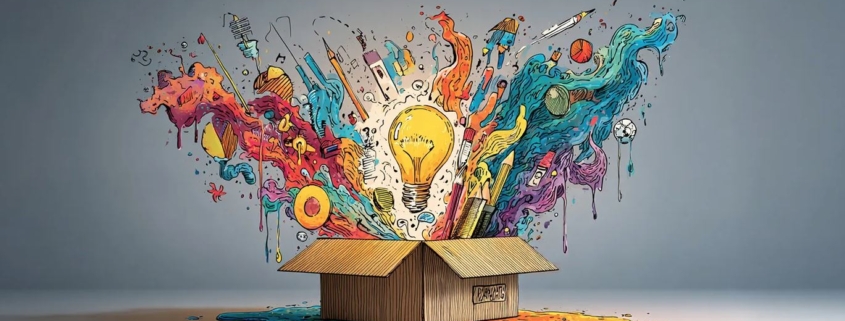
Many people assume freedom is the condition for creativity. In reality, freedom without boundaries is often paralyzing. An unlimited field produces an unlimited number of wrong choices. The mind can spend all its energy selecting a direction rather than moving. Constraints are not limitations in the negative sense. They are a focusing mechanism. A poet chooses a form and discovers surprising language inside the narrow lane. A filmmaker accepts a small budget and invents a style that would not exist with unlimited resources. A designer limits a palette and learns how to create tension through shape rather than color.
Constraints also reduce the internal audience’s power. When the task is clear and bounded, the mind has less space to argue. It can stop questioning whether the work is the right work and start engaging with the work as a problem to solve.
The most powerful constraint is often time. A short, non negotiable window forces decisions. It prevents endless tinkering that masquerades as refinement. Time pressure can be abused, but used wisely it teaches the creator that completion is not a perfect state, it is a choice.
The Creator’s Relationship With Revision Determines Their Future
Revision is where many creative lives end. The first draft exists, flawed but alive. Then the creator looks at it and feels disgust. They interpret the need for revision as proof the piece is bad, rather than proof it is real. Revision requires a different kind of mind. Drafting is generative. Revision is editorial. If a person tries to revise while drafting, they choke the flow. If they try to draft while revising, they never confront structure. The healthiest creators learn to separate these modes, not by rigid scheduling, but by understanding what each mode is for.
Revision also demands humility. It asks the creator to admit that their first expression was not enough, not because they are incompetent, but because the work deserves refinement. This humility is not self humiliation. It is respect for the reader, the viewer, the listener, and for the piece itself.
A mature revision practice treats the draft as clay. The goal is not to punish the early version. The goal is to shape it until it carries what you meant.
Why Comparison Has Become a Creative Weapon
Comparison used to be occasional, a passing glance at other people’s work. Now it is constant. A creator can scroll through an endless gallery of polished outputs in minutes, each one a highlight with no visible struggle. This does not only create envy. It alters a creator’s baseline for what is normal. The mind begins to treat exceptional output as average. It begins to treat your own messy beginnings as embarrassing. It begins to demand that you compete with a filtered reality.
Comparison can be useful when it is educational. Studying masters, analyzing craft, learning structure, these are forms of comparison that build skill. The harmful comparison is the one that collapses time. It compares your beginning to someone else’s peak. It compares your private draft to a public product.
A creator who wants longevity must learn to compare differently. Compare your current work to your previous work. Compare your attention habits to your own goals. Compare your process to the process that produces results, not to the myth of effortless genius.
The Quiet Importance of Boring Repetition
Many creative breakthroughs are not dramatic. They are the result of repetition that looks dull from the outside. Writing daily pages that are not brilliant. Practicing scales. Sketching hands again and again. Filming short scenes that never get posted. Repetition builds a familiarity with the medium that makes fluency possible.
Boring repetition also builds trust. When you show up repeatedly, you stop treating creativity as a fragile event that might vanish. You begin to experience it as a function of engagement. The work becomes less mystical. It becomes more dependable.
This is where many people resist. They want originality without repetition. They want signature without apprenticeship. Yet originality usually emerges from deep intimacy with fundamentals. The artist who knows the rules deeply enough can break them in a way that feels intentional rather than random.
Repetition is not the opposite of creativity. It is the soil where creativity develops its roots.
The Social Life of Ideas
A surprising number of creators fail because they isolate their work too completely. They protect it from criticism, which also protects it from becoming real. Creativity has a social dimension, not necessarily through public exposure, but through contact with other minds.
Sharing a draft with a trusted reader changes the work. Hearing where someone gets confused reveals structure. Listening to someone describe what they felt reveals intention. The creator is not obligated to accept every note, but the feedback offers a mirror that the solitary mind cannot provide.
The danger is premature exposure to hostile critique. That can crush a fragile project. The solution is not total privacy. The solution is careful selection of audience. A creator needs a few people who understand the difference between early stage work and final stage work, people who can respond without turning the draft into a referendum on the creator’s worth.
The right audience is not a crowd. It is a small circle that values growth more than performance.
When Technology Helps, When It Hurts
Tools have never been more accessible. A person can write, record, edit, design, publish, and distribute with minimal cost. This is a genuine gift. It is also a trap. The trap is that tools can become a way to avoid making. A creator can spend months optimizing their setup, choosing software, tweaking settings, curating templates. They can confuse preparation with production. They can pursue the feeling of professionalism rather than the reality of craft.
Technology also compresses the distance between draft and publication. A person can hit publish quickly, which can be exhilarating. It can also create a habit of releasing before refining, not because the creator believes in rawness as a style, but because they cannot tolerate the discomfort of revision.
The healthiest relationship with tools is instrumental. Tools serve the work, not the identity. When tools begin to serve identity, the creator becomes more concerned with appearing creative than with creating.
The Work That Changes You Is Often the Work You Resist
Most creators know what they want to make. They can name the genre, the mood, the theme. The strange part is that when the moment arrives to make it, they drift toward safer projects. They choose the idea that will be easier to finish. They choose the style they already know. They choose the topic that will not expose their vulnerabilities.
This is not laziness. It is self protection. The work that matters carries risk. It risks being misunderstood. It risks revealing a private truth. It risks asking questions you would rather not answer. It risks forcing you to become a more honest person than you currently are.
Resistance can be a compass. Not always, sometimes resistance is avoidance of necessary practice. Yet the particular kind of resistance that feels like fear mixed with attraction often points toward the work that could transform you.
A creator’s task is not to eliminate fear. It is to build a method that allows them to work while fear is present.
The End of the Myth, and the Beginning of a Practice
Creativity is not an identity that you either possess or lack. It is a relationship with uncertainty that you can deepen. It is the repeated decision to enter the early stage, to tolerate the ugliness that precedes form, to stay long enough for the work to tell you what it wants.
The draft you never show is still writing you, teaching you whether you respond to difficulty with curiosity or retreat. The sketch you abandon is still shaping your courage, training you to treat imperfection as either information or shame. The half finished piece is not a failure unless you convert it into a verdict.
The people who continue creating are not the ones who avoid disappointment. They are the ones who stop treating disappointment as a stop sign. They keep going, not because they are more gifted, but because they have learned that the first version is not the point, it is the door.

