
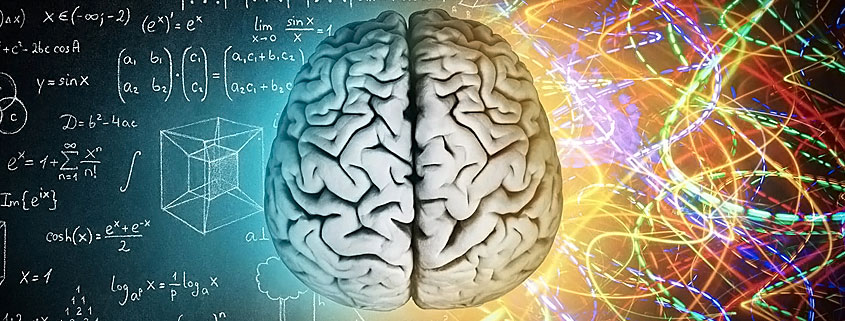
Creativity rarely announces itself as a lightning strike. More often, it arrives quietly, disguised as curiosity, frustration, or a question that refuses to dissolve. The myth of sudden inspiration has long dominated cultural imagination, yet modern science tells a more intricate story. Creativity is not an accident of personality or a gift bestowed on a lucky few. It is a complex biological, psychological, and social process that emerges when the human mind is allowed to wander, connect, test, and reconfigure reality in unexpected ways.
Creativity as a Biological Process, Not a Personality Trait
For much of history, creativity was treated as an ineffable quality, attributed to temperament, talent, or even divine intervention. Neuroscience has gradually dismantled this view. Brain imaging studies reveal that creative thought does not originate from a single region, but from dynamic interaction across multiple neural networks. These networks coordinate memory, attention, emotion, and abstract reasoning in a delicate balance.
What matters most is not raw intelligence, but cognitive flexibility. Creative thinkers demonstrate an unusual ability to move between focused attention and diffuse mental states. This oscillation allows the brain to explore possibilities without immediately judging them. Far from being chaotic, this process follows measurable neurological patterns that can be strengthened through experience and environment.
The Role of the Default Mode Network
One of the most revealing discoveries in creativity research is the role of the brain’s default mode network. This system activates when the mind is not engaged in goal directed tasks. Daydreaming, reflection, and mental wandering were once dismissed as idle behavior. Science now recognizes them as essential conditions for innovation. During these periods, the brain recombines stored knowledge in novel ways. Memories collide, concepts overlap, and distant associations form bridges that logic alone would never construct. Creativity often surfaces not during intense effort, but during moments of apparent rest, when the mind is free to explore without constraint.
Constraints as Catalysts Rather Than Obstacles
Contrary to popular belief, unlimited freedom does not necessarily enhance creativity. Research consistently shows that constraints sharpen inventive thinking. Boundaries force the brain to search deeper, pushing beyond obvious solutions and encouraging risk taking within defined limits. Artists, engineers, and scientists alike benefit from restriction. Whether imposed by time, materials, or rules, constraints act as cognitive lenses, focusing attention and amplifying ingenuity. Creativity flourishes not in chaos, but in structured environments that invite exploration without overwhelming choice.
Emotion, Motivation, and the Creative Drive
Creativity is inseparable from emotion. Dopamine, a neurotransmitter associated with reward and motivation, plays a crucial role in creative persistence. The anticipation of discovery fuels exploration, while emotional resonance gives ideas staying power. Intrinsic motivation is particularly influential. People produce their most original work when driven by curiosity, meaning, or personal challenge rather than external reward. This internal drive sustains the long, uncertain process of innovation, where failure is frequent and validation is delayed. Creativity thrives where emotional investment meets intellectual engagement.
Learning, Memory, and the Power of Combination
No idea emerges from a vacuum. Creative breakthroughs depend on accumulated knowledge and experience. The brain cannot connect what it does not contain. This explains why mastery often precedes innovation, even when the final outcome appears radical. Memory acts as raw material. Creative cognition involves retrieving, reshaping, and recombining existing information into configurations that feel new. This process rewards breadth as well as depth. Exposure to diverse disciplines increases the likelihood of unexpected connections, expanding the palette from which innovation can arise.
Social Environments That Nurture Innovation
Creativity is often portrayed as solitary, yet it is deeply social. Collaborative environments stimulate idea exchange, challenge assumptions, and accelerate refinement. Even disagreement plays a productive role, forcing thinkers to articulate, defend, and evolve their ideas. Psychological safety is a critical factor. Environments that tolerate ambiguity and failure allow creative risk to emerge. When fear of judgment dominates, the brain prioritizes self protection over exploration. Innovation requires spaces where experimentation is encouraged and uncertainty is accepted as part of progress.
Technology and the Expansion of Creative Capacity
Modern tools have transformed the creative landscape. Digital platforms enable rapid prototyping, global collaboration, and access to vast stores of information. Technology does not replace creativity, but it amplifies it, extending human capacity to test ideas, visualize outcomes, and iterate with unprecedented speed. At the same time, technology introduces new challenges. Constant stimulation can fragment attention, disrupting the mental states that creativity requires. The most effective creators learn to use tools deliberately, protecting time for deep thought while leveraging technology to expand reach and impact.
Training Creativity as a Skill
Perhaps the most empowering insight from creativity research is that innovation can be cultivated. Practices such as divergent thinking exercises, interdisciplinary learning, reflective downtime, and deliberate exposure to novelty strengthen creative ability over time. Creativity improves through use. The brain adapts to challenge, building neural pathways that support flexible thinking. What begins as effort gradually becomes intuition, reinforcing the idea that creativity is less about talent and more about sustained engagement with curiosity and complexity.
Rethinking Failure and the Innovation Cycle
Failure is not the opposite of creativity. It is a fundamental component of it. Scientific and artistic breakthroughs alike are built on discarded ideas, unsuccessful attempts, and partial solutions. The creative process depends on feedback, revision, and resilience. Cultures that stigmatize failure suppress innovation. Those that treat it as information accelerate learning. Creativity demands tolerance for imperfection, recognizing that progress emerges through iteration rather than certainty.
Creativity as a Defining Human Capacity
Creativity is not an ornamental trait reserved for artists and inventors. It is a core human function, essential for problem solving, adaptation, and meaning making. In a rapidly changing world, the ability to imagine alternatives and generate novel responses is increasingly vital. Understanding the science of creativity reframes innovation as a shared capability rather than a rare phenomenon. It reveals that imagination follows patterns, that insight can be encouraged, and that human potential expands when curiosity is protected and cultivated. The future of innovation will not belong solely to faster machines or larger datasets. It will belong to those who understand how the human mind creates, connects, and transforms ideas into reality, not by accident, but by design.

