
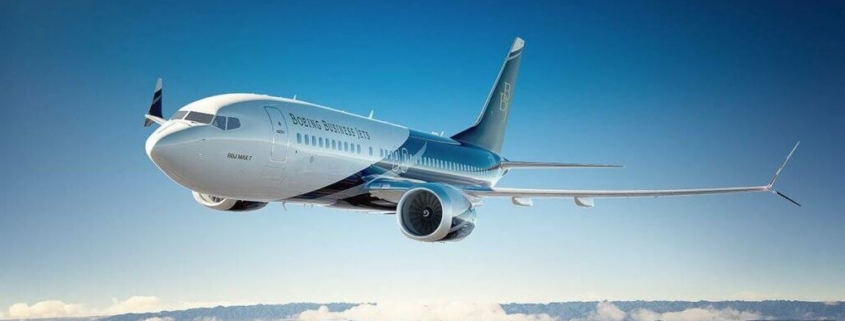
The modern airline passenger is routinely asked to believe in a quiet miracle. You step onto a narrow tube of metal, accept that it will climb into thin air at high speed, and trust that thousands of parts, dozens of procedures, and layers of human judgment will hold together without drama. Most of the time, that trust is rewarded with boredom, which is exactly what a healthy safety system produces. Then a single event punctures the spell, and the public is reminded that technology does not run on confidence, it runs on discipline.
When a door plug blew out of an Alaska Airlines 737 MAX 9 shortly after takeoff, it was not only a frightening incident for the people on that flight. It was a public rupture in a story that has been trying, and failing, to resolve itself since the MAX first became a symbol of institutional overconfidence. The incident pulled a familiar question back into view. Has the culture around building and certifying aircraft truly changed, or has it only learned to speak more fluently about change?
The event did not arrive in a vacuum. It landed in a cultural moment where trust in institutions had already been thinned by years of high-profile failures, contested expertise, and the sense that every complex system is one cost-cutting decision away from catastrophe. Aviation is supposed to be different. It is the industry that prides itself on checklists, redundancy, and a memory that never forgets a mistake. That is what made the details so disruptive. The plane was climbing, the cabin was full, and a part of the fuselage that should have been inert and unquestioned became a hole to the sky.
For the public, the incident read like a nightmare. For the aviation world, it read like a diagnosis. A door plug does not simply decide to leave. It leaves because something in the chain that ensures it stays put failed, either in installation, inspection, documentation, or oversight. Each of those words points to a different kind of vulnerability, and the news cycle that followed became a close study in how quickly those vulnerabilities can move from factory floor to global attention.
A Small Part With an Outsized Meaning
The technical detail that captured attention was almost perversely mundane. A door plug is not a glamorous component. It is an engineered solution to a practical requirement, closing an opening that exists in certain aircraft configurations. It is the sort of thing passengers should never have to think about, which is precisely why its failure was so destabilizing. In complex systems, the most dangerous failures are often not the exotic ones. They are the failures of the ordinary, the assumptions that fade into the background because they are supposed to be solved problems.
The public reaction was not only fear. It was recognition. People recognized the pattern of a system that can look polished on the surface while quietly accumulating risk behind the scenes. The aviation industry has spent decades teaching passengers that flying is safe, and statistically it is. Yet safety is not only a number. It is a feeling, and feelings are governed by stories. When a plane loses a piece of itself in flight, the story becomes visceral. Statistical arguments sound thin against the memory of oxygen masks, screaming air, and a sudden open wound in a pressurized cabin.
For Boeing, the door plug failure carried a particular weight because it reopened a question the company has been trying to answer since the MAX tragedies. Has the organization learned to treat quality as an operational religion rather than a management slogan? Or has it remained trapped in the logic of timelines, delivery targets, and financial expectations that can slowly corrode the willingness to stop the line when something feels uncertain?
The Chain That Holds a Plane Together
Airplanes are built by networks, not by single companies, even when a single brand is printed on the tail. A modern jet is the result of a long chain of manufacturing, subcontracting, assembly, certification, maintenance, and daily operation. Each link depends on the others, and each link has its own incentives. The public often imagines safety as a single authority standing guard. In reality, safety is the emergent result of many layers doing their jobs without shortcuts.
When something as dramatic as a fuselage opening occurs, investigators do not only look for a broken piece. They look for a broken process. Was the plug installed correctly? Were the fasteners present and torqued properly? Was there a record of work performed? Were inspections done as required, and if so, what did they actually verify? Did the organization rely on assumptions that had become routine, where a check becomes a gesture instead of a measurement? These are not merely technical questions. They are governance questions.
The reason these questions matter is that aviation’s safety record is built on the industry’s ability to learn, institutionalize learning, and resist complacency. Learning is not automatic. It must be protected from the forces that oppose it, and those forces are familiar. Schedule pressure. Production targets. Workforce churn. Supplier complexity. The urge to treat problems as public relations issues rather than as engineering and management failures. Every major accident and incident in aviation history has some version of these pressures in its background.
The door plug incident forced a wider audience to confront how easily those pressures can reassert themselves even after tragedy. It suggested that the mechanisms designed to prevent recurrence can be undermined not by a single villain but by a slow drift in standards and attention.
How a Safety Crisis Becomes a Business Crisis
Aviation safety failures become business crises because confidence is an economic asset. Airlines buy aircraft on long timelines, finance them over decades, and depend on predictable operations. Regulators impose constraints when they lose confidence. Passengers shift behavior when they lose confidence. Investors react when they sense uncertainty about deliveries, inspections, and future liabilities. The door plug incident was a reminder that in aviation, brand trust is not a marketing achievement. It is a fragile social contract tied to physical reality.
For Boeing, the timing was brutal. The company was already navigating scrutiny and the long shadow of earlier disasters. An incident that evokes structural failure immediately raises the specter of systemic quality issues, even if the specific root cause is narrow. That is because the public does not separate “one incident” from “a pattern” when the pattern has already been established. Once trust has been damaged, the threshold for new damage becomes lower.
The business implications extend beyond Boeing. Airlines operating the affected aircraft configurations face operational disruptions, inspections, potential groundings, and schedule chaos that ripples through crews and passengers. Supply chains feel the effects when deliveries slow or rework increases. Leasing companies and insurers adjust their assumptions. Even airports and tourism economies can feel subtle impacts when routes are disrupted. A safety event is never contained inside the fuselage.
The cost of quality failures is not only measured in repairs and fines. It is measured in time, credibility, and the strategic freedom to operate without constant external constraint. In a world where manufacturing has become deeply optimized, that freedom is worth more than quarterly margins.
The Regulator’s Dilemma in the Age of Outsourced Oversight
One of the most important, and least visible, tensions in modern aviation is the balance between regulatory authority and delegated responsibility. The system depends on regulators, but it also depends on manufacturers and their representatives conducting significant parts of the compliance process. Delegation exists for practical reasons. Aircraft are complex, regulatory agencies have finite resources, and technical work often requires deep specialized expertise. Yet delegation carries a risk. It can blur the line between independent scrutiny and internal convenience.
After the MAX crises, this topic became a public debate. The door plug incident did not resolve it, but it sharpened it. If a fuselage opening can occur in such a dramatic way, then questions about oversight are inevitable. Did the system rely too heavily on manufacturer assurances? Were inspectors stretched thin? Were production changes or supplier issues sufficiently monitored? Did the regulatory structure possess the incentives and resources to catch early signs of drift?
The deeper challenge is that regulators operate in a political environment. They are expected to ensure safety while also enabling commerce. They face pressure to avoid unnecessary disruption, yet they are punished severely when disruption is postponed until after a failure. The public sees the visible result of this dilemma, and it raises a broader question about modern governance. Can a regulatory system remain both efficient and uncompromising when the industrial environment is relentlessly optimized for speed?
The answer is not simply “more rules.” Rules are only as strong as the culture that enforces them. The more complex the system becomes, the more oversight depends on signals, audits, and the willingness to treat small anomalies as meaningful. The door plug incident was a reminder that in safety-critical industries, small anomalies are often the only warning you get.
The Human Factor People Forget, the Factory
When aviation failures occur, people often focus on pilots and maintenance crews because those are the human faces closest to the event. Yet the factory is also a human environment. Assembly is performed by people who work under constraints, with tools, procedures, fatigue, and organizational expectations shaping what “normal” looks like. Quality is not only a checklist. It is a habit of mind, reinforced or undermined by management.
A manufacturing culture can drift subtly. If the message workers absorb is “keep the line moving,” they will keep it moving. If the message is “stop the line when something is uncertain,” they will stop it, but only if they trust they will not be punished for doing so. That trust is not created by slogans. It is created by what happens after someone raises a concern. Are they respected, or labeled as difficult? Does the concern lead to investigation, or to annoyance? Do managers treat production pauses as failures, or as investments in integrity?
This factory reality became more visible because the incident felt like a building problem. Even if the proximate cause ends up being specific, the public conversation inevitably turns toward whether the manufacturing environment supports meticulousness or discourages it. This is where corporate governance stops being abstract. It becomes physical, expressed in hardware, fasteners, training logs, and inspection stamps.
There is also a workforce dimension that rarely gets attention. Aerospace manufacturing is a skills ecosystem. It depends on experienced workers, stable training pipelines, and institutional memory. When workforces churn, when experience is lost, when subcontracting dilutes accountability, the risk profile changes. A sophisticated system can still be fragile if the human foundations are unstable.
The Media Moment and the Psychology of Risk
The incident also demonstrated how the perception of risk is shaped. Aviation risk is statistically low, but the perception of risk is not statistical. It is narrative, imagery, and the feeling of control. A passenger can accept low risk when the system feels predictable and sober. The moment the system feels chaotic, the acceptable risk threshold changes, even if the underlying probability remains small.
This is not irrational. It is a recognition that probability estimates are not fixed truths. They are reflections of system performance over time. If system performance shows signs of drift, the probabilities might change. The public cannot compute those probabilities directly, so it uses signals. A fuselage opening is a signal that feels impossible to ignore.
Social media intensifies this because it collapses distance between incident and audience. People watch, share, and react in real time. Commentary becomes part of the event. Fear spreads faster. Cynicism spreads faster. So does expertise, sometimes genuine, sometimes performative. The result is not only anxiety, but a kind of collective interrogation. People ask, in public, whether they should trust what they have been told.
The aviation industry often struggles with these moments because it is built on controlled communication. Investigations take time. Conclusions must be careful. Yet the public wants immediate meaning. In that gap, speculation thrives. The industry’s challenge is to communicate without pretending to know what it cannot yet know, while still acknowledging that uncertainty itself is unsettling.
The Airline’s Role and the Reality of Shared Responsibility
Airlines sit in an awkward position during aircraft quality crises. They are the visible face of the experience, yet they are not the manufacturer. Passengers blame the airline because it is the entity they bought a ticket from, the entity whose crew is in the cabin, the entity whose name is on the boarding pass. At the same time, airlines depend on manufacturers and regulators to ensure the aircraft is safe to fly.
Crew response, emergency procedures, and the ability to bring a plane down safely under stress are vital. The incident also highlighted the airline’s responsibility to follow inspection directives and to act conservatively when there is uncertainty.
The broader point is that aviation safety is not a single wall. It is multiple walls. Manufacturing quality is one. Maintenance quality is another. Operational discipline is another. Training and crew performance are another. When one wall cracks, the others matter more. The fact that an incident can occur without catastrophe does not reduce its seriousness, but it does reveal the value of redundancy, not only in engineering but in professional practice.
This shared responsibility also complicates accountability narratives. The public often wants a clear culprit, a single source of blame. Aviation investigations, when done well, resist that simplicity. They look for systemic contributors. That can feel unsatisfying, but it is how safety improves. The uncomfortable truth is that systems fail because multiple safeguards were weakened, not because one person woke up intending harm.
What the Incident Suggested About the Next Decade of Industrial Trust
The door plug incident was a news story, but it also acted as a preview of a broader industrial question that is not confined to aviation. Many high-reliability sectors now operate in an environment that rewards speed and scale while demanding perfection. These demands are in tension. The world wants products faster, cheaper, and more customized. It also wants those products to be flawlessly safe.
Aviation is simply the place where that tension is most visible because the consequences are unignorable. When a consumer electronics product fails, it is annoying. When an aircraft component fails, it becomes existential. That is why aviation often serves as a moral laboratory for other industries. It forces society to ask what it truly expects from complex organizations, and what tradeoffs it is willing to tolerate.
One possible outcome is a renewed emphasis on manufacturing discipline and oversight, with stricter inspection regimes, slower production ramps, and more aggressive auditing of suppliers. Another outcome is deeper technological monitoring, sensors, digital traceability, and data-based quality assurance that aims to catch anomalies earlier. These approaches can help, but they do not replace the need for culture. Tools are only as effective as the integrity of the people using them and the incentives that shape their choices.
Trust is not rebuilt by announcements. It is rebuilt by visible consistency over time. That means fewer promises and more proof, delivered in the form of stable performance, transparent processes, and a willingness to halt production when necessary without turning every pause into a public relations battle.
The most difficult part is that trust can be lost quickly but regained slowly, and the public is now more sensitive to patterns than it used to be. People remember past failures, and they connect dots across years. They interpret each new incident as a clue about whether the underlying story has changed. In that environment, the cost of “almost good enough” rises. There is less tolerance for ambiguity.
The Question That Lingers After the Incident Leaves the Headlines
After the initial shock fades, news cycles move on. Investigations continue quietly. Engineers examine parts. Lawyers file claims. Regulators issue directives. The aircraft returns to service with changes that are real, but often invisible to the passenger. That is how the world returns to normal, not by forgetting, but by absorbing the event into procedure.
Yet the incident leaves behind a lingering question that is larger than any single aircraft model. It is a question about what modern societies are willing to demand from the organizations that build the infrastructure of everyday life. Safety is often treated as a background feature until it breaks, and then it becomes the center of the story. The challenge is to keep it central even when it is boring, because boring is what safe systems look like.
The door plug incident made aviation feel less like a miracle of engineering and more like what it truly is, an enormous coordination project held together by people, processes, and the daily refusal to accept shortcuts. A society that learns to pay attention only after fear arrives is a society that will be repeatedly shocked. A society that learns to value invisible discipline, and to insist on it even when the headlines are elsewhere, might slowly rebuild the kind of trust that does not depend on blind faith. It depends on work.

