
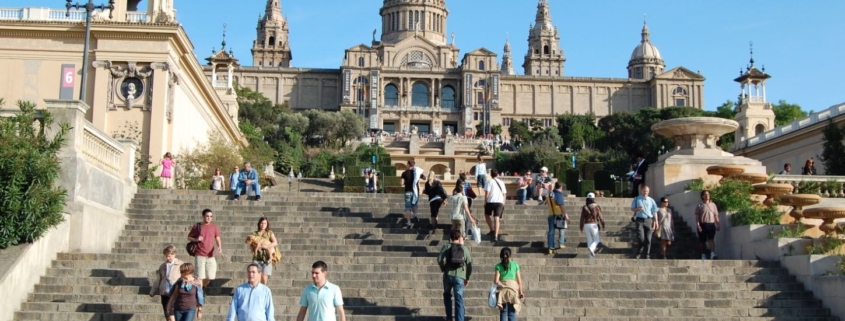
A destination can survive poverty, political upheaval, even disaster, and still be undone by praise. There is a particular kind of ruin that arrives wrapped in admiration, the flood of “must see” lists, the sunrise reel that becomes a stampede, the café that turns into a photo booth, the neighborhood that starts pricing out its own rhythm to accommodate visitors who only want a version of it that fits on a screen. Travel has always carried the risk of extraction. What is new is the speed at which attention converts into congestion, and the way that congestion is now built into the design of itineraries, platforms, and even airport arrivals.
The problem is not that people travel. The problem is that the same people travel to the same places at the same times, guided by the same recommendation systems, reacting to the same images, and rewarded by the same social feedback. A once personal act has become a mass behavior pattern, and the pattern has side effects that are no longer subtle.
Yet the story is not simply overtourism as a moral warning. It is a redefinition of what travel is for. If the old promise was discovery, the new temptation is confirmation, going somewhere to prove you were there, to reenact a visual script, to consume an experience that has already been pre-chewed by thousands of strangers. The question for modern travel is not where to go. It is how to move through a world where the most visible places are increasingly fragile, and where the best experiences are often hidden behind restraint, timing, and a willingness to be slightly misunderstood.
The algorithm built a single global itinerary
Travel used to be constrained by guidebooks, word of mouth, and the limits of local knowledge. Now a traveler can land in a city and follow a route that is almost identical to the route followed by millions of other people, because the same maps highlight the same “top rated,” the same short videos glorify the same viewpoints, the same blogs recite the same sequences. It is not conspiracy. It is convergence.
Recommendation systems tend to amplify what is already popular because popularity creates data, and data creates confidence. The result is a self-reinforcing hierarchy of attractions and neighborhoods. This changes cities in practical ways. Streets become funnels. Transit becomes overloaded at peak hours. Small businesses turn into service stations for an international crowd rather than places rooted in local need. The places that once made a city feel specific start acting like nodes in a global circuit.
For the traveler, the damage is psychological as well as physical. When your path is pre-selected by ranking systems, you are less likely to notice the quiet street with no label, the museum without a viral exhibit, the corner store with no English menu. You become a participant in a collective itinerary, and then you wonder why the experience feels oddly generic.
“Authentic” became a category that destroys what it describes
The word “authentic” used to imply something encountered accidentally, a local scene not arranged for outsiders. Now it is often a marketing tier. Neighborhoods are described as authentic precisely when they are on the edge of being consumed. Restaurants are celebrated for authenticity at the moment their customer base begins to shift toward visitors. Markets are praised for authenticity until the stalls stop selling daily essentials and begin selling souvenirs.
This cycle is not only about tourism boards or greedy landlords. It is about how desire works. Travelers seek authenticity because they are bored by the global sameness of airports, chain hotels, and standardized shopping districts. They want texture, contradiction, local life. The tragedy is that large-scale desire for texture tends to flatten it, because businesses adapt to the most profitable customer group, and the most profitable customer group often demands predictability.
The most honest version of authenticity is not a product. It is a relationship, one that requires humility and time. It asks the traveler to enter as a learner rather than a collector.
The new scarcity is not flights, it is reservation slots
Travel used to involve queues. You could arrive early, wait, and eventually enter. Increasingly, many experiences now require pre-booking, timed entry, or online reservations released in batches. This is often framed as a convenience, a way to reduce waiting. It also changes the emotional structure of travel.
Pre-booking turns spontaneity into planning labor. The trip becomes a sequence of secured appointments. Your days are shaped by confirmation emails and time windows. Missed trains or delayed flights have cascading effects. The traveler becomes a project manager, and the destination becomes a schedule.
There is also an equity problem embedded in reservation culture. People with flexible jobs, strong internet access, familiarity with booking systems, and the ability to pay higher prices can secure the best time slots. Others are left with leftovers. When scarcity is mediated by platforms, the experience of travel becomes less about curiosity and more about access.
This changes what it means to “see” a place. You are no longer wandering through a city. You are chasing slots in a system that has converted wonder into inventory.
Crowds change the meaning of beauty
A beautiful view is not only visual. It is the feeling of space around it, the sense that the environment has room for your mind to expand. Crowds compress that. Even if the view remains stunning, the experience becomes different when it is framed by jostling, line management, and constant phone screens.
This matters because many travelers blame themselves when a famous site disappoints. They assume their imagination was too romantic or their expectations too high. Often the problem is that the site is being experienced in the mode of crowd control. When you are herded through a place, you begin to see it as a task rather than as an encounter.
Crowds also change behavior. People speak louder. They become less patient. They treat each other as obstacles. When the social atmosphere becomes competitive, the place itself feels harsher, and even locals who are working there begin to adopt a defensive posture.
Beauty is not only what you look at. It is what the place allows you to feel while you look.
The off-season is becoming the new peak season
In many regions, travelers are moving away from traditional peak months because peak months have become punishing. Heat is rising in places once considered mild. Crowds have reached levels that turn strolling into pushing. Prices are inflated in ways that feel less like market dynamics and more like a penalty for arriving when everyone else arrives.
This is producing a shift toward shoulder seasons, late autumn, early spring, even winter travel in places that once had clear tourist cycles. The benefit is obvious: fewer people, better prices, a calmer rhythm. The trade-offs are more subtle. Some attractions reduce hours. Some transport schedules thin. Weather becomes less predictable. The city you meet may be more local and less curated, which is often what travelers say they want, until they realize that “local” includes closed doors and quiet streets.
Off-season travel also tests a traveler’s relationship with inconvenience. When the café you wanted is closed and the rain arrives unexpectedly, you either adjust with grace or you discover you were only comfortable with adventure when it came prepackaged.
The off-season does not simply reduce crowds. It changes the moral shape of travel. It asks for less entitlement.
The real cost is paid by neighborhoods, not landmarks
Overtourism is often discussed through iconic sites, the cathedral steps, the famous beach, the historic square. The deeper impact is felt in residential zones where short-term rentals and visitor demand transform housing markets and daily life.
When long-term housing becomes less profitable than short stays, local communities hollow out. Schools shrink. Neighborhood businesses shift to visitor preferences. The town begins to operate like a stage set, lights on, locals off. Visitors may not notice this at first because the area still looks charming. Yet charm without community is a brittle thing. It becomes fragile, then it becomes performative.
For the traveler who cares about ethics, the question becomes uncomfortable. You are not only choosing where to spend your money. You are choosing which economic pressures you amplify. This does not mean travelers should never visit popular places. It means the traveler is not a neutral observer. You participate in the outcome simply by arriving.
The rise of the “local simulation” itinerary
A strange new pattern has emerged. Travelers want to feel like locals without doing the things locals do. They want to “live like a local” while avoiding long commutes, repetitive errands, or mundane constraints. They want local neighborhoods with visitor convenience, a simulation of ordinary life stripped of its frustrations.
This desire is understandable. The fantasy is a kind of temporary belonging, waking up in a neighborhood bakery zone rather than a tourist corridor, feeling part of the city’s morning pulse. The problem is that when many visitors seek this, they push those neighborhoods toward visitor-serving economies, which changes the very local life they came to borrow.
The answer is not to reject neighborhood stays. It is to treat them differently. If you stay in a residential area, the goal should not be to consume “localness” as a vibe. The goal should be to minimize disruption, to shop without treating shops as attractions, to walk without blocking sidewalks for photos, to behave as if you are a guest in someone’s daily rhythm.
Local life is not a costume. It is a system of obligations, habits, and relationships. Travel that respects that becomes more satisfying, not less.
Travel is becoming climate-literate whether we like it or not
There is a new layer of planning that is no longer optional. Heat, smoke, storms, floods, water scarcity, and ecological stress are shaping the experience of entire regions. Travelers once treated weather as a mild variable, pack a jacket, bring sunscreen. Now weather can become the defining feature of a trip, altering safety, mobility, and comfort.
This changes how people choose destinations and seasons. It also changes what travelers owe the places they visit. In water-stressed areas, tourism can intensify strain. In fragile ecosystems, foot traffic and waste can have outsized impact. In regions facing repeated climate disruptions, tourism revenue may be crucial, but the capacity to host may be unstable.
A climate-literate traveler plans with humility, not only looking for perfect conditions, but considering how their presence interacts with local limits. Climate literacy is not a guilt ritual. It is realism. It acknowledges that the world you want to see is changing, and that travel is part of that change.
The new luxury is not five-star, it is frictionless calm
Luxury travel is often described as nicer hotels and better seats. The emerging luxury is simpler: quiet. The ability to move without crushing crowds. The ability to find a meal without booking a week ahead. The ability to sit somewhere beautiful without fighting for space. Calm has become scarce.
This is why some travelers are shifting toward less famous regions, smaller cities, rural corridors, islands with visitor caps, and destinations that require more effort to reach. Effort becomes a filter. It reduces crowd density. It increases the chance of having an experience that feels like it belongs to your own life rather than to a mass script.
The irony is that calm travel is sometimes cheaper than famous travel, but it requires something many people find difficult: giving up the reassurance of social proof. The calm destinations are not always the ones with the most posts. They are the ones with the most space.
The ethical traveler is not the one who avoids everything, it is the one who learns to distribute impact
It is tempting to respond to overtourism with purity, never visit popular places, never fly, never contribute. Most people will not live that way, and even if they did, the global economy that depends on travel would fracture in complex ways. A more realistic ethical approach focuses on distribution.
Travel can distribute impact by shifting timing, choosing shoulder seasons, staying longer in one place instead of hopping rapidly, spending money in locally owned businesses, using public transit, respecting quiet zones, and learning basic norms. Distribution also means dispersing attention, not treating the same three neighborhoods as the only places worth seeing.
Ethics in travel is not a badge. It is a practice of noticing consequences. Noticing, then adjusting, then noticing again.
The most satisfying trips are often the ones that do not photograph well
Photography can enrich travel. It can also distort it. When an experience is selected primarily for how it will appear, you begin to prioritize surfaces. You chase viewpoints designed for impact. You favor places that look iconic over places that feel complex.
Some of the most meaningful travel moments are invisible on a screen. A conversation with a shop owner about an ordinary detail. A long walk through a neighborhood at dusk when the city shifts into its own private tempo. A museum room that is empty, where you can stand and think without pressure. A meal in a place with no story attached, where the food is simply good and nobody is performing.
These moments tend to happen when the traveler is less busy documenting and more available to be surprised. The paradox is that the trip becomes more memorable when you capture less.
Learning to be bored is a travel skill again
In the era of constant entertainment, many travelers treat every hour as something that must be filled. They move through cities like consumers in a theme park, activity stacked on activity, because downtime feels like wasted value. Yet boredom is often the doorway to perception.
When you stop chasing stimulation, you begin to notice the texture of a place. The pace of pedestrians. The way light changes on stone. The public manners of a city, who stands close, who speaks softly, who lingers. The everyday rituals that are not designed for tourists but are the actual culture.
Boredom is also where you become present enough to get lost in a productive way, not physically lost, but mentally detached from the idea that travel must deliver constant novelty. This is where travel begins to resemble living, and living is the original point.
A new definition of travel is emerging
The old definition of travel was movement plus consumption, go far, see much, return with proof. The emerging definition is different. It is about depth rather than breadth, timing rather than novelty, relationship rather than conquest. It is about choosing places that can hold visitors without collapsing, and choosing behaviors that do not turn cities into products.
This does not mean travel must become solemn. It means travel can become mature. Mature travel is willing to miss some highlights. It is willing to sit in a park. It is willing to revisit a place slowly rather than race toward a list. It is willing to be a guest rather than a customer.
The places that are still travelable are often the places that are not being shouted about, and the travelers who find them are often the ones willing to leave room in the day for whatever the place is, not whatever the internet promised it would be.

