
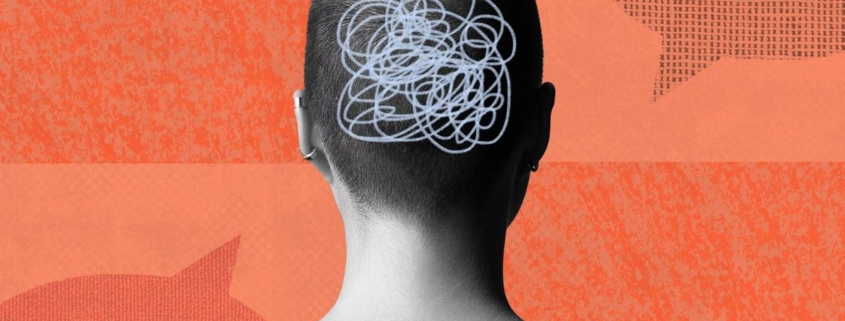
Most people who claim they have no creative spark are not empty. They are crowded. Their minds are not barren landscapes. They are busy intersections, flooded with borrowed voices, constant prompts, tiny emergencies, social micro-performances, and a steady drip of other people’s finished work. In that environment, the problem is not invention. The problem is signal.
Creativity needs a certain kind of privacy to develop, not only privacy from other people, but privacy from constant input. Ideas rarely arrive as polished sentences or complete images. They arrive as misfits, fragments, half-formed tensions in the mind, the kind of raw material that requires quiet to notice and time to shape. Overstimulation dissolves that quiet. It replaces the slow incubation of thought with a quick, compulsive responsiveness, and then the same person who responds to everything all day wonders why nothing original emerges at night.
The most useful way to think about modern creativity is not as a talent but as an ecosystem. The ecosystem can be hospitable or hostile. If it is hostile, even gifted people will feel uninspired. If it is hospitable, ordinary people will produce work that surprises them.
The myth of the blank mind and the reality of clutter
The popular picture of creative struggle is the blank page, the empty canvas, the silent instrument, a person staring into nothingness. That image flatters the idea that creativity begins in a vacuum. In reality, the modern problem is rarely vacuum. It is saturation.
A saturated mind is full of headlines, snippets, videos, comments, arguments, and polished outcomes. It is full of other people’s conclusions, which is a subtle poison. When you live in other people’s conclusions, you stop rehearsing your own uncertainty. Yet uncertainty is where original work begins. It is the stage of not knowing what you mean yet, of circling a feeling, of tolerating awkwardness long enough for form to appear.
Clutter does not only distract you. It teaches your brain to expect immediate clarity. That expectation is incompatible with making anything that requires exploration.
Attention is the raw material, not the reward
Creativity is often framed as output. Write more. Paint more. Produce more. The hidden truth is that creativity begins far earlier than output. It begins in what you can attend to and how long you can remain with it.
Sustained attention is the soil where complicated ideas take root. Without it, you get only the shallow plants, quick jokes, obvious takes, familiar melodies. These can be pleasant, but they rarely feel like the thing you were hoping to make. The thing you were hoping to make usually requires staying with a thought past the moment it stops being immediately gratifying.
Modern life trains attention to dart. Notifications arrive like taps on the shoulder. Feeds refresh endlessly. Tabs multiply. Even without explicit distraction, many people maintain a low-grade scanning behavior, always ready to switch, always waiting for something better. Creativity does not thrive in scanning mode. It thrives in dwelling.
If you want more originality, you do not need a new idea. You need a different relationship with attention.
Inspiration is not a lightning strike, it is a pattern of perception
The language of inspiration makes creativity sound mystical. A muse visits. A spark strikes. A brilliant idea appears. This language is seductive because it absolves you. If inspiration does not arrive, it is not your fault.
Yet most creative breakthroughs are not sparks. They are accumulations. They arise because someone has been paying attention to a particular set of questions, contradictions, or obsessions long enough for connections to form. The mind begins noticing patterns in ordinary things. It begins linking disparate experiences. It begins hearing a sentence in a conversation and recognizing it as the seed of a story.
Overstimulation breaks this pattern of perception because it keeps your attention bouncing between other people’s highlights. You do not linger long enough to develop your own private noticing habits.
Originality is often nothing more glamorous than sustained noticing of what other people skim past.
The nervous system sets the ceiling on creative depth
This is the part most advice ignores. Creativity is not only cognitive. It is physiological.
A stressed nervous system narrows. It prioritizes threat detection. It pushes the mind toward urgent decisions and simple answers. This is useful if you are escaping danger. It is disastrous if you are trying to make nuanced work. Nuance requires safety. It requires the ability to hold ambiguity without panicking. It requires spaciousness.
Overstimulation often keeps people in a mild fight-or-flight state, even if their lives are not objectively dangerous. The constant stream of information triggers micro-alerts. The social comparison triggers self-evaluation. The pressure to respond triggers urgency. The result is a creative system trying to operate in a biological state designed for survival, not exploration.
One reason many people feel creatively blocked is that their bodies are not calm enough to wander.
The cult of productivity flattened the creative timeline
Many people treat creativity as a task to be completed rather than a process to be lived. They want the result quickly. They want to feel efficient. They want proof that the time is worth it. This mindset is understandable, especially in cultures where worth is measured through output.
Yet creative work has uneven rhythms. Some days are fertile, others are dry. Some hours are slow and clumsy. Some weeks are spent thinking rather than producing. The production-only lens makes those slow phases feel like failure, which creates anxiety, which then worsens the block.
Overstimulation worsens this because it offers constant examples of other people’s finished work. You see the polished product without witnessing the messy timeline behind it. You internalize a false standard, that creativity should look like a highlight reel.
The truth is that creativity often looks like confusion, and confusion is intolerable when you are already overloaded.
The secret cost of constant input is the loss of inner language
Every creator develops an inner language, a vocabulary of sensations, images, and thoughts that are not yet public. This inner language is where the work begins. It is private, awkward, sometimes repetitive, sometimes irrational. It becomes refined through rehearsal and patience.
Constant input can drown out inner language. You begin thinking in borrowed phrasing. You begin feeling in culturally approved emotions. You begin reacting to other people’s ideas rather than generating your own. Your mind becomes a commentary engine.
This is why some people feel they are writing, making, or speaking, but the work feels hollow. It is not hollow because they lack skill. It is hollow because they are not hearing themselves.
Recovering creativity often means recovering inner language, the ability to have thoughts that are not immediately shared, liked, or optimized.
Taste can become a weapon against you
A common modern dilemma is that people have excellent taste and low output. They know what good work looks like. They can identify brilliance. They can see flaws in their own drafts immediately. They feel embarrassed before they even begin.
This is not a moral failure. It is a developmental imbalance. Taste often matures faster than craft because it is easier to consume excellence than to produce it. Overstimulation accelerates this imbalance by exposing you to endless exceptional work while giving you fewer opportunities to practice in private.
The gap between taste and output creates shame. Shame creates avoidance. Avoidance keeps the gap alive.
The way out is not to lower your standards. It is to protect your practice long enough for your craft to catch up. That protection requires reducing the input that inflames comparison and treating early drafts as exercises rather than performances.
Creativity requires friction, not only freedom
People assume that removing friction makes creativity easier. In some ways it does. Better tools and faster workflows can reduce barriers. Yet friction has an overlooked function. It slows you down enough to make decisions with intention.
When everything is frictionless, you can generate options endlessly. You can revise forever. You can seek feedback constantly. You can consume inspiration constantly. The result is often not productivity, but drift. Drift is the enemy of finishing. Drift is also the enemy of voice because voice emerges through commitment, through choosing one sentence over another, one palette over another, one interpretation over another.
Friction creates constraints. Constraints force selection. Selection shapes identity.
A creative practice without constraints can become a foggy room where nothing solidifies.
The difference between stimulation and nourishment
Not all input is harmful. The mind needs material. The problem is the ratio between nourishment and stimulation.
Nourishment is input that deepens you. It gives you texture, context, complexity. It invites reflection. It lingers. It changes how you see. Stimulation is input that excites you briefly and then evaporates, leaving you hungry for the next hit.
Many modern environments provide abundant stimulation and scarce nourishment. The result is a mind that feels busy and empty at the same time. Busy because it is always reacting. Empty because nothing has been absorbed deeply enough to transform into insight.
Creative people often think they need more inspiration. Often they need fewer inputs and better ones, selected with care, digested slowly, allowed to become part of their private mental compost.
Solitude is not isolation, it is an ingredient
Solitude has gained a bad reputation because it is confused with loneliness. Loneliness is the pain of disconnection. Solitude is the condition in which your mind can speak without interruption.
Creative solitude is not necessarily silence in a cabin. It can be a walk without audio. It can be an hour without social feed exposure. It can be a morning where you do not open messages until you have done one honest thing with your attention.
Solitude is also where you encounter the parts of yourself that you prefer to avoid. Restlessness, boredom, insecurity, grief, unresolved desire. Those states can feel unpleasant. They are also sources of creative material because they are real. When you drown them out with input, you lose access to a certain kind of truth.
A person who cannot tolerate solitude often cannot tolerate the early stages of creation, because early creation feels like solitude even if you are surrounded by people.
The role of play and the danger of performance
Play is often described as childish. In reality, play is a sophisticated form of exploration. It allows experimentation without immediate stakes. It allows wrong turns without punishment. It allows surprise.
Overstimulation tends to push people toward performance because social platforms reward presentable output and punish awkward exploration. When you feel watched, even by an imaginary audience, play becomes difficult. You become cautious. You start editing too early. You try to look competent rather than to discover something.
This is why many people who were creative as children feel blocked as adults. They did not lose imagination. They gained an internal audience, and the internal audience demands results.
Recovering creativity often requires reclaiming a private space where work can be ugly, silly, and unfinished without consequence.
The practical craft of reducing mental noise
The most effective creative shifts are often small and structural. Not grand resolutions, but changes that alter the default environment.
A creator who protects mornings from input often finds that ideas arrive more easily because the mind has not been colonized by other people’s priorities. A creator who limits social consumption during a project often finds that voice becomes clearer because imitation pressure decreases. A creator who separates inspiration intake from production time often finds that the work becomes less reactive and more intentional.
These are not moral rules. They are ecological interventions. You are changing the conditions under which your mind operates.
The simplest litmus test is this: does your current input pattern leave you feeling more capable of making, or more inclined to keep consuming. The answer is rarely subtle.
Creativity in the age of AI requires a new kind of honesty
Tools that can generate text, images, music, and ideas quickly can be liberating. They can also intensify overstimulation because they multiply output and reduce friction. The world will fill with competent drafts. That will raise the noise floor.
In that environment, human creativity becomes less about producing a first draft and more about choosing what matters. It becomes less about generating options and more about committing to a point of view. It becomes less about novelty for its own sake and more about specificity, the details that come from lived experience, the tensions that come from real observation, the contradictions that come from being human in a particular place and time.
AI can provide language. It cannot provide your stakes. It cannot provide what you care about enough to risk being misunderstood. That is the part of creativity that is not a skill and not a style. It is a decision.
If you feel blocked in the age of infinite generation, the block may be a signal that you are avoiding the only question that matters, what do you actually want to say.
The work you want to make is waiting behind your tolerance for quiet
A mind that is constantly fed becomes dependent. Not dependent in a dramatic way, but dependent in a behavioral one. It learns to expect input, to expect novelty, to expect a steady stream of other people’s finished thoughts. When that stream is removed, the mind panics briefly, then it begins to produce.
That brief panic is where many people turn back. They interpret discomfort as emptiness. They assume nothing is there. They reopen the feed. They refill the room.
If you can stay through the discomfort, something else begins. The mind starts generating its own material because it has no other choice. It begins revisiting old questions you have avoided. It begins noticing things you have been moving too fast to see. It begins offering fragments that feel strange and personal. Those fragments are not entertainment. They are seeds.
The creative life is not primarily a search for more ideas. It is a practice of making space for the ideas you already have, the ones that cannot speak while everything else is shouting.

