
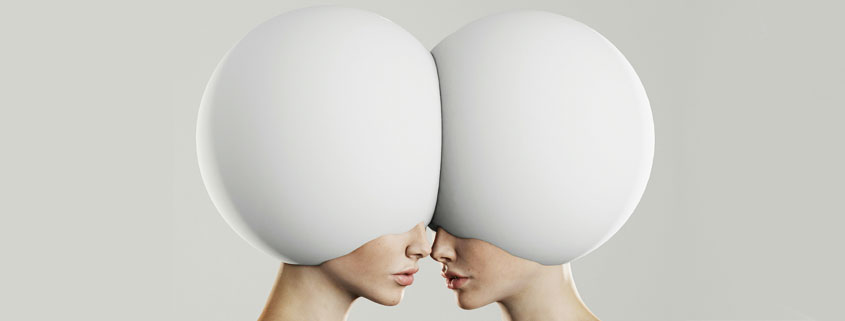
A strange kind of panic has settled into creative life, the feeling that you are always arriving late to something you never chose. A new sound becomes mandatory overnight, a visual style spreads like a mold across thousands of thumbnails, a phrase gets repeated until it stops meaning anything, and the pressure is not only to participate, but to participate immediately. The feed has no patience for slow work, and it punishes hesitation with silence. You can sense it in the way people talk about ideas now, not as seeds to cultivate, but as opportunities that will expire.
This is not simply about distraction. It is about the gradual replacement of taste with compliance. The modern creator is surrounded by mirrors that reflect back what is already winning. When those reflections become the primary reference point, creativity begins to behave like a market forecast instead of a form of exploration. The result is a paradox that feels personal but is structural. People have access to more tools, tutorials, and audiences than any generation before them, yet many feel less certain about what they actually like, what they want to make, and what they would pursue if nobody were watching.
The most damaging effect of the ranking economy is not that it pushes creators to chase attention. It is that it erodes the inner equipment that makes creativity worth doing at all, a private sense of direction. Taste is that direction. It is the set of invisible preferences, standards, hungers, and refusals that shapes what you notice and what you ignore. Taste is how a person becomes themselves in public, without needing permission. When taste weakens, originality becomes luck, and consistency becomes mimicry.
The collapse of taste is not announced with drama. It arrives as a small bargain you make repeatedly. You adjust the title to be more searchable. You smooth the rough edges because the platform favors clarity. You choose the safer ending because retention graphs hate ambiguity. None of these choices feels like a betrayal in isolation. Over time, they form a creative personality that is optimized to be legible rather than alive.
The Feed Teaches You What to Want Before You Know You Want It
Taste develops through friction. You encounter something that does not fit your assumptions, you resist it, you return to it, you argue with it internally, and eventually you either reject it with precision or absorb it with transformation. That process is slow, and it requires enough silence for a reaction to become a considered response. The feed interrupts that rhythm. It floods the mind with finished judgments, expressed as numbers, comments, trending lists, and repetition. It tells you what matters by showing you what is already being rewarded.
This is the part that hides in plain sight. A ranking system is not merely distributing content. It is distributing values. It teaches you, through exposure patterns, which emotions are profitable, which topics are safe, which angles travel, which aesthetics are familiar enough to be instantly understood. It teaches you to pre-empt the audience’s confusion, because confusion is punished. It teaches you to compress, because depth takes time. It teaches you to signal, because subtlety is expensive.
When the environment trains you to anticipate reaction, your own preferences start to feel unreliable. You become suspicious of the thing you like that is hard to explain. You feel guilty about the work you want to make that does not have an obvious hook. You begin to treat your curiosity as a liability. Taste becomes something you outsource to the crowd, then you call the crowd “the market” to make it sound inevitable.
What makes this so destabilizing is that the process is pleasurable in the short term. The feed rewards you with little bursts of social clarity. It tells you, instantly, whether something landed. It gives you the comfort of belonging. It also gives you the fear of irrelevance, which is an efficient motivator. Together, those forces create a loop where you feel most alive when you are most reactive. Your creative life becomes a constant negotiation with the public, and the private part of you begins to starve.
Taste cannot be built inside constant surveillance. It needs privacy the way a flame needs oxygen. Not secrecy, not isolation, but room to be wrong without consequence. Room to make work that nobody sees. Room to have preferences that are not yet defensible. The feed is allergic to that room because it cannot monetize it.
Engagement Is Not Appreciation, and That Confusion Warps Everything
One of the cruelest tricks of modern platforms is that they collapse different kinds of attention into a single scoreboard. A laugh, a rage click, a doom scroll pause, and a moment of genuine admiration can all look similar to an algorithm. The creator sees the metrics and imagines they represent love, or meaning, or impact. Sometimes they do. Often they represent something closer to stimulation.
This matters because taste is built on discernment, and discernment requires accurate feedback. If a creator receives reinforcement for work that triggers reaction rather than resonance, they will slowly adjust their instincts. They will learn to prioritize immediacy over complexity. They will choose the angle that gets interpreted fastest. They will flatten the work’s emotional range, because extremes travel better. Over time, they become skilled at producing content that performs, while losing the ability to recognize the difference between what performs and what matters to them.
A person can get very good at “winning” inside a platform while becoming less capable of making work they respect. This is where creative burnout often begins, not as exhaustion from effort, but as disgust from misalignment. The work keeps moving, the audience keeps responding, and the creator feels increasingly detached, as if they are managing a character that produces output. They are celebrated and hollow at the same time.
The deeper problem is that engagement data encourages creators to treat their own taste as a variable to be engineered. If a certain style gains traction, they adopt it. If a topic spikes, they pivot. If a format dips, they abandon it. These adaptations are rational, but they have a hidden cost. They train the creator to distrust their own long-term instincts. They become dependent on external validation to confirm what should be internally known.
Appreciation has a different texture. It is quieter, slower, and often less legible. The work that changes a person’s mind rarely goes viral in the moment it is released. The work that forms a lifelong attachment can feel strange at first, even to the person who will later cherish it. Taste grows toward what it can live with for years, not what it can exploit for a weekend.
A culture that treats short-term reaction as the highest signal produces creators who fear their own deeper impulses. They become afraid of making work that needs time, because time is exactly what the metrics do not give them.
Trend Imitation Feels Like Learning, Until You Notice What It Replaces
There is a legitimate form of imitation that has always existed in craft. Apprentices learn by copying. Musicians internalize standards by playing other people’s songs. Painters learn structure by studying old masters. Writers learn rhythm by echoing voices they admire. That kind of imitation is not humiliating. It is an act of respect, and it is a method of acquiring tools.
Trend imitation is different. It is imitation without digestion. It is copying aimed at distribution rather than understanding. The goal is not to learn the principles behind a style, but to wear the style long enough to get seen. The copy becomes a costume. The creator does not ask, “What does this technique allow me to express?” They ask, “Will this be recognized quickly?”
This subtle shift changes the entire creative process. When imitation is a learning method, it eventually creates divergence, because the creator discovers what fits and what does not. When imitation is a distribution method, it tends to create convergence, because divergence is risky. Convergence looks like professionalism for a while. Thumbnails become cleaner. Hooks become sharper. Color palettes get consistent. Everything looks competent. Then everything starts to look the same.
The loss is not only aesthetic. It is psychological. Trend imitation teaches creators that their value is in their ability to adapt, not in their ability to commit. It trains them to treat identity as a set of modular parts that can be swapped for performance. That may be useful in marketing, but it is corrosive in art, because art is not built on adaptability alone. It is built on obsession, stubbornness, and the willingness to pursue what does not yet have an audience.
The most important creative questions do not have immediate answers. They require a creator to live inside uncertainty, to tolerate the feeling of making something nobody asked for. Trend imitation offers a shortcut around that discomfort. It provides an audience without requiring a vision. The price is that the creator never develops the inner architecture that makes vision possible.
Taste Is a Muscle Built by Refusal, Not by Possibility
Most people think taste is a kind of aesthetic knowledge, a refined sense of what is good. That is only half of it. The other half is the ability to refuse. Taste is the discipline of saying no to what is available, even when what is available is popular, even when it would be easier, even when it would be rewarded. Without refusal, taste becomes a collage of whatever you encountered last.
Refusal is difficult because it creates short-term loss. The creator who refuses a trend may lose reach. The writer who refuses the safer angle may lose clicks. The musician who refuses to flatten a song into a hook may lose the playlist placement. The refusal can feel like self-sabotage until you understand what it is protecting. It is protecting your capacity to recognize yourself in your work.
The feed makes refusal feel irrational. When the culture is constantly presenting “opportunities,” refusing them can look like arrogance or fear. But refusal is often how a creator stays honest. It is how they preserve the conditions necessary to produce work that is not merely reactive. It is how they keep their internal compass intact.
Taste is built through repeated acts of preference that have consequences. You choose the harder draft, and it takes longer, and fewer people notice, but you respect it more. You choose the quieter idea, and it attracts a smaller audience, but the audience is more aligned. You choose to live with your own questions longer, and the resulting work has depth that cannot be faked. Over time, these choices create a signature, not as branding, but as a real pattern of mind.
The creator without refusal becomes extremely flexible, and that flexibility is praised. They can do any style, any format, any tone. Yet when you look closely, the work has no center. It has competence, but no character. It feels like it was made by someone who is always watching themselves from the outside.
Character is what taste produces. Character is what survives.
The Private Canon and the Importance of Being Poorly Influenced
One of the most effective ways to rebuild taste is to become poorly influenced on purpose. Not by low quality work, but by work that the feed is unlikely to give you, work that is not already optimized for viral digestion. A private canon is a set of influences chosen in secret, without the need to justify them publicly. It is an antidote to the algorithmic mirror because it is not shaped by what is currently trending. It is shaped by what you want to live with.
A private canon is powerful because it reintroduces asymmetry into your inputs. The feed tends to homogenize inputs. Everyone sees versions of the same things, because distribution is driven by collective behavior. A private canon creates personal eccentricity. It gives you references that your peers may not share. It gives you language that is not already exhausted. It gives you permission to be strange.
The phrase “inspiration” is often used as if it were a momentary spark. In reality, inspiration is usually a slow contamination. You spend time with a body of work, and its standards seep into you. You begin to notice different details. You begin to dislike certain shortcuts. You begin to value certain kinds of precision. This is not a mood. It is a reconfiguration of perception. That reconfiguration cannot happen if your inputs are constantly replaced by new stimuli.
The most important influences often do not feel immediately exciting. They can feel demanding. A difficult novel, an uncompromising album, a film that refuses to explain itself, a painter whose choices do not translate into quick lessons. These influences strengthen taste because they force you to meet them with attention. They require a more active mind. They make you slower, and slowness is a form of freedom.
Being poorly influenced means exposing yourself to work that is not currently “useful” for growth. It means reading outside your niche, listening outside your genre, watching outside your timeline. It means allowing your preferences to be shaped by something that is not trying to sell you an identity. It means letting your mind become less predictable, and that unpredictability becomes creative power.
The Lost Skill of Boredom and Why It Is Not a Luxury
Boredom has become a dirty word, associated with laziness or lack of stimulation. In creative life, boredom is often a threshold. It is the moment when the easy novelty is exhausted and the deeper material begins to surface. The problem is that modern environments do not allow boredom to complete its work. The moment boredom appears, a device offers relief. The relief is immediate, and it resets the mind into consumption.
A creative mind needs stretches of low stimulation for two reasons. First, it needs time to digest what it has already taken in. Second, it needs space for associations to form. Many original ideas are not invented. They are assembled from fragments that would not ordinarily meet. Those meetings occur in quiet. They occur during the walk, the shower, the long drive, the waiting room, the aimless hour. They occur when the mind is not being given new material constantly.
The feed colonizes those spaces. It turns the in-between moments into content opportunities. It trains people to treat any silence as wasted potential. The result is a creative life with constant input and reduced integration. People feel full and empty simultaneously. They have seen everything and understood little. Their references multiply while their voice weakens.
Boredom is not a romantic ideal. It is a cognitive condition that allows deeper processing. When you remove it, you get a mind that is good at reacting and poor at forming. You get a person who can generate ideas quickly and struggle to sustain them. You get output without sediment.
A creator who protects boredom is protecting depth. They are protecting the slow chemistry where influences become personal rather than copied. They are protecting the place where taste consolidates.
Creative Identity Is Not a Brand, It Is a Contract With Your Future Self
One reason creators get trapped in trend cycles is that they misunderstand identity as a public performance. They think they are choosing a persona that will be rewarded. They tweak and adjust and polish until the persona is legible. Then they feel trapped by it. They cannot evolve without risking their reach. They cannot change tone without confusing the audience. They become custodians of their own past.
A healthier understanding treats creative identity as a contract with your future self. The question becomes, “What kind of work will I be proud to have made five years from now?” That question is not sentimental. It is operational. It changes how you choose projects, how you allocate time, how you resist short-term rewards that compromise long-term coherence.
The contract requires honesty about what you are actually trying to learn. Some creators are trying to master craft. Some are trying to articulate a worldview. Some are trying to build a body of work that contains their life. Those goals demand different choices. A creator chasing craft might deliberately imitate to learn technique. A creator chasing worldview might accept smaller audiences to preserve complexity. A creator building a life’s body of work might avoid constant output in order to protect continuity.
The feed pushes everyone toward the same goal, constant visibility. Constant visibility is not a creative goal. It is a marketing goal. Marketing goals can support creative goals, but they can also replace them. When marketing replaces creation, the work becomes optimized for being consumed quickly. The contract with your future self is violated. You are no longer making the work you need to make. You are making the work that keeps the machine running.
A contract with your future self requires certain forms of courage. The courage to be misunderstood for a while. The courage to make work that does not fit the current appetite. The courage to endure quiet seasons without panicking. These are not heroic traits. They are the daily decisions that keep taste alive.
The Countermove: Designing a Creative Life That Cannot Be Fully Measured
If taste collapses under constant measurement, then rebuilding taste requires choosing parts of your creative process that are deliberately unmeasurable. This does not mean refusing all feedback. It means refusing to let measurement be the only authority. It means cultivating activities where the value is obvious internally, even if it is invisible externally.
This might look like a sketchbook nobody sees, where you draw badly on purpose to explore forms without audience expectations. It might look like writing drafts that are allowed to be messy, because mess is where unexpected structure emerges. It might look like composing music without recording it immediately, letting it exist as a private exploration before it becomes a product. It might look like reading in a way that is not content creation, not highlight harvesting, not a performance of intelligence, but actual absorption.
Unmeasurable work restores a sense of internal reward. It makes creativity feel like a relationship rather than a transaction. It reduces the feeling that every action must justify itself publicly. It also creates a reservoir. When you have a reservoir, you are less dependent on the feed for direction, because you have an internal source of questions and interests.
The countermove also involves building relationships that are not based on public performance. A small group of peers who care about the work itself can provide a kind of feedback that metrics cannot. They can say what feels true, what feels forced, what feels derivative, what feels newly alive. Their feedback is slower and more specific. It does not spike your dopamine the way numbers do. It strengthens your standards rather than your anxiety.
Most importantly, the countermove involves learning to tolerate the lag between making something meaningful and receiving recognition for it. The feed collapses time. It trains people to expect instant response. Serious creative work often has a different timeline. It can take months or years for its value to become visible, and sometimes the visibility is not mass attention, but the quieter impact of becoming part of someone’s interior life.
When creators accept that lag, they stop interpreting silence as failure. They stop treating their deepest impulses as risky because they are not immediately rewarded. They regain the ability to pursue what they truly find interesting, which is the only sustainable fuel.
Taste is not a luxury reserved for artists. It is a survival tool for anyone who wants to live with integrity inside an environment designed to shape desire. The ranking systems will continue to reflect back what is already winning. The mirror will keep offering you versions of yourself that are easier to monetize. The task is not to smash the mirror. The task is to stop confusing it for your face.

