
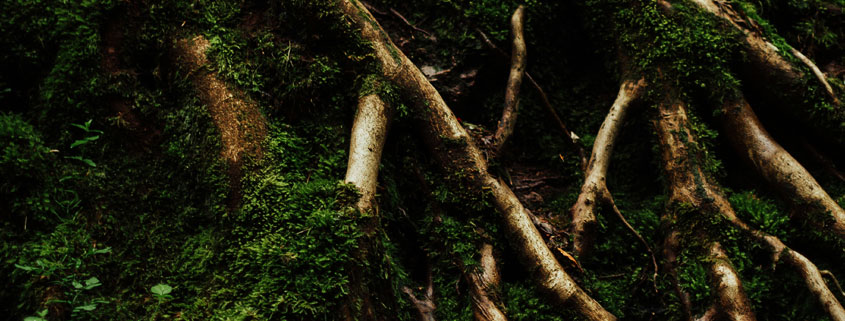
A garden can look alive and still be starving. Leaves can gleam, stems can stand upright, flowers can perform on schedule, and yet the ground beneath them can be functionally silent, a mineral stage where plants survive by constant external feeding rather than by belonging to a living place. The most consequential boundary in gardening is not the fence line or the edge of a bed. It is the thin, crowded zone where roots meet the soil, where the plant’s private economy begins, and where a second organism often decides whether that economy thrives or collapses.
That organism is fungus. Not the cartoon mushroom that appears after rain, but the fine, threadlike filaments that move through soil like an invisible textile. The garden’s most important architecture is rarely built above ground. It is stitched below, strand by strand, by mycorrhizal networks that bargain with roots, reshape structure, and govern how water and nutrients behave when weather stops cooperating.
The Underground Bargain That Built Terrestrial Life
Plants did not conquer land alone. Long before horticulture, long before lawns and beds and seed catalogs, early plants faced a problem that still haunts gardeners today. Soil minerals do not readily volunteer themselves. Phosphorus locks up. Micronutrients hide in chemical forms roots cannot easily access. Water arrives inconsistently, then leaves abruptly. A root is an impressive tool, but it has limits. It can push into pores, exude acids, recruit bacteria, and sense gradients. It cannot, by itself, comb an entire volume of earth with the delicacy and reach of fungal hyphae.
Mycorrhizal fungi solve that problem by extending the plant’s reach. Their filaments are far thinner than root hairs, able to slide into microspaces that roots cannot physically enter. In exchange for the plant’s sugars, fungi deliver water and nutrients gathered from beyond the root’s immediate territory. This is not charity. It is trade, enforced by biology. Plants allocate carbohydrates toward partners that pay, and can punish those that do not. Fungi, for their part, invest in plants that feed them reliably. Over evolutionary time, this exchange became one of the most successful deals on Earth.
In gardening terms, this means a plant is not a singular organism with a simple appetite. It is a consortium. When the consortium is healthy, the plant behaves as if it has a larger body, a wider map, and a steadier supply chain. When it is absent, the plant can still grow, but often with a nervous dependence on frequent watering and quick-release fertility, a life managed rather than supported.
The Root Zone as an Economic District
The most useful way to understand mycorrhizae is not as a supplement or a trick, but as a form of infrastructure. The root zone functions like an economic district where transactions happen continuously. Roots leak sugars, amino acids, and other compounds into the soil. Those exudates are not waste. They are payments, invitations, and signals. Bacteria gather around that food. Protozoa hunt those bacteria. Nematodes play several roles, some destructive, many essential. Fungi thread through the entire scene, connecting pockets that would otherwise be isolated.
Mycorrhizal fungi form relationships with most plants, but not all. Many garden staples, including brassicas and some other families, do not typically form the same mycorrhizal partnerships. That fact matters because it changes what a bed “wants” over time. A garden dominated by plants that do not partner with mycorrhizae can still have rich soil biology, but the fungal network will not be built in the same way. In mixed plantings, the underground economy becomes more diverse, and diversity is often what stabilizes a system under stress.
Gardeners sometimes approach soil as a pantry: add nutrients, remove weeds, repeat. A more accurate model is a city. Streets matter. Water systems matter. Communication matters. If the only support a city receives is imported food, it becomes fragile. If it has farms, trade, redundancy, and maintenance, it becomes resilient. Mycorrhizal fungi are part of that maintenance crew. They do not replace good management, but they change what “good” means.
Why Modern Gardening Often Breaks the Fungal Web
A mycorrhizal network is not delicate in the sentimental sense, but it is vulnerable to repeated disruption. Soil can host fungi for decades, yet a few habits common in modern gardening can reduce fungal life dramatically.
Frequent tilling is one of the most obvious. When soil is turned, fungal hyphae are physically broken. That does not permanently eliminate fungi, but it forces constant rebuilding, and rebuilding costs energy. If the garden is disturbed every season, fungal networks live in a state of perpetual interruption. The bed becomes like a city that rebuilds its roads every month and wonders why deliveries are late.
Overuse of soluble fertilizers can also distort the relationship. If a plant receives nutrients easily through the soil solution, it has less incentive to pay fungal partners for hard-to-reach resources. The plant’s bargaining position changes. It can reduce carbohydrate allocation to fungi. Over time, fungal populations may diminish because the economy that fed them is no longer active. This is not moral failure. It is basic energy logic.
Fungicides, even when used for legitimate reasons, can have spillover effects. A treatment aimed at a leaf disease may also affect non-target fungi in the soil, especially if products drift, wash down, or are used repeatedly. Similarly, repeated bare-soil practices, where beds sit exposed without mulch or cover plants, can create harsh surface conditions that reduce fungal activity near the top layer, where many garden processes occur.
None of this means a gardener must avoid all disturbance or never fertilize. It means fungal health is not automatic. It is shaped by the same choices that shape moisture retention, compaction, and nutrient cycling.
Fungi Do Not “Feed Plants” the Way Fertilizer Does
It is tempting to talk about mycorrhizae as if they are natural fertilizer. That language is convenient and misleading. Fertilizer supplies nutrients directly. Fungi supply access, efficiency, and movement. They can help unlock phosphorus, improve uptake of micronutrients, and increase the effective surface area of the root system. They also influence how water is held and distributed. Yet they do not magically create nutrients from nothing. They operate within the physical and chemical constraints of a garden.
This distinction matters because it changes how gardeners set expectations. A gardener who adds fungal inoculant but keeps soil compacted, dry at the surface, heavily salted with quick nutrients, and repeatedly disturbed, is asking fungi to perform in hostile conditions. The outcome will often look like nothing happened, which encourages the belief that mycorrhizae are overhyped. In reality, the gardener added potential without building habitat.
Fungal benefits are often cumulative and indirect. They show up in plants that handle heat better, recover faster after transplanting, and require less rescue watering. They show up as steadier growth, not necessarily as sudden acceleration. They show up as soil that becomes easier to work because aggregates form and persist. These are not dramatic effects in the way a nitrogen spike is dramatic. They are slow architecture.
The Soil Structure Story People Miss
When gardeners talk about fungi, they often focus on nutrient uptake because nutrients are measurable. Structure is harder to quantify, so it gets less attention, even though it can be the difference between a garden that survives a brutal season and a garden that collapses under it.
Fungal hyphae contribute to aggregation, the clustering of soil particles into stable crumbs with pore space. Those aggregates create channels for water infiltration and air exchange. They resist crusting. They buffer against compaction. They reduce runoff. They create microhabitats where bacteria, mites, springtails, and other organisms can live without being constantly flooded or desiccated.
In many soils, a key contributor to stable aggregation is a glycoprotein often associated with certain fungi. The details are complex and still actively studied, but the practical implication is straightforward. A biologically active soil behaves differently under rain and drought. It accepts water rather than repelling it. It holds moisture without becoming anaerobic sludge. It drains without becoming dust.
A gardener can add compost and still have poor structure if the soil is continually compressed by foot traffic, hammered by heavy irrigation, or left bare to sun and pounding rain. Fungi help create that structure, but they need a stable environment to do it. Gardening for fungi is often gardening for pores, for cover, for continuity.
Mulch as Microclimate, Not Decoration
The simplest tool for supporting fungal life is also one of the most misunderstood. Mulch is often treated as cosmetic, a neat surface to make beds look finished. In a fungal garden, mulch is climate control. It moderates temperature swings, retains moisture near the surface, and provides a slow supply of carbon-rich material that fungi can work with.
The type of mulch matters less than its role. Leaf litter, straw, shredded bark, wood chips, and even chopped plant residue can all function as protective cover, though they behave differently. Woodier materials tend to favor fungal dominance over time because fungi are well-equipped to break down lignin and cellulose. Leaf mold, the partially decomposed remains of leaves, often becomes a fungal-rich amendment that mimics forest floors.
Mulch also reduces the need for constant irrigation, which reduces the cycle of wet-dry stress that can destabilize soil biology. It supports earthworms and other decomposers that help incorporate organic matter without heavy digging. It creates a surface that feels alive when lifted, a layer where you can see hyphae and smell complexity rather than sterility.
The mistake gardeners make is to apply mulch as a one-time act and expect a permanent transformation. Mulch decomposes. That decomposition is not a problem. It is the point. A fungal garden is fed slowly, in layers, with an understanding that fertility is a process, not a product.
The Inoculant Question and the Seduction of Easy Fixes
Mycorrhizal inoculants are sold with the confidence of miracle products. Some can be useful, especially in sterile potting mixes, newly built raised beds with low biological activity, or disturbed soils that have been stripped of life. Yet inoculants are not guaranteed, and the marketing often skips the part where fungi must compete, establish, and survive.
A fungal inoculant can also be the wrong species for the plants being grown. Some fungi associate primarily with certain plant groups, and some garden plants do not form these relationships at all. Even when the right species is present, it must encounter roots in conditions that allow colonization. Dryness, high salt levels from fertilizers, and repeated disturbance can prevent establishment.
A more reliable strategy than chasing products is to cultivate conditions. If habitat is built, fungi often arrive on their own, carried by wind, insects, compost, plant material, and the ordinary movement of life. In many gardens, the issue is not that fungi are absent. The issue is that the garden is managed in a way that keeps them from becoming influential.
The most useful question is not, “Did I add mycorrhizae?” It is, “Did I make the garden hospitable to them?”
Raised Beds and the Myth of Instant Soil
Raised beds are popular because they offer control. They can also become biological deserts if filled with lifeless media and managed like containers. Many raised bed mixes are heavy on peat or coir and compost, light on mineral soil, and prone to rapid drying. They can grow impressive plants for a season or two, then start to behave like exhausted sponges, requiring constant feeding and watering.
To build fungal life in raised beds, gardeners need to think beyond nutrients. They need structure and continuity. A bed that receives regular organic inputs, stays mulched, and avoids complete seasonal clearing can develop a stable community. A bed that is emptied, re-dug, and re-set each season is constantly reset biologically.
Mineral diversity helps. Soil organisms need more than carbon and nitrogen. They benefit from the complex chemistry of real soil, including clays and silts that hold nutrients and provide habitat. Adding small amounts of native soil, rock dusts where appropriate, or well-aged compost derived from diverse materials can increase that mineral complexity. The goal is not to mimic a forest perfectly, but to avoid creating a potting mix that behaves like a disposable substrate.
Raised beds also make it easier to avoid compaction, which fungi appreciate. When paths are stable and beds are never stepped on, the pore network stays intact, and fungal threads can persist.
Containers as a Special Case of Biological Loneliness
Container gardening can be productive, but it is often biologically lonely. Potting mixes are designed for drainage and lightness, not for fostering long-term soil food webs. They dry quickly. They are frequently replaced. They are often fed with soluble nutrients. In those conditions, mycorrhizal relationships can exist, but they are more fragile.
Supporting fungi in containers requires a different mindset. Watering must be consistent enough to prevent surface desiccation. Feeding should be gentle rather than aggressively soluble. Organic top-dressing, including compost, worm castings, or leaf mold, can help. Mulching a pot, even lightly, changes the microclimate. Growing a diversity of plants in containers, rather than monocultures, can also create a more stable root environment.
Even then, container fungi will not behave like garden fungi because the habitat is constrained. The point is not to force containers to become ecosystems. The point is to reduce the conditions that repeatedly break biological relationships.
Plant Diversity as Underground Insurance
Diversity above ground usually means diversity below ground. Different plants exude different compounds. They attract different microbes. They create different root architectures. They occupy different depths. This variety creates more niches and more stable biological communities.
In a garden dominated by one crop type, disease pressure rises, and soil organisms that favor that crop can become imbalanced. A diverse garden does not guarantee health, but it reduces the chance that one pest or one drought pattern collapses everything. Fungal networks, in particular, can benefit from continuity provided by perennials, shrubs, and long-season plants that keep roots in place for extended periods.
Even a small corner planted with perennial herbs or groundcovers can act as a reservoir of stable biology. When annual beds are disturbed, fungi can recolonize more easily from nearby stable zones. This is a landscape view of soil, and it is often missing in small-space gardening where beds are treated as isolated units.
The Fertility Trap and the Art of Moderation
Many gardeners struggle with a fertility paradox. They want rich soil, so they add more and more amendments. The soil becomes dark and soft, yet plants become dependent and sometimes more prone to pests. Excess nitrogen can create lush growth that attracts sap-suckers. Excess salts from repeated fertilization can stress roots. Too much compost can unbalance mineral ratios, especially in raised beds.
Fungal-friendly fertility is often moderate. It respects that plants and microbes negotiate, and that negotiation is disrupted by floods of easily available nutrients. Slow-release organic inputs, careful compost use, and an emphasis on building structure rather than chasing immediate growth can help maintain the underground bargain.
This does not mean starve the garden. It means learn the difference between nourishment and stimulation. Stimulation looks impressive quickly and often fades. Nourishment builds capacity. Capacity shows itself when weather turns hostile, when pests arrive, when the season is imperfect, which is most seasons.
Water, Drought, and the Value of Invisible Reach
The most persuasive argument for fungal gardening is not ideology. It is drought. When water becomes scarce or irregular, a garden built on shallow, fertilizer-driven growth tends to panic. Plants wilt quickly. Soil crusts. Roots stay near the surface because that is where water is delivered. The gardener becomes locked into a rescue cycle.
Fungal networks can change this dynamic. By extending the plant’s reach, they can access moisture in microspaces and deeper zones. They can help plants maintain hydration longer. They can influence root behavior, sometimes supporting deeper rooting because the plant’s supply chain is not limited to the immediate surface layer.
This does not make a garden drought-proof. It makes it less brittle. It turns water from an emergency service into a resource managed by a system.
Mulch, again, becomes crucial here. A mulched soil loses less moisture to evaporation, which preserves the habitat fungi need to function. Irrigation style matters too. Deep, less frequent watering tends to encourage deeper rooting and more stable moisture profiles. Shallow daily watering encourages surface dependency and keeps the upper layer cycling through extremes.
Mycorrhizae and the Myth of Plant Communication
Popular culture often portrays mycorrhizal networks as plant internet, whispering messages through the soil. There is research suggesting plants can influence each other through shared fungal networks, and that signals related to stress can be transmitted. Yet the most practical takeaway for gardeners is less romantic and more important.
Whether or not plants “talk” in a human sense, fungal connections can redistribute resources. They can move carbon and nutrients in ways that stabilize a plant community. They can influence which plants thrive in a mixed bed. They can also shape competition. Not all sharing is benevolent. Sometimes a dominant plant benefits more. Sometimes a stressed plant is supported. The network is not a moral agent. It is a biological system that responds to energy flows.
Gardeners who treat fungal networks as magic miss the point. The point is that the soil is not a neutral medium. It is an active arena of influence, and fungi are one of the main ways that influence travels.
The Ethical Dimension of Soil Life
Gardening is often described as peaceful, but it is not a gentle act. It is intervention in living systems. When gardeners dig, weed, prune, and amend, they make decisions about which lives are supported and which are removed. Soil biology adds another layer. A gardener can choose practices that treat soil as a disposable substrate, or practices that treat it as a living community.
This is not about purity. It is about consequence. A garden built on constant chemical correction often exports hidden costs, including runoff, soil degradation, and the eventual need for more inputs to maintain the same results. A garden built with biological infrastructure tends to reduce those costs because it builds internal capacity.
There is also a quieter ethics. When a gardener learns to see fungi, not as mold to fear but as allies to cultivate, it changes their relationship to decay, mess, and time. Leaves breaking down become fertility rather than waste. Seasonal dieback becomes part of a cycle rather than failure. The garden becomes less about controlling nature and more about cooperating with processes that existed long before the gardener arrived.
How a Gardener Learns to See What Cannot Be Seen
The challenge of fungal gardening is that it demands faith in processes that are not immediately visible. Many gardeners are trained to trust what they can measure or photograph. Fungi operate at a scale that resists casual observation. Yet there are signs.
Soil that smells rich rather than sour. Beds that hold moisture without becoming stagnant. Plants that transplant with less shock. Roots that appear more fibrous and extensive. Mulch that develops fine white threads underneath. A garden that recovers after stress rather than collapsing.
Observation also involves noticing what stops happening. Less crusting after rain. Less rapid wilting in heat. Fewer dramatic swings in growth. Less dependence on constant feeding.
These are subtle shifts, and they ask for patience. Patience is not a sentimental virtue in gardening. It is a technical advantage. A patient gardener sees cause and effect. An impatient gardener chases quick fixes and often creates new problems to solve.
The Garden as a Relationship with Time
Fungi turn gardening into a long game because they reward continuity. They reward leaving roots in place longer. They reward mulching. They reward adding carbon slowly. They reward disturbance that is thoughtful rather than habitual. They reward a gardener who thinks in seasons and years, not in weekend transformations.
This does not mean a garden must be wild. It means a garden benefits from being treated as a place with memory. Soil remembers how it has been handled. It remembers compaction. It remembers repeated chemical floods. It remembers cover. It remembers organic inputs. Fungi are part of that memory because they build networks that persist when given stability. Many gardening disappointments come from treating soil like a blank slate each season. The slate is never blank. The slate is the story.
A gardener who learns to cultivate fungi is not just growing plants. They are building invisible architecture that will outlast any single crop. They are shaping a below-ground community that will decide what the garden can handle when conditions stop being kind. They are participating in an ancient bargain, one that made land green in the first place, and one that still asks the same question every season.
Will you build a garden that survives only under constant management, or a garden that can take care of itself, at least a little, when you are not looking?

